
Best Commercial Real Estate CRM Software 2026 Picks
Best Commercial Real Estate CRM Software 2026 Picks. A practical guide to what works, what to skip, and how to get started.


Austin Beveridge
Tennessee
, Goliath Teammate
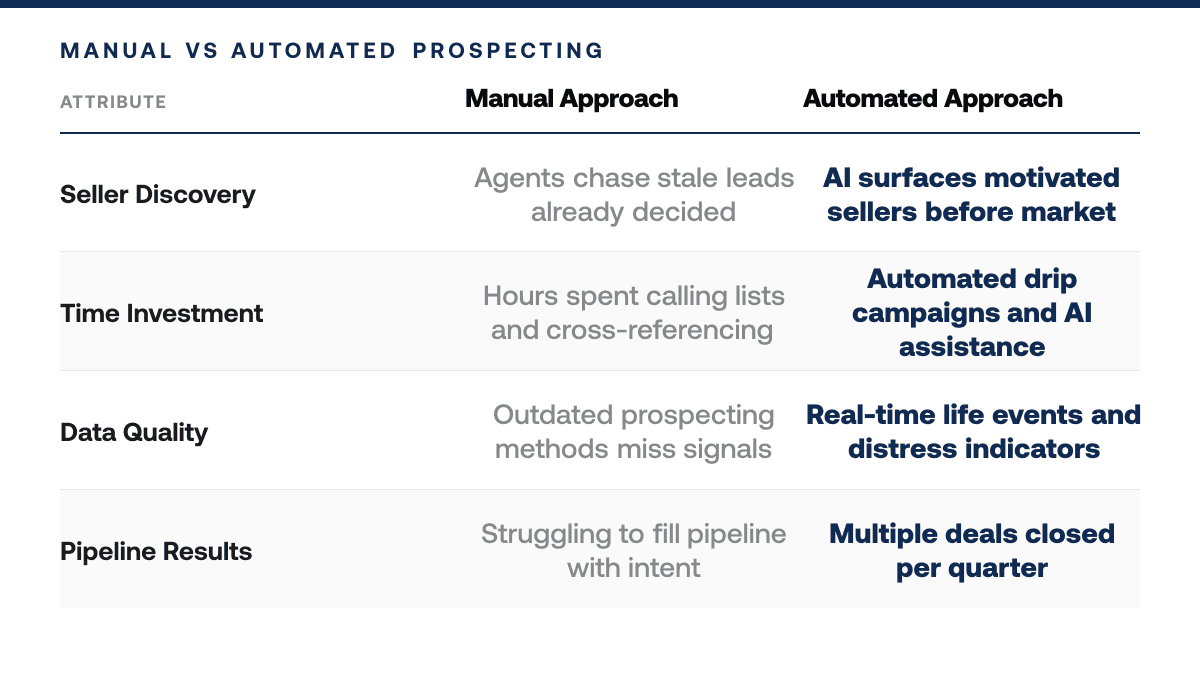
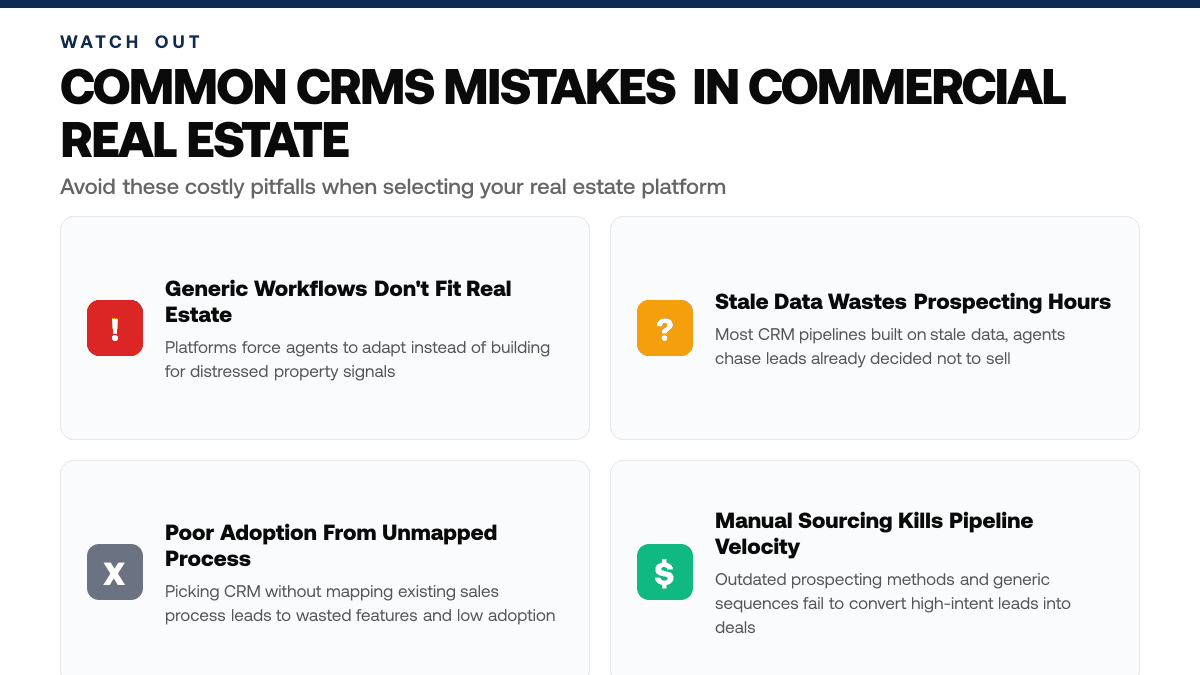
Real estate agents and investors spend hours each week manually searching for motivated sellers—calling through lists, cross-referencing public records, and hoping to reach someone ready to move. Yet most CRM platforms treat real estate like any other sales industry, forcing agents to adapt generic workflows instead of tools built for the specific signals that identify distressed properties and urgent sellers. The result is wasted time and missed opportunities.
Finding motivated sellers faster is the difference between closing multiple deals per quarter and struggling to fill a pipeline. Commercial real estate investors and agents need systems that surface life events—job relocations, inheritance transfers, property tax delinquencies—before competitors do. Without the right data and automation, agents rely on outdated prospecting methods and generic follow-up sequences that fail to convert high-intent leads into closed transactions.[2]
This guide reviews the best commercial real estate CRM software for 2026, focusing on platforms that combine proprietary data signals, real estate-specific workflows, and dedicated support to help agents and investors identify motivated sellers, automate prospecting and follow-up, and close more deals without increasing marketing spend. We'll compare feature sets, data accuracy, ease of use, and customer support so you can choose the right tool for your business. Most CRM pipelines are built on stale data and manual prospecting, so agents spend hours chasing leads who've already decided not to sell — Goliath Data monitors real-time life-event signals like foreclosures and job changes to surface motivated sellers before they hit the market, so agents only chase prospects with genuine intent.
TL;DR
Commercial real estate CRM software automates prospect tracking, lead scoring, and follow-up workflows to help agents and investors identify motivated sellers and close deals faster.
The best platforms integrate property data, transaction history, and contact management so you can prioritize high-potential opportunities without manual research or additional marketing spend.
Most users fail because they pick a CRM without mapping their existing sales process first—leading to poor adoption and wasted features that don't match your prospecting workflow.
All 5 tools compared at a glance
Tool | Best for | Pricing | Key strength | Limitation vs #1 |
|---|---|---|---|---|
Commercial RE agents needing AI-powered motivated-seller sourcing | AI-skiptracing, automated drip campaigns, list-building, and AI assistant David | — | ||
PropertyRadar | Investors hunting off-market deals via property data search | Starts at $119/mo | Advanced property search filters and bulk contact data pulls | Requires manual sourcing; lacks embedded AI-driven list automation |
REsimpli | Wholesalers identifying distressed owners via public records | Starts at $149/mo | Tax liens, foreclosure filings, and code violations integrated | Separate data sourcing workflow; no embedded AI prospecting assistant |
PropStream | Investors analyzing behavioral and financial distress signals | Starts at $99/mo | Tax delinquencies, code violations, and probate filing flags | Focuses on data layers; lacks automated multi-channel drip campaigns |
DealMachine | Solo investors automating prospecting and dialer workflows | Starts at $119/mo | Skip-tracing, automated dialer, and bulk list-building integration | Manual sourcing required; no AI-driven list automation or AI assistant |
Pricing as of June 2026; verify current rates on each provider's site.
1. Goliath Data: AI-Powered CRM & Motivated-Seller Lists for Faster Deal Flow

Visit goliathdata.com
Goliath Data is a commercial real estate CRM purpose-built for agents and investors who need to find motivated sellers and close deals faster without inflating marketing budgets. The platform combines contact management, calling, texting, and deal tracking with built-in list-building and AI-powered prospecting automation—eliminating the need to juggle separate tools or hire dedicated prospectors.
Here's the gap most tools miss: traditional CRMs force you to source leads separately, then manually input them and chase follow-up. Goliath Data flips that workflow by embedding AI-driven list building and automated drip campaigns directly into the platform, so you identify motivated sellers and nurture them without context switching or dead-end follow-ups.
The platform delivers AI-Skiptracing (2,500 credits monthly), automated multi-channel drip campaigns, list-building with niche filters, ad-platform integrations for retargeting, task automation, activity tracking, and an AI assistant named David that handles routine prospecting questions. All contact and deal data syncs across calling, texting, and email in a single inbox.
The CRM + Data tier starts at $299/mo and includes everything above. For teams wanting fully outsourced prospecting—list pulling, calling, texting, email, direct mail, lead qualification, and ongoing follow-up—the Done-For-You service is $2,999/mo. Annual billing saves two months.
2. PropertyRadar
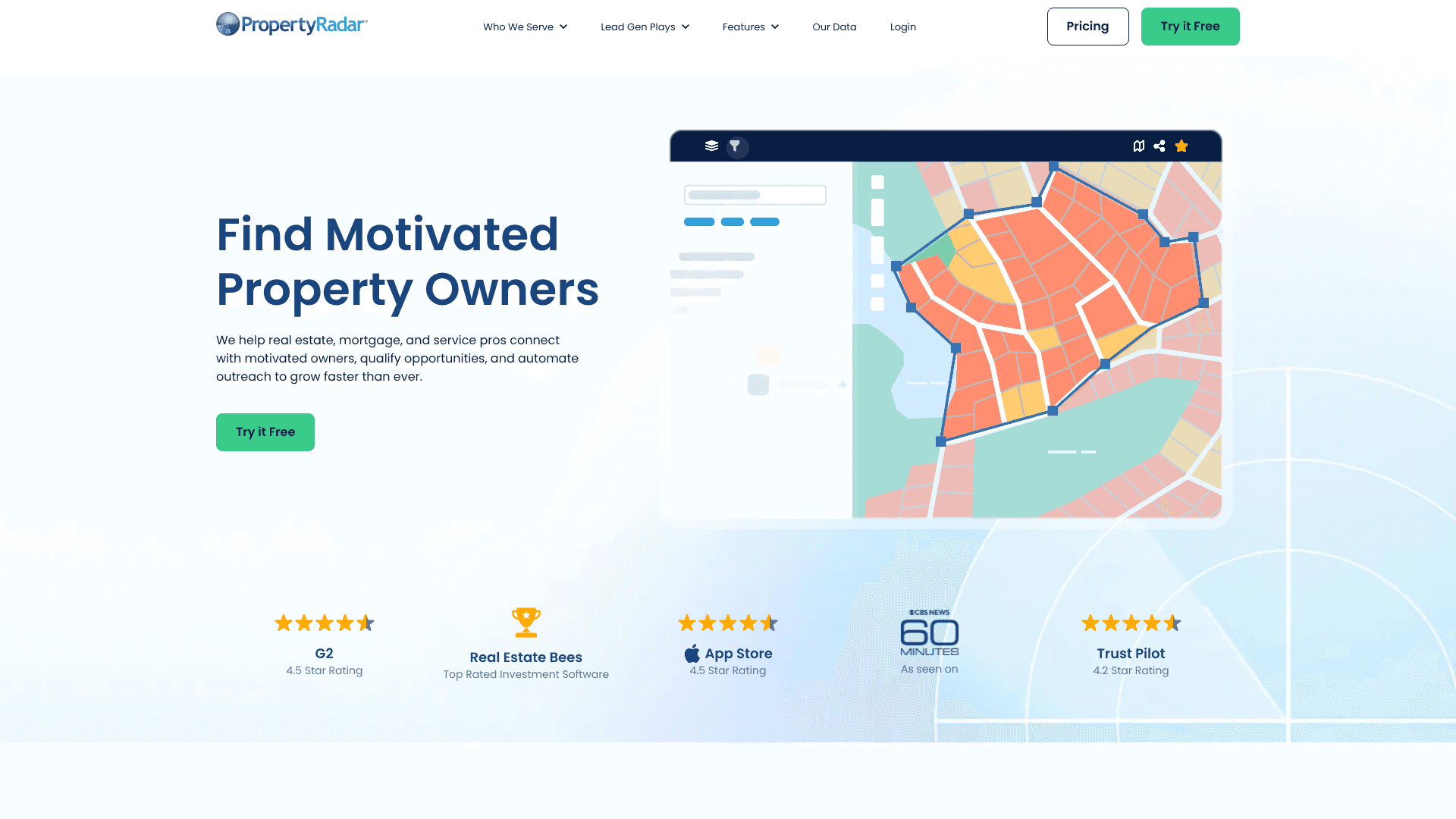
PropertyRadar is a commercial real estate data and CRM platform designed for agents, investors, and wholesalers hunting for off-market deals and motivated sellers. It aggregates property records, tax data, and ownership intelligence across multiple sources, then layers CRM and workflow tools on top so you can organize leads, track follow-ups, and manage pipelines without jumping between platforms.
Here's the gap most tools miss: most CRMs focus on contact management after you've already identified a prospect. PropertyRadar flips that—it starts with the property data itself. You search by criteria (distressed ownership, recent tax liens, absentee owners, or portfolio patterns), then the platform auto-populates contact records and tracks your outreach history. That means less time manually building prospect lists and more time on actual conversations with qualified leads.
The platform includes advanced property search filters, bulk contact data pulls, automated lead scoring, email and SMS campaign tools, and a customizable CRM dashboard to monitor deal pipeline. You can also set saved searches and alerts so new matching properties land in your inbox as they hit public records, keeping your prospect funnel constantly refreshed without manual daily hunting.
PropertyRadar's entry-level paid plan starts at $119/mo, positioning it as a mid-range investment for serious investors and agents who need both data discovery and CRM in one tool rather than cobbling together separate subscriptions.
3. REsimpli
REsimpli homepage
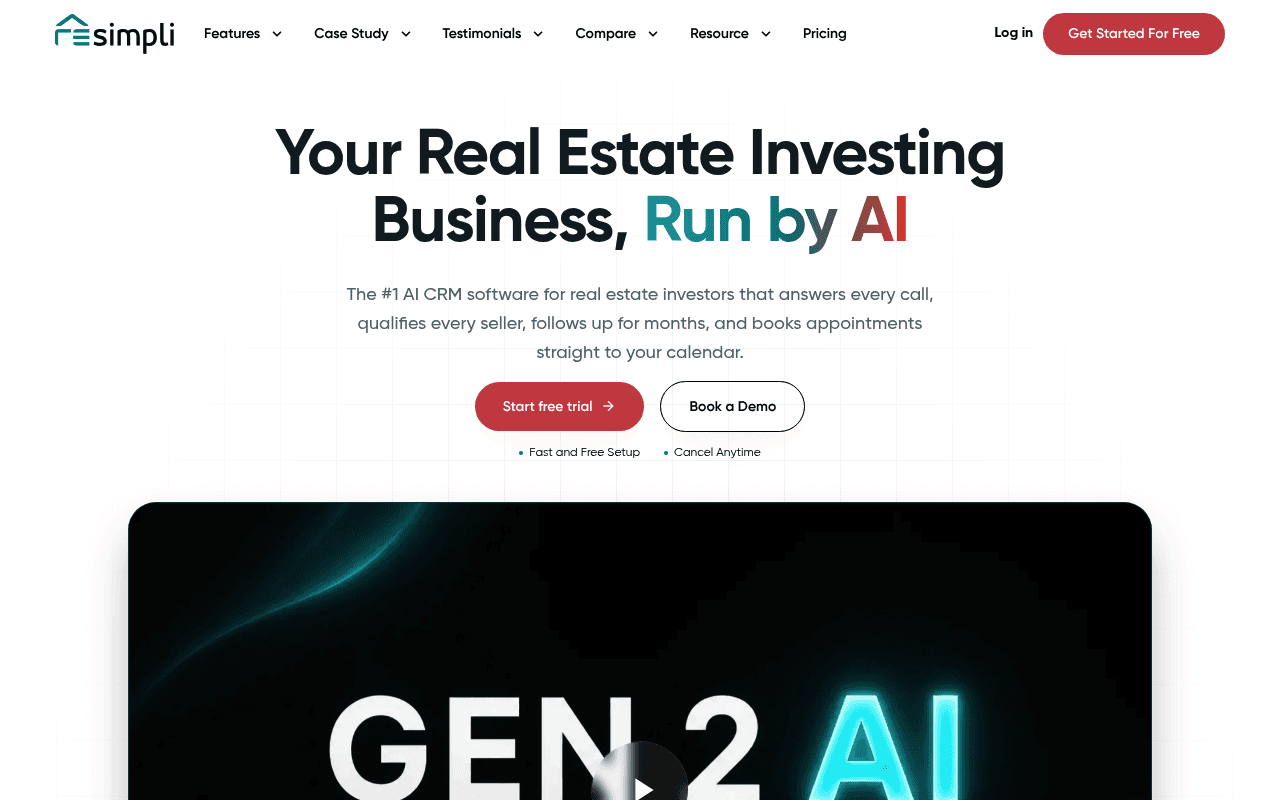
REsimpli is a commercial real estate CRM built to help agents and investors identify off-market opportunities and distressed property owners. The platform targets wholesalers, fix-and-flip investors, and agents who need to source motivated sellers and build targeted prospect lists without relying on traditional MLS channels.
Here's the gap most tools miss: REsimpli integrates public records data—property tax liens, foreclosure filings, code violations, and ownership changes—directly into your workflow. Rather than manually hunting through county records or paying for fragmented data sources, the platform surfaces distressed and motivated leads in one searchable database, cutting the research time agents and investors typically spend on prospecting.
The platform delivers lead lists filtered by property condition, ownership tenure, and financial distress signals. Users can build custom prospect segments, automate follow-up sequences via email and SMS, and track engagement within the CRM. The system also syncs with popular real estate tools, allowing agents to move leads through their existing pipeline without manual data entry.
REsimpli's first paid tier starts at $149/mo. This entry-level plan includes access to the core lead database and basic automation features, making it accessible for solo agents and small investment teams looking to accelerate deal flow without a significant upfront software investment.
4. PropStream
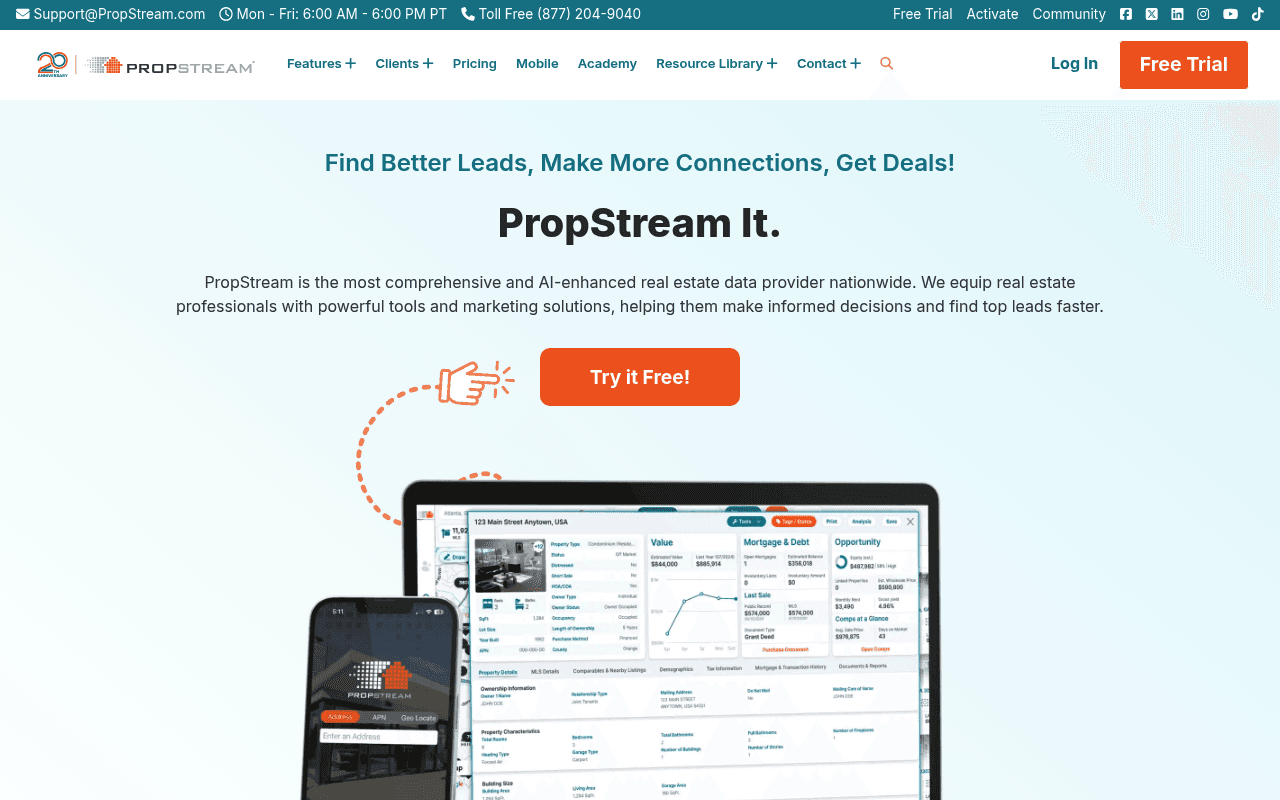
PropStream homepage
PropStream is a commercial real estate data and lead-generation platform designed for agents and investors who need to identify off-market opportunities and motivated sellers at scale. Built for wholesalers, fix-and-flip operators, and buy-and-hold investors, it aggregates property records, ownership data, and financial indicators to surface deals before they hit the MLS.
Here's the gap most tools miss: PropStream layers behavioral and financial signals—tax delinquencies, code violations, probate filings, and ownership changes—on top of property records. Rather than relying on list-building alone, it flags properties where owners face real friction, making outreach more targeted and conversion-ready.
The platform delivers skip-tracing for direct owner contact, batch property analysis, custom filtering by equity, condition, and motivation markers, and integration with CRM systems for seamless follow-up workflows. Users can build lists, run comparative market analysis, and track deal progress without switching platforms.
PropStream starts at $99/mo for access to core data and lead-generation tools. The pricing covers unlimited property searches and list exports, making it cost-effective for agents and investors running high-volume prospecting campaigns without inflating their marketing overhead.
5. DealMachine
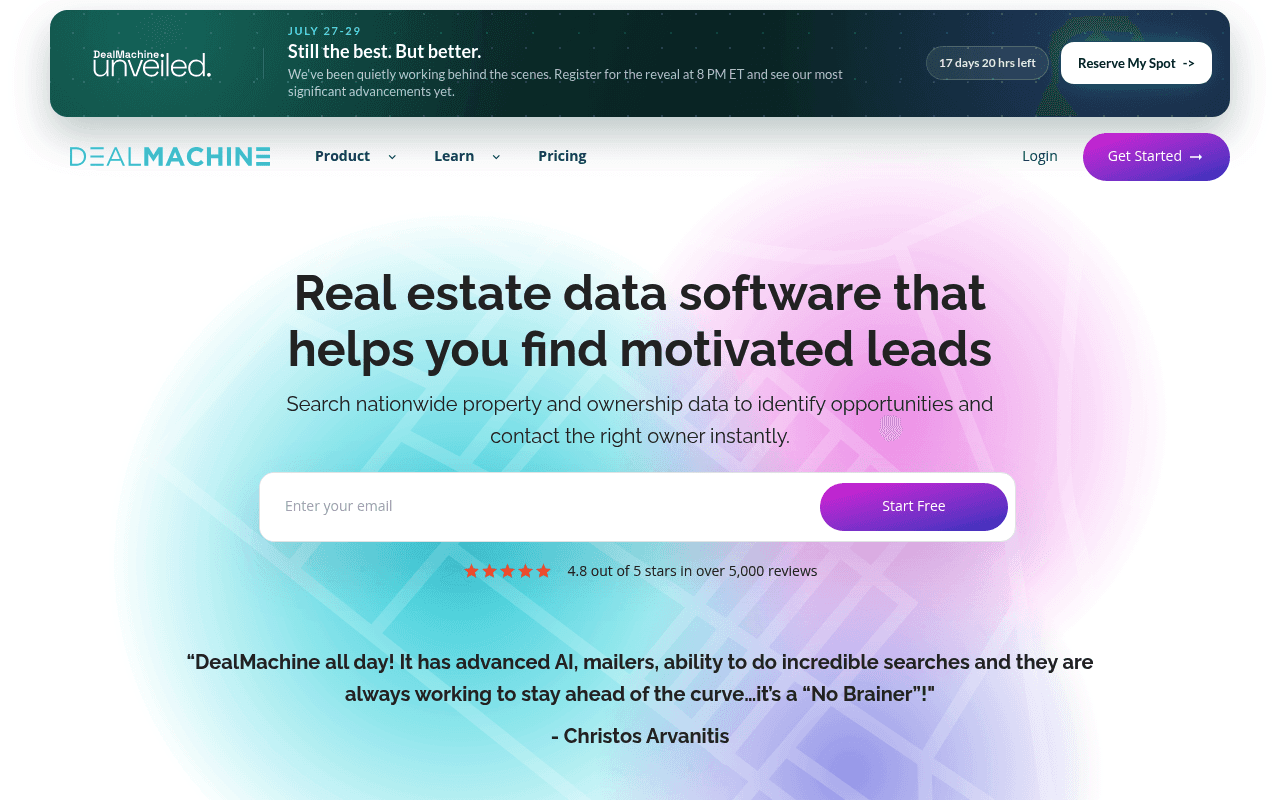
DealMachine homepage
DealMachine is a commercial real estate prospecting and CRM platform designed for agents and investors who need to identify and contact property owners at scale. The platform combines property data, owner contact information, and workflow automation to help users build lists of motivated sellers and execute targeted outreach campaigns without relying on expensive paid advertising.
Here's the gap most tools miss: many CRMs focus on managing deals after contact, but DealMachine starts earlier—at the prospecting stage. It pulls public property records and owner data, then layers in skip-tracing to surface current phone numbers and email addresses. This means you can move from "I found a property" to "I have the owner's contact info" in minutes, not days.
The platform includes bulk list-building from property criteria, automated dialer integration for outbound calling, SMS and email campaign templates, and a built-in CRM to track conversations and follow-ups. Users can also upload their own lists and append owner contact details, and the system tracks which prospects have been contacted across your team to avoid duplicate outreach.
DealMachine's first paid tier starts at $119/mo. This entry-level plan includes core prospecting and dialer features, making it accessible for solo investors and small teams looking to systematize their sourcing workflow without a large upfront investment.
Frequently Asked Questions
How do commercial real estate CRMs help identify motivated sellers?
Modern CRM platforms integrate data on life-event signals—job changes, property tax delinquencies, foreclosure activity, and family transitions—to surface homeowners most likely to sell before they list publicly. By combining these signals with automated lead scoring and AI-powered outreach, agents can prioritize high-intent prospects and reduce time spent on cold contacts. This targeted approach lets you focus prospecting efforts on sellers with genuine motivation to transact.
Can CRM automation really reduce my marketing spend while closing more deals?
Yes. Automation handles repetitive tasks—follow-up emails, text reminders, appointment scheduling, and lead nurturing—without additional headcount or ad spend. By systematizing these workflows, agents and teams eliminate manual bottlenecks, respond faster to inbound leads, and keep prospects warm through the pipeline longer. The result is higher conversion rates and deal velocity from the same marketing budget, since you're extracting more value from each lead already in your system.[2]
What's the difference between a general CRM and a real estate-specific platform?
Real estate CRMs are built for deal workflows—property details, comps, financing terms, inspection timelines, and closing checklists—rather than generic sales pipelines. They also integrate directly with MLS data, public records, and property research tools, so you don't need separate subscriptions to find leads or verify property info. General CRMs require manual data entry and custom setup, making them slower to deploy and harder to scale for high-volume prospecting.[1]
Where can I get real-time lead data and tools to automate outreach at scale?
Goliath Data monitors real-time life-event signals—foreclosure notices, tax delinquencies, job changes, family changes—to surface homeowners most likely to sell before they hit the market. Its AI assistant David handles inbound calls, outbound follow-ups, texts, emails, and appointment scheduling automatically, so you never miss a lead. The platform also includes a full CRM and pipeline management, letting you act on motivated-seller data without manual prospecting overhead.
