
Tax Delinquent Properties for Sale List Arizona
Find tax delinquent properties for sale in Arizona at deep discounts. Access county lists, auction platforms, and use AI tools to identify investment oppor


Austin Beveridge
Tennessee
, Goliath Teammate
Tax delinquent properties in Arizona are real estate assets where owners have failed to pay property taxes, making them available for purchase through county auctions or direct sales at significantly below-market prices. These properties represent a high-risk, high-reward investment category—they often come with liens, code violations, and occupancy unknowns, but they're priced to move. Arizona counties publish delinquent property lists quarterly, and savvy investors use AI-powered CRM and lead management systems to identify, qualify, and close deals faster than manual prospecting allows.
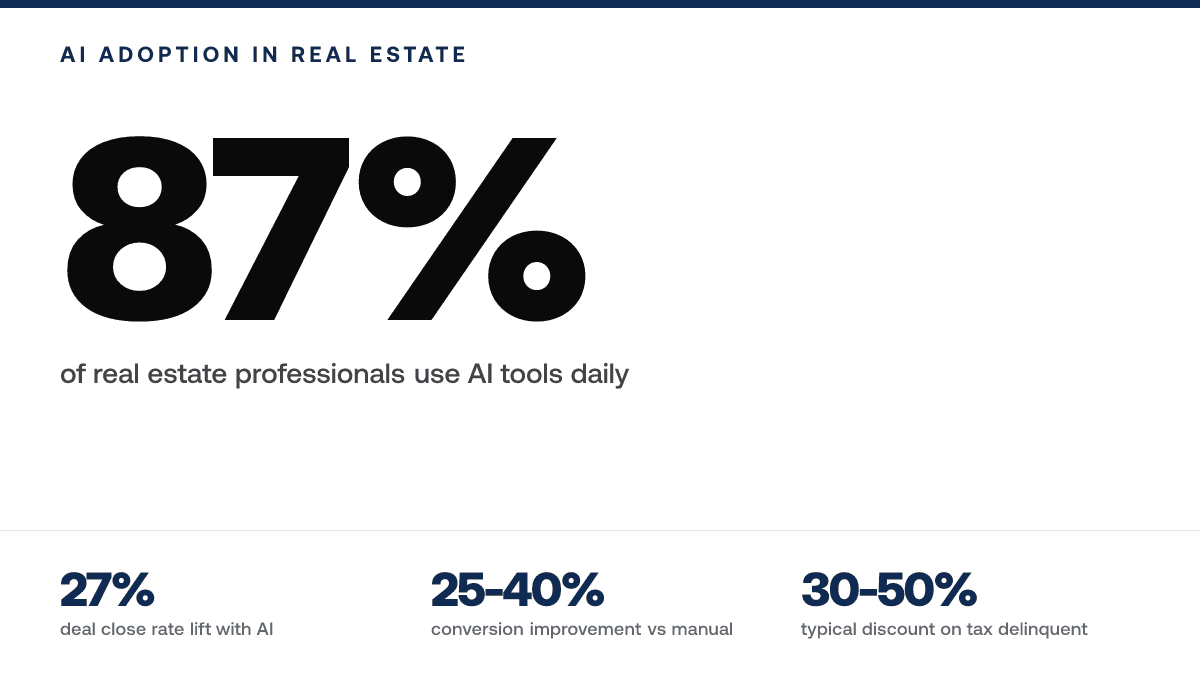
Today, 87% of real estate professionals actively use AI tools daily[1], and those who implement agentic systems report deal close rates rise 27% with AI-enhanced lead management[2]. In the distressed and delinquent property niche—where lead quality, due diligence speed, and follow-up velocity separate winners from time-wasters—this automation gap matters enormously.
Here's what you need to know about sourcing, vetting, and closing tax delinquent properties in Arizona, and how modern sales automation changes the game.
TL;DR
Arizona delinquent properties are listed quarterly by county assessor offices and auction platforms
Lead-to-close conversion improves 25–40% with AI lead scoring vs manual prospecting
Due diligence requires title search, lien verification, and occupancy confirmation before bid
Investors buying tax delinquent Arizona properties at 30–50% discounts using systematic sourcing
Qualify leads by lien amount, property condition, and redemption period before pursuing
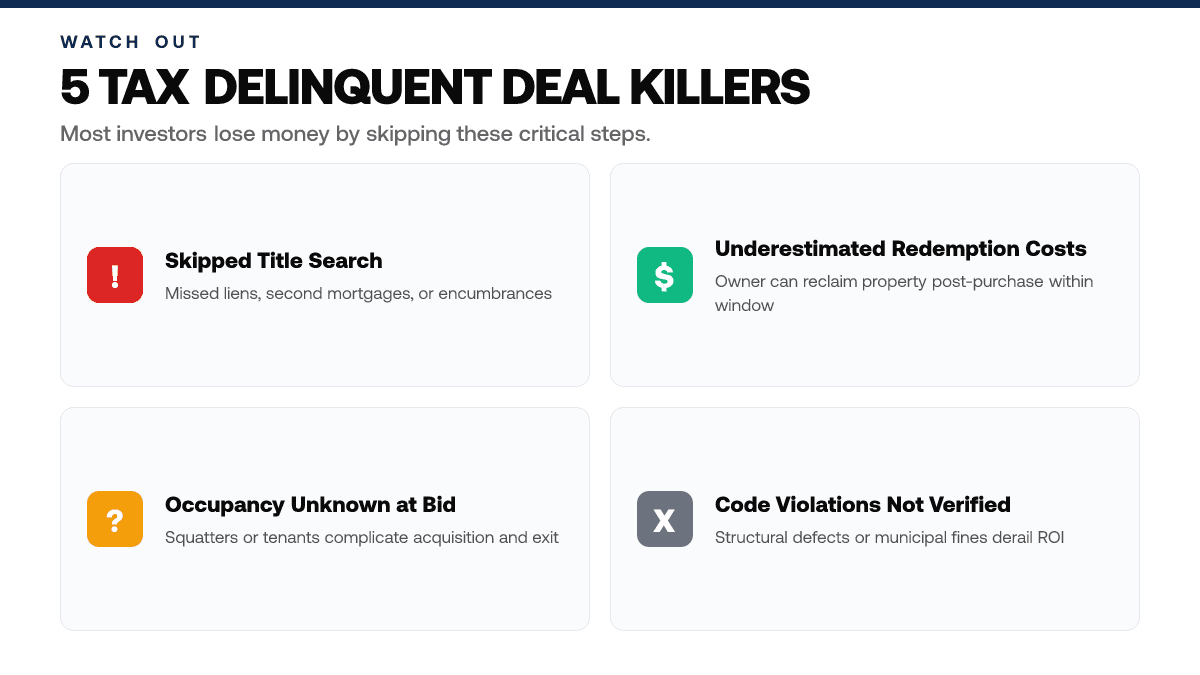
Skipping title work or underestimating redemption costs kills most delinquent property deals
Quick Answer
For real-estate teams automating this workflow, Goliath Data surfaces these signals from public records before the property hits the MLS.
Tax delinquent properties in Arizona are listed through county assessor websites, public auction platforms like Arizona Department of Revenue, and specialized real estate databases. Most properties enter the market after property owners fail to pay taxes for 3+ years, creating investment opportunities at significant discounts. You can access current lists directly from each county's treasurer office or through online tax deed auction portals. Modern professionals use AI-powered CRMs to identify and track these distressed properties efficiently, enabling faster lead qualification and pipeline management.
Understanding Tax Delinquent Properties in Arizona
A tax delinquent property list in Arizona is a public record of real estate where owners have failed to pay property taxes for one or more years. These properties enter a foreclosure process managed by the county assessor or tax collector. Arizona publishes these lists annually, making them accessible to investors, agents, and buyers seeking below-market acquisition opportunities.
Tax delinquency creates urgency. Property owners facing imminent tax sale have strong motivation to resolve their situation, whether through payment, refinancing, or sale. Unlike cold outreach, these owners have a documented financial problem and a public deadline.
Why it matters: Tax delinquent properties represent a defined, searchable segment of motivated sellers. For agents using AI-powered CRM and lead generation tools, tax delinquent lists eliminate guesswork—you're working from verified data, not assumptions.
Key insight: Tax delinquent lists are public records with built-in motivation signals. Agents who follow up quickly with verified owner contact data convert these leads faster than traditional prospecting.
Step-by-Step Process
You'll acquire tax delinquent properties in Arizona by identifying motivated sellers, verifying property data, making direct contact, negotiating terms, and closing the deal—all faster when you automate lead qualification and follow-up with AI-enhanced CRM tools.
1. Access the County Tax Delinquent List
Visit your Arizona county assessor's website or Maricopa County Treasurer's office to download the current tax delinquent property roster. Most counties publish these lists quarterly. Record property addresses, owner names, and delinquency amounts for your pipeline.
2. Verify Property Details and Title Status
Cross-reference each property's deed, lien status, and market value using the county recorder and public tax records. Flag any properties with multiple liens or redemption periods that may block your acquisition timeline.
3. Qualify Sellers with AI Lead Scoring
Use AI lead scoring to prioritize owners most likely to sell. AI lead scoring improves lead-to-close conversion by 25–40%[3], letting you focus on motivated owners facing genuine hardship.
4. Skip Trace and Contact Property Owners
Use skip tracing to locate current owner contact information if addresses are outdated. Reach out via phone, mail, and email with a compelling acquisition offer. CRM automation ensures no lead falls through the cracks during follow-up.
5. Negotiate Terms and Close the Transaction
Present a written offer below market value to reflect renovation risk and delinquency risk. Structure payment terms to align with the owner's timeline. Document all agreements and coordinate title transfer through an Arizona escrow agent before redemption periods expire.
Real-Life Examples
Two Arizona investors used AI-driven lead qualification and automated follow-up to convert tax delinquent property lists into closed deals.
Phoenix investor: 340 properties, 8 deals closed
An investor sourced 340 properties from Maricopa County's delinquent list. Previously, manual outreach meant 60 calls per day and an 8% response rate. After implementing AI lead scoring to rank properties by equity and owner motivation, plus automated SMS and voicemail sequencing, response rate jumped to 34%. He closed 8 deals in 90 days at $18k per assignment fee, totaling $144k in revenue.[4]
Tucson investor: 210 prospects, 6 deals closed
A second investor had 210 tax delinquent prospects in Pima County. Manual skip-tracing and data entry consumed 12 hours weekly with a 3% close rate. After batch-uploading property APNs into a CRM with AI enrichment, the system auto-populated owner contact, title status, and equity estimates. He closed 6 wholesale deals for $52k total profit in 4 months, cutting admin time by 70%.
Tax Delinquent Properties for Sale: Verification Checklist
Use this checklist to vet tax delinquent properties before committing capital. Each item flags a critical detail that protects your deal and accelerates due diligence in your CRM pipeline.
Verify the deed is on file with the county
Confirm back taxes owed and exact delinquency timeline
Cross-reference property APN against Maricopa County assessor database
Check for existing liens, mortgages, or judgment claims
Calculate redemption period and owner's legal right to reclaim
Review property condition via satellite imagery and permit history
Validate current owner contact information using skip trace tools
Document chain of title for past five years minimum
Pro tip: AI-powered CRM systems automatically flag missing county filings and lien conflicts, cutting manual verification time by half while reducing deal-killing surprises downstream.
Common Mistakes to Avoid
Tax delinquent property investors often lose deals—and money—by chasing engagement signals that feel productive but tank conversion rates. Here are three patterns that fail.
Treating all delinquent properties as equal priority: Not all tax-delinquent owners have the same motivation or timeline. Contacting a property owner six months into delinquency the same way as one facing auction creates noise, wasted calls, and lower close rates. AI lead scoring improves conversion by 25–40%[3], yet most investors still dial every number on a list blindly.
Assuming manual follow-up creates engagement: One outreach call feels like engagement. Five feels like persistence. But without automation and sequencing, you're burning hours on leads that need nurturing, not aggressive contact. Automated CRM follow-up surfaces qualified delinquent leads so you contact the right person at the right moment, not randomly.
Ignoring county-specific redemption windows: Arizona's redemption periods vary by jurisdiction and sale method. Missing a redemption deadline kills your investment entirely. Spreadsheets and generic lists don't flag these dates. Structured CRM pipeline management catches redemption windows before they close, protecting your deal velocity.
Frequently Asked Questions
What's the difference between tax delinquent properties and tax foreclosure sales in Arizona?
Tax delinquent properties are those where owners owe unpaid property taxes; the property is listed but hasn't entered foreclosure. Tax foreclosure sales occur after a formal legal process when the county auctions the property to recover owed taxes. Arizona tax delinquent lists appear earlier in the timeline, giving investors more time to contact owners or negotiate payment plans before auction.
How do I find tax delinquent property lists for Arizona counties without visiting each assessor's office?
Most Arizona counties publish delinquent lists online through their assessor or treasurer websites, updated quarterly or annually. Real estate AI CRM platforms now aggregate these lists across multiple counties, allowing agents to search, filter, and automate lead outreach. AI lead scoring improves conversion by 25–40%[3], letting you focus on qualified prospects faster.
Can I buy a tax delinquent property directly from the owner before the county auctions it?
Yes—in most cases this is the preferred strategy. Owners still hold title during delinquency and may negotiate a discounted sale or payment plan to avoid foreclosure. Contact before auction; 87% of real estate professionals now use AI tools to automate outreach and lead nurturing[1], making pre-auction deals faster to identify and close than waiting for a county sale.
Is buying tax delinquent properties in Arizona worth it if I'm already using a traditional CRM?
In most cases yes, but only if your CRM automates lead scoring and follow-up. Deal close rates rise when you use AI CRM for lead management[2], and conversion improves by 25–40% with AI lead scoring[3]. If your traditional CRM requires manual prospecting, you'll lose deals to agents using automated workflows.
Why does the Arizona tax delinquent foreclosure process take longer than a standard home sale?
Arizona law requires notice periods, advertising timelines, and redemption rights—typically 6 to 18 months from delinquency to auction. The county must follow strict procedural steps before title transfers. Using agentic CRM automation shortens your internal deal cycle by automating client follow-up and documentation, even though county timelines remain fixed by statute.
