
12 Best Propstream Alternatives for Real Estate Investors
How to Choose a PropStream Alternative: A 5-Step Evaluation Framework. A practical guide to what works, what to skip, and how to get started.


Austin Beveridge
Tennessee
, Goliath Teammate
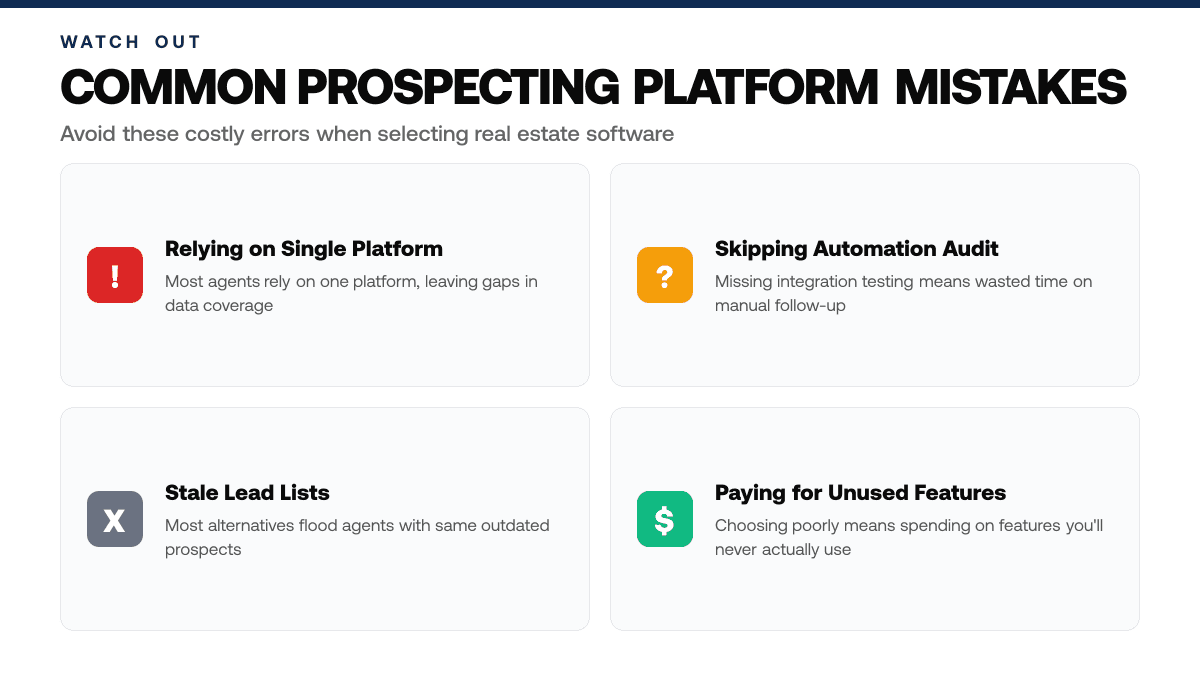
Most real estate agents and investors rely on a single platform to find motivated sellers, but that platform often leaves gaps. You might be pulling data from multiple sources—property records, tax assessments, demographic shifts—and still missing the signals that separate a qualified lead from a time-waster. When your prospecting tool doesn't surface the right opportunities fast enough, your deal flow stalls and your marketing budget stretches further than it should.
The market for prospecting software has fragmented. Platforms like PropStream have become industry standards, but they're not the only option—and they may not be the best fit for your specific workflow, budget, or deal type. Whether you're wholesaling, flipping, or building a buyer's list, the right tool should combine reliable data with features that match how you actually work. Choosing poorly means wasted time on unqualified leads and money spent on features you'll never use.
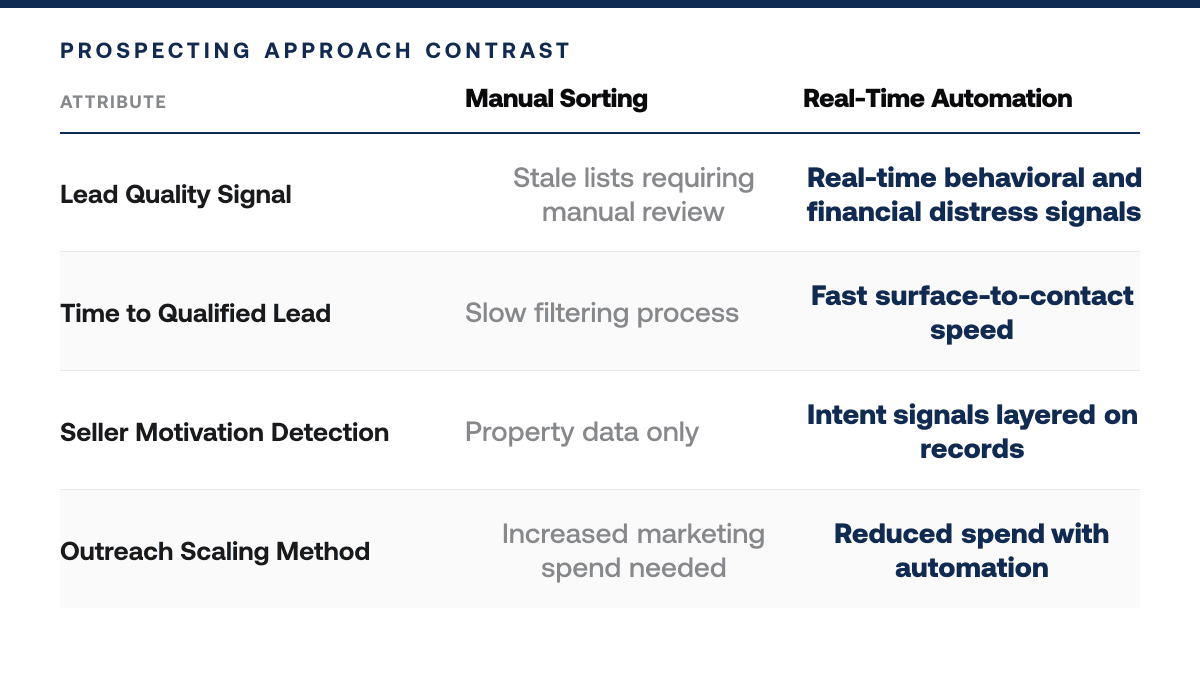
This framework walks you through five concrete steps to evaluate any prospecting alternative: defining what motivated-seller signals matter most to your business, assessing data quality and coverage in your target markets, testing workflow integration with your CRM or follow-up system, comparing pricing against the features you actually need, and validating customer support and onboarding so you're not left to figure it out alone. By the end, you'll know exactly what to look for and how to spot a platform that delivers results. Most PropStream alternatives flood agents with the same stale lead lists, forcing manual sorting to find who's actually ready to sell right now — Goliath Data monitors real-time life-event signals like foreclosure notices and job changes to surface only the homeowners most likely to transact before they list.
TL;DR
A PropStream alternative evaluation framework helps agents and investors compare real estate data software by core features, data accuracy, and cost-effectiveness to find motivated sellers faster.
The five-step process assesses prospecting capabilities, automation tools, integration options, user experience, and total cost of ownership to match your deal-closing workflow.
Most agents skip the automation and integration audit—the biggest mistake—missing opportunities to reduce manual follow-up and scale outreach without higher marketing spend.
All 5 tools compared at a glance
Tool | Best for | Pricing | Key strength | Limitation vs #1 |
|---|---|---|---|---|
Agents and investors finding off-market deals fast | Real-time alerts on behavioral and financial distress signals | — | ||
PropertyRadar | Teams needing raw public records and ownership data | Custom — contact sales | Emphasis on data accuracy and breadth across multiple states | Shows property data but not seller intent or motivation signals |
REI BlackBook | Wholesalers and fix-and-flip investors hunting deals | Custom — contact sales | Layers behavioral indicators on property records for targeting | Lacks real-time alerts on behavioral and financial distress signals |
PropStream | Agents and investors building targeted cold outreach lists | Custom — contact sales | Multi-signal approach combining tax, deed, and foreclosure data | Does not layer real-time intent signals for seller motivation |
BatchLeads | Agents and investors automating prospect list building | Custom — contact sales | Combines property records and direct contact details in one interface | Bridges data depth and ease but lacks real-time intent detection |
1. Goliath Data: Real-Time Motivated Seller Intelligence for Real Estate Agents and Investors
Goliath Data is a motivated-seller intelligence platform built specifically for real estate agents and investors who need to identify off-market opportunities faster. Unlike generic lead databases, Goliath Data focuses on distressed and pre-motivated sellers—homeowners facing property tax liens, code violations, foreclosure risk, or other financial pressures that signal readiness to sell below market value.
Here's the gap most tools miss: traditional prospecting tools show you property data, but not *intent*. Goliath Data layers behavioral and financial signals—tax delinquency, ownership changes, probate filings, and code enforcement records—so you're reaching sellers at the moment they're most likely to listen, not months after the opportunity has passed.
The platform delivers real-time alerts on motivated-seller triggers, customizable list building by property type and distress signal, skip-tracing and contact data for direct outreach, and automated follow-up workflows to keep deals moving. You can filter by equity position, property condition, and seller timeline to focus on the highest-probability deals in your market.
Goliath Data uses enterprise pricing with custom quotes based on your market size, deal volume, and feature set. Contact their sales team for a personalized proposal aligned to your prospecting goals and budget.
2. PropertyRadar
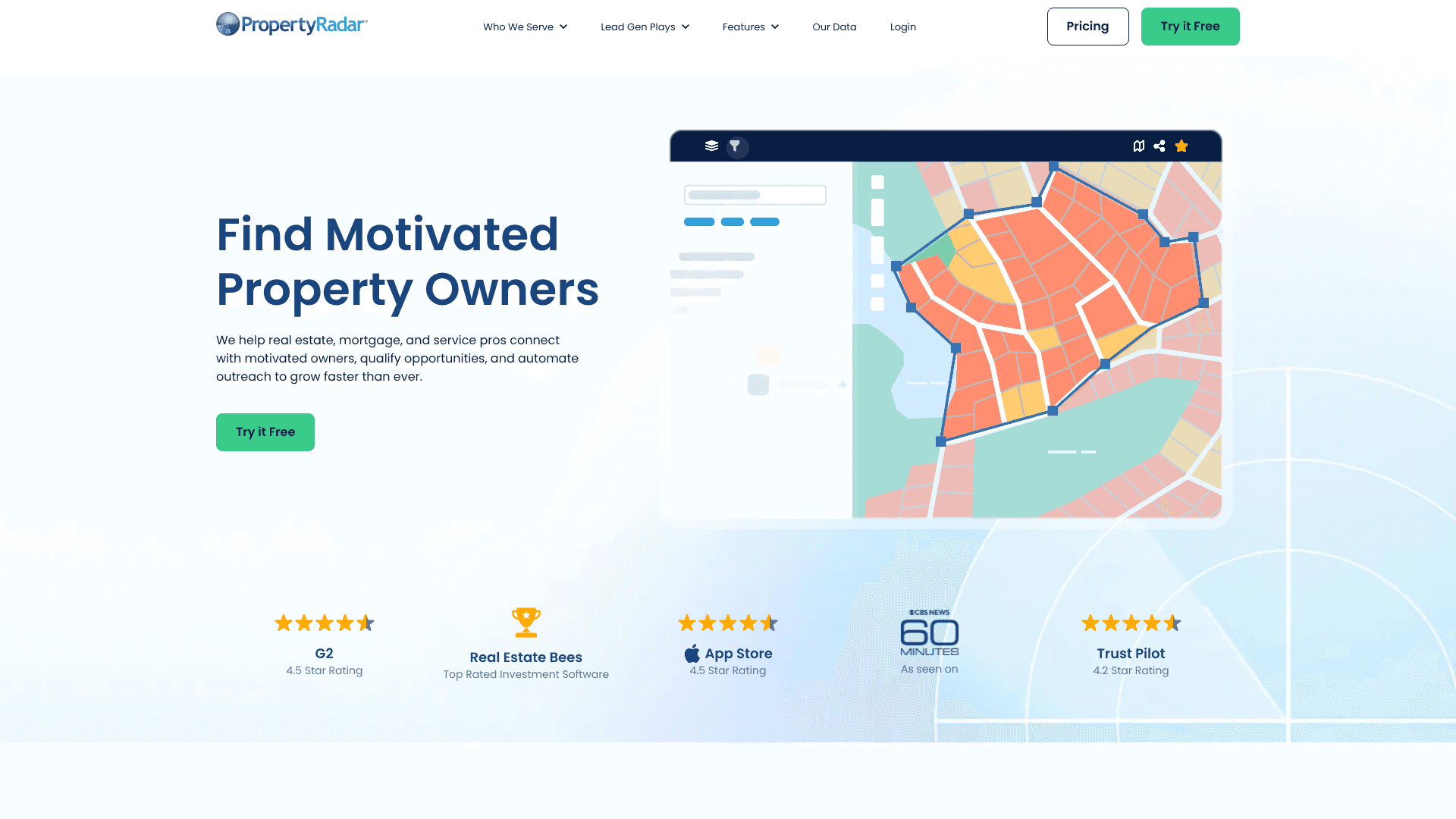
PropertyRadar is a real estate data and analytics platform built for agents and investors who need fast, reliable property intelligence to identify motivated sellers and off-market opportunities. The tool aggregates public records, tax data, and ownership information into a searchable database, letting you filter properties by ownership tenure, equity position, and other distress signals without manual record hunting.
Here's the gap most tools miss: PropertyRadar emphasizes raw data accuracy and breadth over automation. Rather than pre-built lead lists or AI-generated outreach sequences, it gives you the underlying records—ownership changes, lien filings, assessed values—so you can build your own criteria and validate leads before prospecting. That means fewer false positives and more control over your sourcing logic.
The platform lets you search and filter properties by ownership history, equity levels, and tax assessment changes. You can export results for follow-up, set up saved searches to monitor new matches, and access public record data across multiple states. The interface is built for batch research rather than single-property lookups, making it efficient for agents and investors running systematic prospecting campaigns.
PropertyRadar operates on an enterprise pricing model with custom quotes based on your usage volume and feature set. You'll need to contact the vendor directly for a formal proposal, making it best suited for teams or serious investors who can justify a dedicated budget for data access.
3. REI BlackBook
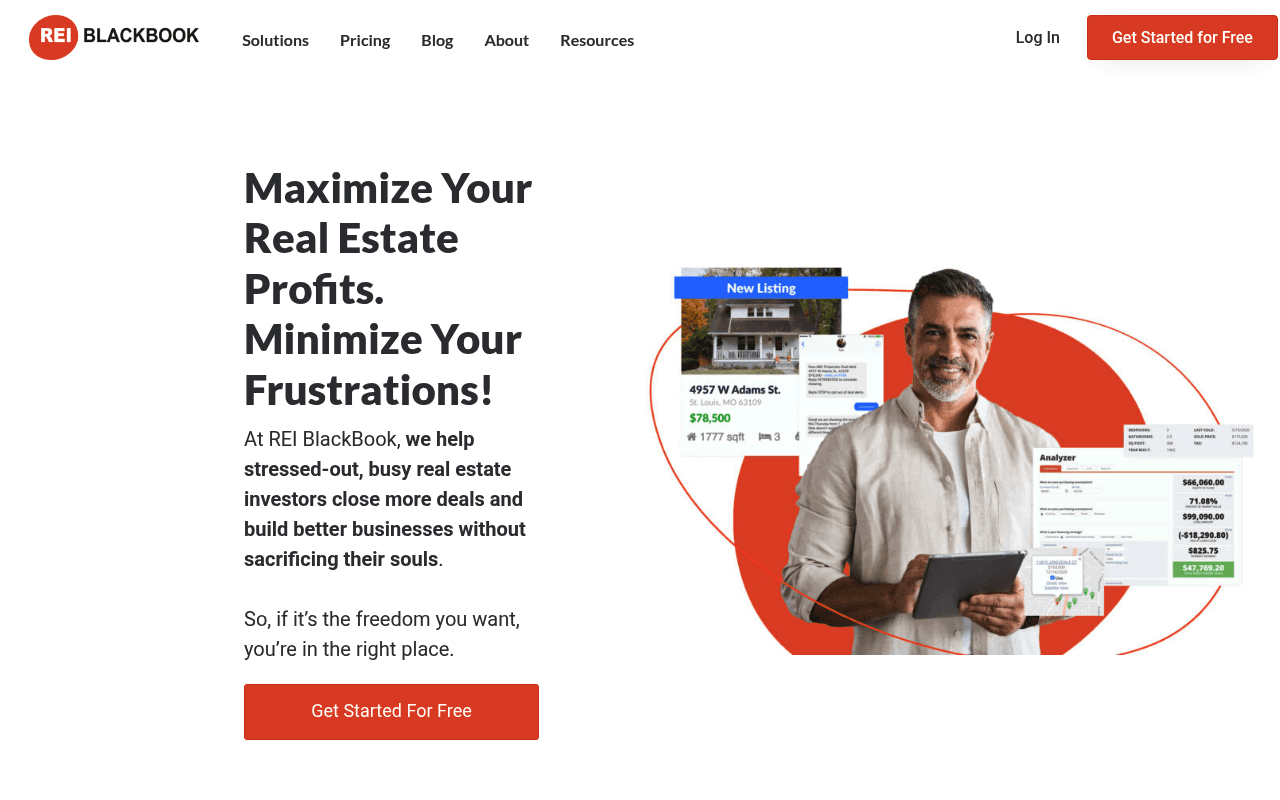
REI BlackBook is a real estate data and lead-generation platform designed for wholesalers, fix-and-flip investors, and agents hunting for off-market deals and motivated sellers. It aggregates property records, ownership details, and market signals to help investors identify acquisition targets faster than traditional MLS searches.
Here's the gap most tools miss: REI BlackBook layers behavioral and financial indicators—like recent tax assessments, code violations, and ownership changes—on top of raw property data. Rather than showing you every property in a zip code, it surfaces the ones most likely to be motivated to sell, cutting through noise and letting you focus prospecting effort where it counts.
The platform delivers property records, owner contact information, and customizable filtering by criteria such as equity position, property condition flags, and ownership tenure. Users can build targeted lists, export data for outreach, and integrate results into their CRM for automated follow-up sequences.
REI BlackBook operates on an enterprise pricing model. Costs vary based on data volume, list size, and integration requirements, typically requiring a custom quote. This structure suits teams and high-volume investors who need dedicated support and scaled data access rather than a one-size-fits-all tier.
4. PropStream
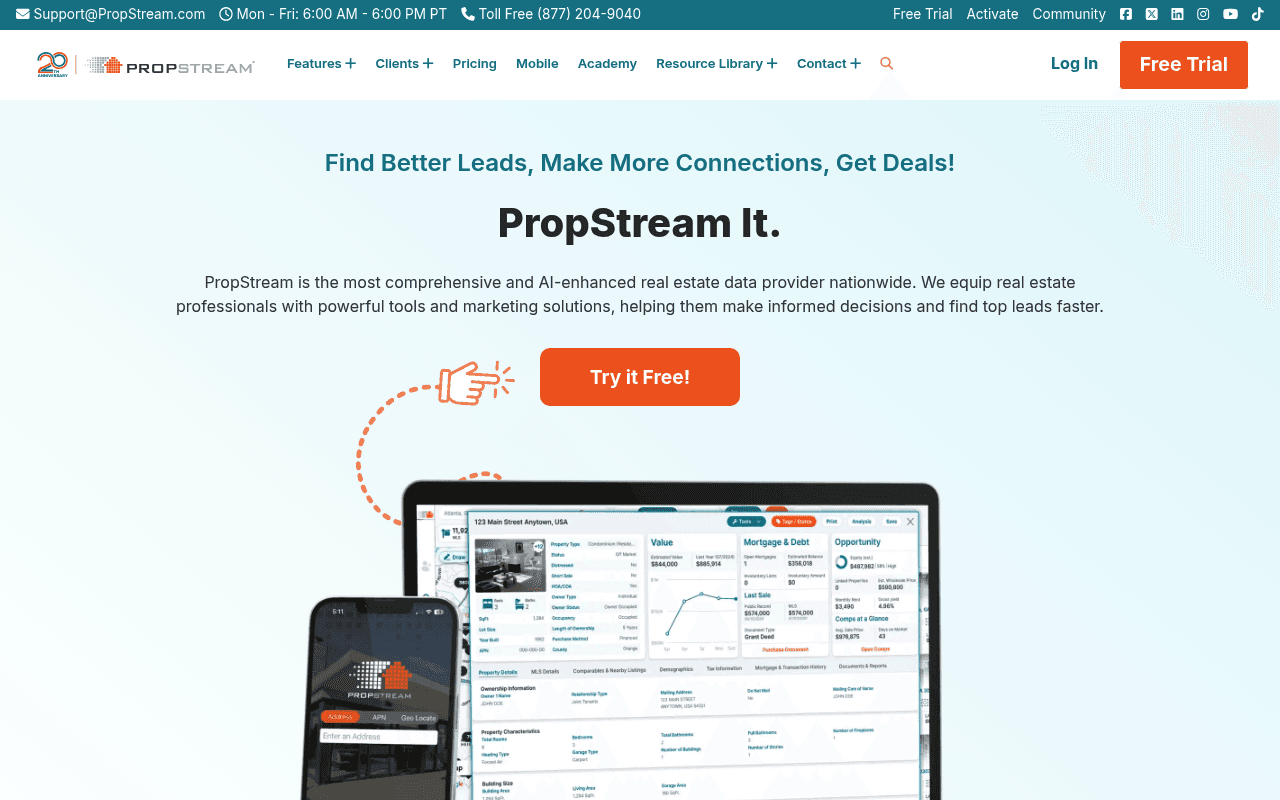
PropStream is a real estate data and prospecting platform designed for agents and investors who need to identify off-market opportunities and motivated sellers quickly. The platform aggregates property records, ownership data, and market signals to help users build targeted lists for cold outreach and direct mail campaigns.
Here's the thing: PropStream focuses on layering multiple data sources—tax records, deed transfers, foreclosure filings, and equity position—to surface sellers in distress or transition. This multi-signal approach aims to reduce noise and help users prioritize prospects most likely to respond to acquisition offers.
The platform includes property search and filtering, list export for direct mail and cold calling, skip-tracing to find contact information, and integration with CRM and email tools. Users can build custom criteria around property condition, ownership tenure, and financial indicators to narrow their target audience.
PropStream operates on an enterprise pricing model with custom quotes based on usage, data volume, and feature access. Prospective customers typically request a demo or contact the sales team directly to discuss pricing aligned with their deal volume and prospecting goals.
5. BatchLeads

BatchLeads is a real estate prospecting platform built for agents and investors who need to identify and contact motivated sellers at scale. The tool aggregates property data and owner contact information to help users build targeted lists without manually sifting through public records or county databases.
Here's the thing: most prospecting tools force you to choose between data depth and ease of use. BatchLeads bridges that gap by combining property records, ownership history, and direct contact details in a single interface—so you can filter for distressed properties, pre-foreclosures, or other seller signals without jumping between platforms.
The platform lets you build custom prospect lists based on property criteria, export contacts for CRM integration, and automate follow-up sequences. You can filter by property type, ownership duration, equity position, and other data points to narrow your outreach to the most likely motivated sellers in your target market.
BatchLeads pricing is available through enterprise and custom quote models, with costs scaled to your usage volume and feature set. Contact their sales team for a tailored proposal that matches your prospecting volume and deal flow.
Frequently Asked Questions
What data sources should I prioritize when evaluating a PropStream alternative?
Prioritize tools that integrate public records, tax assessor data, and demographic information from authoritative sources like the U.S. Census Bureau. The most effective platforms combine property ownership records with life-event signals—such as tax delinquencies or foreclosure notices—that indicate motivation to sell. Cross-check whether the platform updates data in real-time or batches updates, as frequency directly affects your ability to reach prospects before competitors do. Look for integrations that pull from multiple authoritative databases rather than relying on a single source.[1]
How do I compare pricing models across different prospecting platforms?
Request detailed pricing breakdowns from each vendor, including per-lead costs, monthly subscription tiers, and any hidden fees for additional features like API access or bulk exports. Compare total cost of ownership by calculating the price per qualified lead you actually convert, not just the headline rate. Some platforms charge by user seat, others by data volume; align the model with your team size and monthly prospecting volume. Ask for a trial period so you can measure lead quality and conversion rates before committing to an annual contract.
What automation features matter most for scaling my prospecting without hiring more staff?
Look for platforms that automate follow-up sequences, appointment scheduling, and multi-channel outreach across email, SMS, and phone. AI-powered lead scoring and CRM integration reduce manual data entry and help your team focus on the highest-probability prospects. Inbound call handling and automated text responses ensure no lead falls through the cracks during off-hours. The goal is to eliminate repetitive tasks so your existing team can spend time on relationship-building and closing rather than administrative work.
Where can I get real-time motivated-seller data with built-in automation tools?
Goliath Data monitors real-time life-event signals—foreclosure notices, tax delinquencies, job changes, family changes—to surface homeowners most likely to sell before they hit the market. Its AI assistant David handles inbound calls, outbound follow-ups, texts, emails, and appointment scheduling automatically, so you never miss a lead. The platform also includes a full CRM and pipeline management, allowing you to track prospects from initial contact through closing without switching between multiple tools.
