
PropStream Alternatives for Real Estate Investors: Complete Comparison of Data Platforms in 2026
PropStream Alternatives for Real Estate Investors: Complete Comparison of Data Platforms in 2026. What actually works, and what to skip.


Austin Beveridge
Tennessee
, Goliath Teammate
Real estate investors and agents spend hours each week hunting for motivated sellers—scrolling through public records, cross-referencing tax data, and manually tracking follow-ups. Many rely on a single data platform to fuel their pipeline, only to discover it lacks the signals they need to identify sellers in transition or the workflows built for their specific deals.
The real estate market moves fast, and finding prospects before competitors do requires more than generic lead lists. Investors need access to life-event signals—recent divorces, property tax liens, inheritance transfers—combined with tools designed specifically for prospecting and deal management. Without the right platform, agents and wholesalers waste budget on cold outreach and miss opportunities in their own backyard.[1]
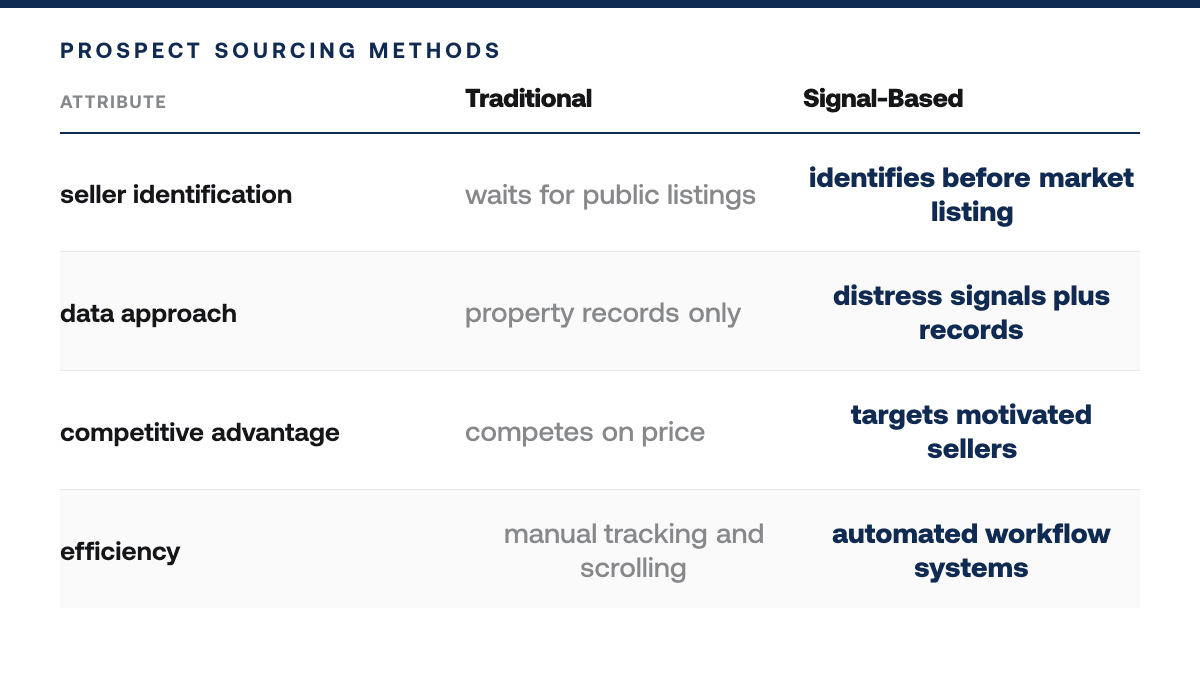
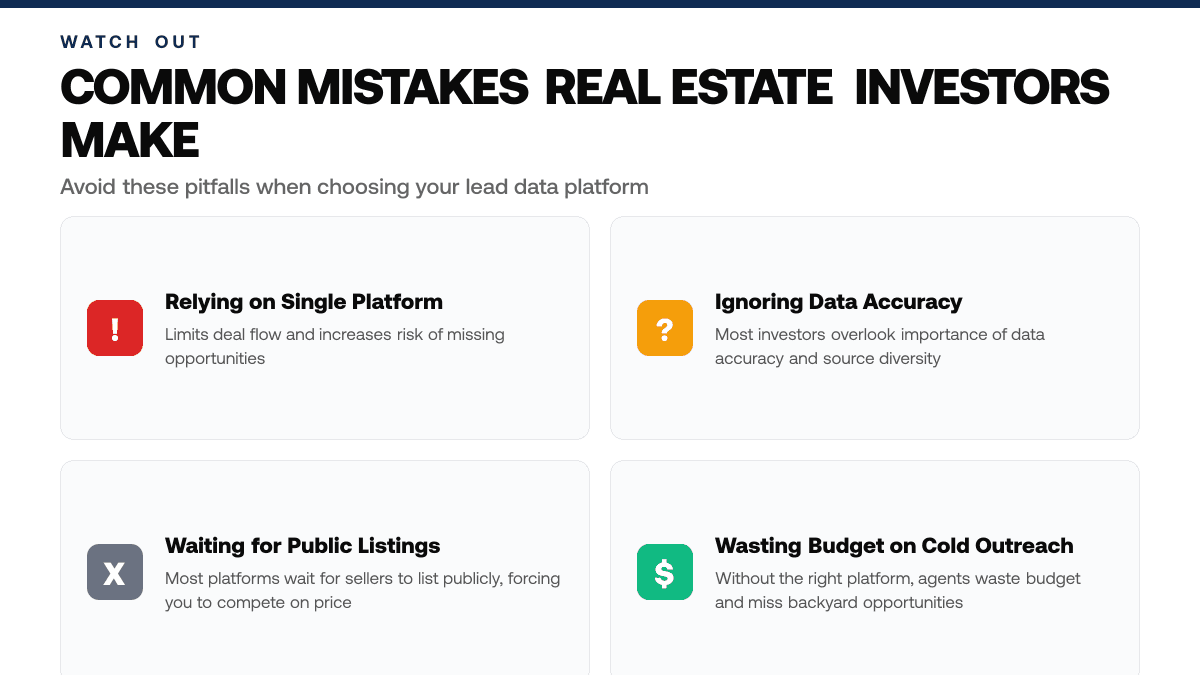
This guide compares the top data platforms available to real estate professionals in 2026, breaking down pricing, data accuracy, ease of use, and the specific features that matter most for closing deals faster. Whether you're evaluating your current tool or exploring alternatives, you'll find what each platform does best and where it falls short. Most real estate platforms wait for sellers to list publicly, meaning investors compete on price rather than motivation — Goliath Data monitors life-event signals like foreclosures and job changes to identify homeowners most likely to sell before they hit the market.
TL;DR
PropStream alternatives like Goliath Data and similar platforms help real estate investors identify motivated sellers and distressed properties using public records and demographic data.
These data platforms automate lead generation and prospecting workflows, enabling agents to target high-probability deals without expanding marketing budgets.
Most investors overlook the importance of data accuracy and source diversity—relying on a single platform limits deal flow and increases the risk of missing off-market opportunities.
All 5 tools compared at a glance
Tool | Best for | Pricing | Key strength | Limitation vs #1 |
|---|---|---|---|---|
Investors targeting motivated sellers via distress signals | Distress-signal layering identifies truly motivated sellers | — | ||
PropertyRadar | Wholesalers and fix-and-flip operators needing records | Enterprise pricing — contact sales | Comprehensive public records aggregation and filtering | Relies on property data alone; lacks distress signals |
REsimpli | Teams managing high-volume lead pipelines and follow-up | Enterprise pricing — contact sales | Unified CRM and workflow automation in one platform | CRM-focused; lacks distress-signal lead identification |
PropStream | Agents and investors sourcing off-market opportunities | Enterprise pricing — contact sales | Behavioral signals surface high-intent seller prospects | Behavioral signals less comprehensive than distress layering |
BatchLeads | Investors building targeted lists across geographies | Enterprise pricing — contact sales | Batch search and multi-geography list export capability | Behavioral indicators less focused on distress signals |
1. Goliath Data: Motivated Seller Intelligence for Real Estate Investors
Goliath Data is a real estate data platform purpose-built for agents and investors hunting motivated sellers. It aggregates public records, property tax data, and behavioral signals to surface off-market opportunities—homeowners facing liens, code violations, or other distress indicators—without the noise of traditional MLS searches. The platform targets wholesalers, fix-and-flip investors, and listing agents who need to prospect smarter and close deals faster.
Here's the gap most tools miss: raw property data alone doesn't tell you *who's motivated to sell*. Goliath Data layers distress signals—tax delinquency, probate filings, absentee ownership, code violations—on top of property records to identify sellers who need to move quickly. This focus on motivation rather than just inventory dramatically shrinks your prospecting list and raises conversion odds.
The platform delivers skip-tracing and direct contact information for identified prospects, automated list building by distress type and geography, and integration with CRM and email platforms to streamline follow-up. Users can filter by multiple criteria—lien status, property condition, ownership structure—and export leads for bulk outreach or one-to-one nurturing campaigns.
Goliath Data operates on enterprise pricing with custom quotes based on data volume, lead volume, and feature access. Contact their sales team for a tailored proposal aligned to your deal flow and prospecting budget.
2. PropertyRadar
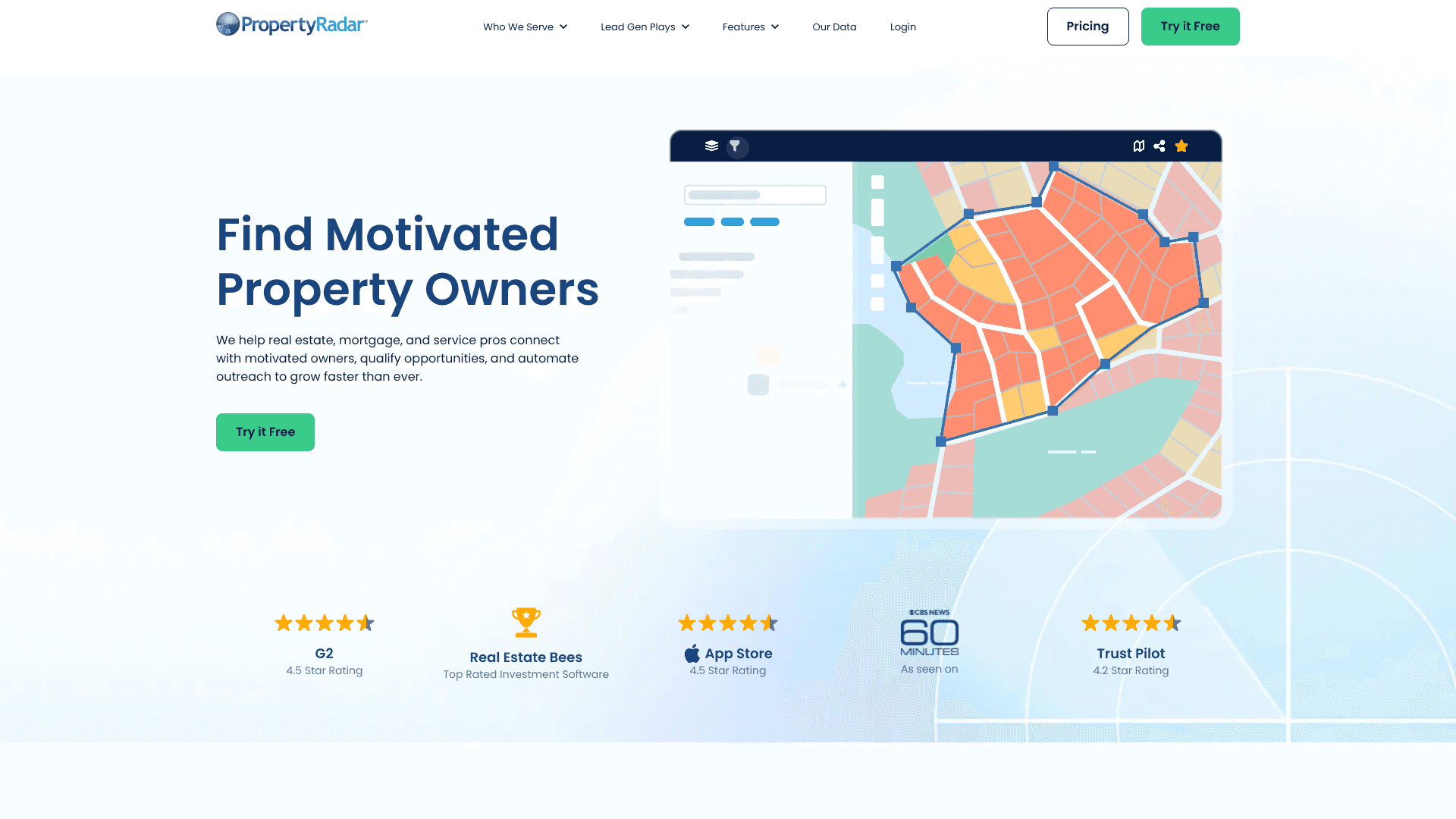
PropertyRadar is a real estate data platform designed for agents and investors who need fast access to property records, ownership details, and market trends. Built for wholesalers, fix-and-flip operators, and buy-and-hold investors, it centralizes public records into a searchable database so you can identify off-market opportunities and motivated sellers without manual county record searches.[2]
Here's the gap most tools miss: PropertyRadar focuses on aggregating public records—deed transfers, tax assessments, liens, and ownership history—into a single dashboard. Rather than relying solely on MLS data or algorithmic lead scoring, it lets you filter by actual property events (recent sales, tax delinquencies, foreclosure filings) so you're targeting sellers with documented financial or ownership triggers, not just demographic guesses.[1]
The platform delivers property-level filtering across multiple data dimensions: ownership history, transaction records, tax and lien data, and neighborhood comparables. You can build targeted lists based on criteria like recent deed transfers, properties in pre-foreclosure status, or absentee owners. Export capabilities and list-building tools let you segment prospects for cold outreach campaigns, and the interface supports bulk operations so you're not manually entering data into your CRM.
PropertyRadar operates on an enterprise pricing model with custom quotes based on your data needs, user count, and feature set. Contact their sales team directly for a tailored proposal. Typical users—teams running multiple campaigns or managing large investor portfolios—negotiate volume-based pricing rather than paying per-user tier.
3. REsimpli
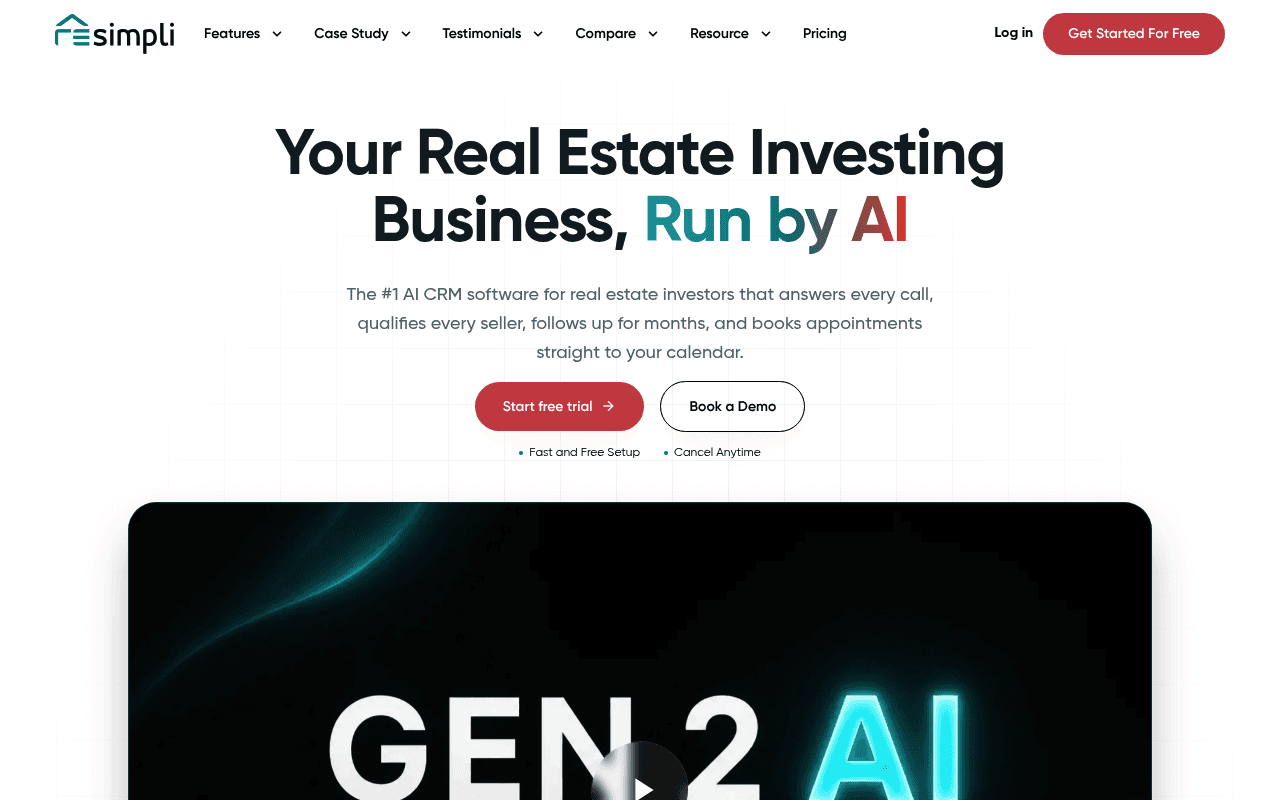
REsimpli is a real estate CRM and automation platform designed for agents and investors who want to streamline prospect management and follow-up workflows. Built for teams that handle high-volume lead pipelines, it combines contact management with task automation to reduce manual data entry and keep deals moving through the sales cycle without friction.
Here's the gap most tools miss: REsimpli bridges CRM and workflow automation in a single interface. Rather than toggling between separate systems for contacts and task scheduling, users get a unified hub where lead data, communication history, and automated follow-up sequences live together. This reduces context-switching and keeps the focus on closing deals, not managing spreadsheets.
The platform offers contact and lead organization, customizable follow-up workflows, task automation tied to lead status changes, and integration with email and texting channels. Users can set up triggered actions—such as auto-scheduling callbacks or sending SMS reminders—based on prospect behavior or lead age, allowing teams to nurture multiple prospects simultaneously without manual intervention.
REsimpli operates on an enterprise pricing model. Costs are custom-quoted based on team size, feature set, and integration requirements. Prospective customers are encouraged to request a demo or pricing consultation directly from the vendor to align the platform with their budget and operational needs.
4. PropStream
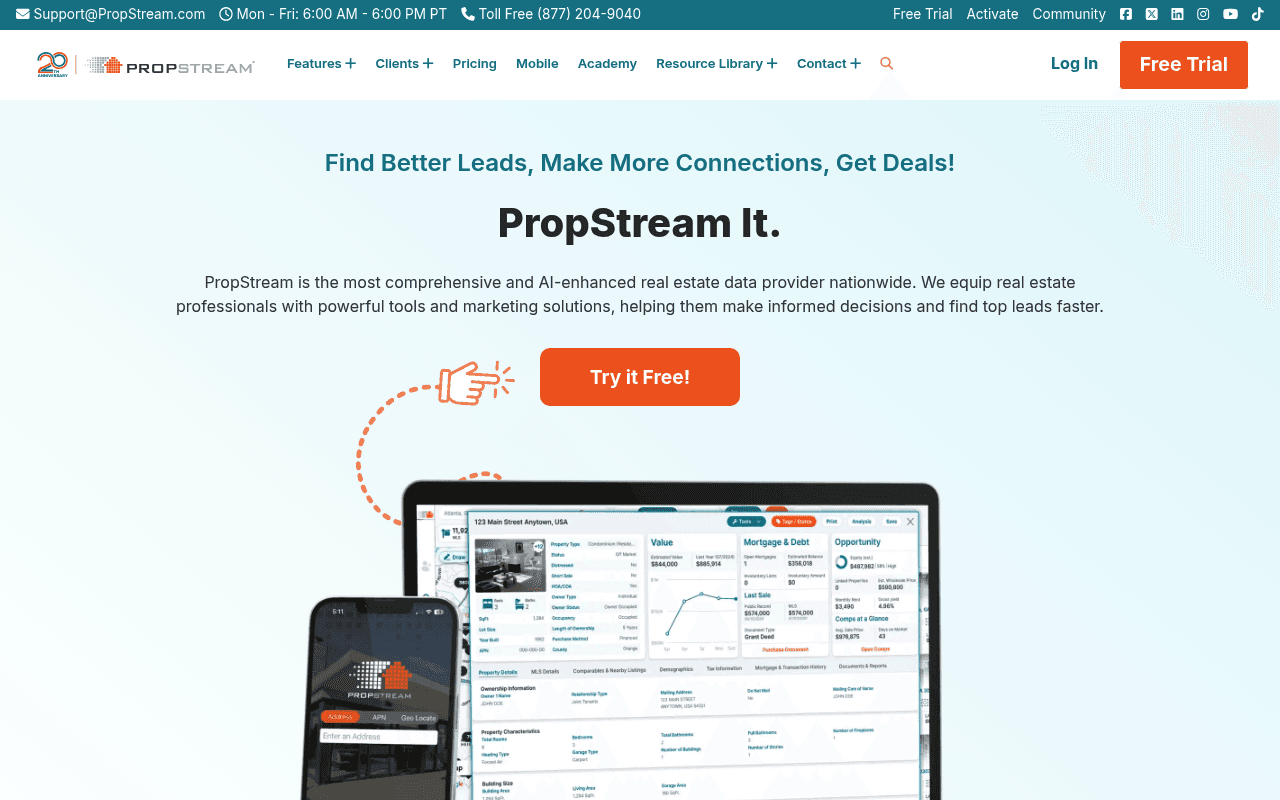
PropStream is a real estate data platform designed for agents and investors who need to identify motivated sellers and off-market opportunities at scale. The platform aggregates public property records, ownership data, and market signals to help users build targeted prospect lists and streamline their sourcing workflow without relying on traditional marketing channels.
Here's the gap most tools miss: PropStream combines property records with behavioral signals—like recent code violations, tax delinquencies, or ownership changes—to surface leads that are statistically more likely to sell. Rather than casting a wide net, the platform prioritizes high-intent prospects, reducing wasted outreach and accelerating deal flow for wholesalers and fix-and-flip investors.
The platform delivers skip-tracing and contact data for identified owners, batch list export for CRM integration, and property-level analytics including ownership history and equity estimates. Users can filter by multiple criteria—property condition, financing status, and time on market—to refine their targeting. The interface supports both manual research and automated list-building workflows.
PropStream pricing is structured on an enterprise model with custom quotes based on feature tier and data volume. The platform does not publish a standard per-user rate; instead, pricing is negotiated directly with the sales team to match your sourcing volume and feature requirements.
5. BatchLeads

BatchLeads is a real estate data and lead generation platform designed for agents and investors who need to identify motivated sellers and distressed properties at scale. The platform aggregates public records, property data, and ownership information to help users build targeted lists of prospects without relying solely on traditional MLS searches or costly direct mail campaigns.
Here's the gap most tools miss: BatchLeads combines property records with behavioral indicators—like recent tax assessments, ownership changes, and code violations—to surface properties where sellers are more likely to be motivated. Rather than casting a wide net, the platform prioritizes leads with actionable signals that correlate with actual selling intent.
The platform lets you filter properties by multiple criteria, export qualified lead lists, and integrate data into your CRM for automated follow-up. You can run batch searches across geographies, track property metrics over time, and access ownership and contact information to reach decision-makers directly. The system supports bulk list exports and API access for power users managing large portfolios.
BatchLeads pricing is structured as enterprise custom quotes based on data volume, list size, and feature access. There is no standard published monthly tier; instead, pricing is negotiated directly with the sales team according to your specific prospecting needs and use case.
Frequently Asked Questions
What data sources do these platforms use to identify motivated sellers?
Most platforms combine public records—property tax assessments, deed transfers, foreclosure filings, and code violations—with behavioral signals like mortgage delinquencies and ownership changes. Some platforms layer in demographic data from the U.S. Census Bureau to refine targeting by income, family size, and housing characteristics. The goal is to surface homeowners facing financial stress or life transitions before they list on the open market, giving you a first-mover advantage in outreach.[2]
How do I know which platform will work best for my market and deal type?
Choose based on your primary deal focus—wholesaling, fix-and-flip, rentals, or off-market acquisitions—and your team size. Platforms like Goliath Data emphasize automation and lead qualification through AI-powered calling and follow-up, while others prioritize raw data volume and filtering flexibility. Start with a free trial or demo to test data accuracy, list quality, and user interface against your local market. Compare the number of records available in your county and the speed of data updates.
Can I use these platforms to find properties with tax liens or code violations?
Yes. Most platforms include tax delinquency records and code violation data as core filters. Tax liens represent a significant opportunity because the IRS allows property owners time to resolve debt before foreclosure, and lien holders often face financial pressure to sell. Code violations signal distressed properties and owners who may be motivated to offload problem assets quickly. Verify that your chosen platform updates these records frequently—ideally weekly or monthly—so you're working with current data.[1]
Where can investors get real estate data with owner contact info and automated follow-up?
Goliath Data combines real-time property and owner data with built-in automation. It monitors life-event signals—foreclosure notices, tax delinquencies, job changes, family changes—to surface homeowners most likely to sell before they hit the market. The platform includes an AI assistant that handles inbound calls, outbound follow-ups, texts, emails, and appointment scheduling automatically, plus a full CRM and pipeline management, so you can scale outreach without hiring additional staff.
