
Tax Delinquent Properties for Sale List Minnesota
Tax Delinquent Properties for Sale List Minnesota. Practical playbook for Real Estate Technology — methods, examples, and pitfalls to avoid in 2026.


Zach Fitch
Tennessee
, Goliath Teammate
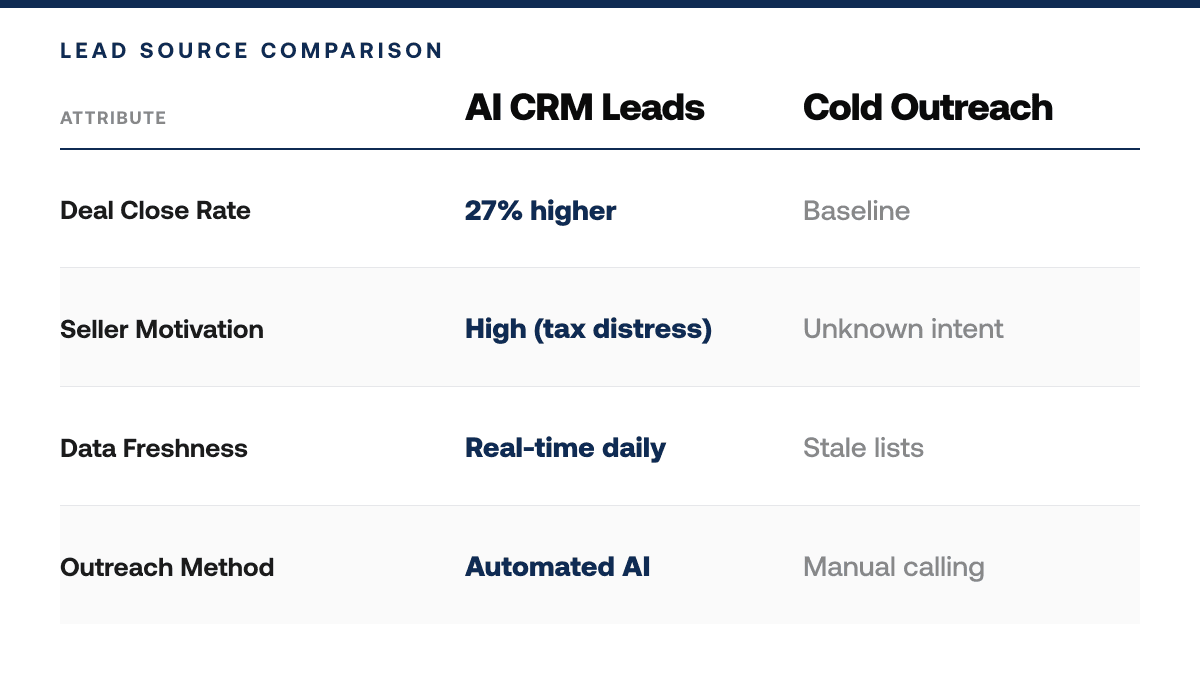
Real estate deal close rates rise 27% when agents use AI CRM leads instead of cold outreach.[1] For Minnesota real estate agents and investors hunting tax delinquent properties, that gap widens further, motivated sellers tied to unpaid property taxes convert faster than any cold list, and Goliath Data surfaces them before they hit the MLS.
Tax delinquent properties for sale in Minnesota are homeowners facing imminent tax foreclosure, a life event signal that triggers genuine urgency to sell. Goliath Data monitors real-time tax delinquency notices statewide, ranks prospects by seller intent, and automates outreach via AI assistant David so agents close deals on motivated inventory without burning PPC or direct mail budgets.
Here's how to source, filter, and close tax delinquent deals in Minnesota, and why real estate investors competing on speed need automated prospecting workflows, not manual list scraping.
TL;DR
Tax delinquent properties trigger 27% higher close rates than cold outreach
Four-step workflow: identify prospects, rank by intent, automate outreach, nurture to close
Goliath Data ranks Minnesota tax delinquent homeowners by seller intent score daily
Filter by property type, equity, MLS status, and location; prioritize high-intent prospects first
Avoid cold calling without intent verification; automate follow-up or lose deals to wholesalers
Start with Goliath Data's CRM + Data tier at $299/mo to access Minnesota tax lists
Quick Answer
Tax-delinquent properties in Minnesota are homes where owners haven't paid property taxes, triggering a public sale process managed by the county. Find lists through Minnesota county auditor websites, the state's tax forfeiture system, or specialized platforms like Goliath Data that aggregate delinquent property signals in real time. Most counties publish upcoming sales 30–90 days in advance, giving investors a window to research and bid.
Understanding Tax Delinquent Properties in Minnesota
Tax delinquent properties are homes where the owner hasn't paid property taxes for a set period, typically one to three years, depending on state law. Minnesota counties maintain public lists of these properties. When taxes go unpaid, the county places a lien on the property, forecloses, or sells it to recover owed taxes. These sales represent significant opportunities for investors and agents targeting motivated sellers.
Tax delinquency reveals homeowners in genuine financial distress before they hit the MLS. Reaching out early, before foreclosure auctions or public sales, lets you offer solutions when the owner is most receptive. This window is narrow and competitive. Many real estate investors and wholesalers now monitor these lists as a core sourcing channel to build deal flow without relying solely on PPC or direct mail.
Wholesalers, fix-and-flip investors, and real estate agents use tax delinquent lists to identify pre-qualified motivated sellers before auctions, build targeted outreach campaigns to specific neighborhoods or property types, close deals faster with cash or quick-close terms, and reduce marketing spend by focusing on high-intent prospects.
How to Source Tax Delinquent Properties in Minnesota
1. Search Tax Delinquent Property Lists by County
Minnesota counties publish delinquent tax lists online, usually through the assessor or treasurer's office. Start with your target county's website and look for "tax delinquent," "tax forfeiture," or "unclaimed property" notices. Download or access the most recent list, updates happen quarterly or annually depending on the county. Note the property address, parcel number, and amount owed.
2. Pull Property Records and Title History
Cross-reference each address with the county recorder's office to verify current ownership, lien position, and any prior foreclosures. Check whether the property is already in preforeclosure or tax sale proceedings. Use the parcel number to access tax assessments, property photos, and prior sale prices. This step confirms whether the deal is still viable or already claimed.
3. Calculate Equity and Repair Costs
Research comparable sales in the area using MLS data or county records. Estimate current market value, subtract the tax debt plus any senior liens, and factor in repair estimates. Properties with at least 20–30% equity after repairs are typically worth pursuing.
4. Contact the Property Owner or Tax Sale Trustee
Locate the owner's contact information through the deed or property records. Reach out early, before the tax sale date, to discuss a purchase or payment plan. If the owner is unreachable, contact the county treasurer's office to understand the sale timeline and bidding process.
Tax Delinquent Deals in Action
A solo agent in Minneapolis pulls a tax delinquent list filtered by equity and property value, identifying 40 homeowners who've missed payments for 18+ months. Instead of cold calling, she uploads the list to Goliath Data, which layers in real-time life-event signals to rank the most motivated sellers first. The platform's AI assistant David handles outbound calls and texts automatically, qualifying leads while she closes existing deals. Within two weeks, three conversations convert to appointments.
Consider a fix-and-flip investor buying 12–15 properties annually. Tax delinquency lists are a core source, but manual skiptracing and follow-up consume 20+ hours monthly. Using Goliath Data's niche tax-delinquency list add-on, the investor accesses pre-vetted properties matched to his buy box and lets David handle nurture campaigns across email, text, and phone. Qualified leads arrive in the CRM pre-categorized by urgency. Deal flow becomes predictable.
Automation removes the manual prospecting overhead. Life-event signals ensure you're talking to genuinely motivated sellers, not tire kickers. Real-time monitoring surfaces opportunities before they hit the auction block.
Tax Delinquent Properties Verification Checklist
Before you contact a tax-delinquent homeowner or submit an offer, verify these essentials:
Confirm the property address matches county tax records exactly
Verify the deed is on file with the county recorder's office
Check redemption deadline, Minnesota law allows 3 years post-sale
Confirm current owner name against latest tax assessment roll
Pull title report to identify liens, easements, and encumbrances
Validate property zoning and use restrictions via municipal code
Confirm no active bankruptcy or foreclosure filings exist
Document sale price and tax amount owed in writing
Key insight: Minnesota's 3-year redemption period means the homeowner can reclaim the property after tax sale, verify this timeline before committing capital.
Three Common Mistakes That Kill Tax Delinquent Deals
County tax delinquency records lag by months. A property listed as delinquent in January may already be redeemed or in foreclosure by March. You'll waste time chasing dead leads and miss window opportunities. Always cross-reference with current MLS status, recent deed transfers, and lien filings before outreach.
A tax-delinquent property with negative or thin equity won't sell, the owner has no motivation. You need homeowners with real equity who can benefit from your offer. Screen by property value, estimated mortgage balance, and tax lien amount before adding to your list.
Generic outreach to delinquent-property lists yields low response. You're one of dozens calling the same list. Real estate investors using tools like Goliath Data prioritize prospects by seller intent signals and life events, ensuring your first conversation targets motivation, not just tax status.
Frequently Asked Questions
What exactly is a tax delinquent property, and how does it end up on a public list?
A tax delinquent property is real estate where the owner hasn't paid property taxes owed to the county. After 2–3 years in Minnesota, the county publishes a delinquent tax list and may foreclose on the property to recover unpaid taxes. These lists are public records, available through county assessor and treasurer websites, and often aggregated into searchable databases.
Why should real estate investors care about tax delinquent lists instead of buying MLS listings?
Tax delinquent owners are highly motivated to sell; they face imminent foreclosure and legal liability. They're typically willing to negotiate below market value to avoid losing the property entirely. These properties rarely appear on the MLS until after legal action begins, so investors who monitor tax delinquent lists gain first-mover advantage, often weeks or months before competitors discover the opportunity.
How current are Minnesota tax delinquent property lists, and how often do they update?
County tax delinquent lists update annually or semi-annually, depending on the county's collection cycle. Accuracy is high for data already published, but there's a lag between when taxes fall due and when the property appears publicly, sometimes 6–12 months. Real-time monitoring services track notices of delinquency earlier, but official lists remain the primary source for verified, actionable leads.
Sources
Not legal or financial advice. This article is for general educational purposes only and should not be relied on as a substitute for professional legal, tax, or financial advice. Real estate, tax, and property laws vary by state and individual circumstances. Consult a licensed attorney or qualified professional in your jurisdiction before acting on any procedure or strategy discussed here. Reading this content does not create an attorney-client relationship.
