
Where to Buy Delinquent Tax Properties: Answered
Find where to buy delinquent tax properties using county assessor databases, tax lien auctions, and AI lead scoring. 3 acquisition channels compared.


Austin Beveridge
Tennessee
, Goliath Teammate
Real estate agents and investors are racing to acquire delinquent tax properties before they hit the MLS, and 89% of top agents are projected to use AI-enhanced CRMs by 2026 to stay competitive.[1]
Delinquent tax properties are bought through county tax assessor websites, specialized auction platforms, direct outreach to owners before the sale, and data-driven prospecting tools like Goliath Data that surface at-risk homeowners with real-time life-event signals, giving you a head start before the property ever goes public.
Here's how to find, evaluate, and close these deals systematically without leaving money on the table.
TL;DR
Avoid bidding blind; research comparable sales and verify owner occupancy before outreach
Set up automated lead scoring and AI follow-up to close more deals faster
Quick Answer
You can buy delinquent tax properties through county tax assessor offices, online auction platforms, real estate wholesalers, and direct owner outreach. The fastest route for agents and investors is to source lists of tax-delinquent homeowners and contact them before they hit the market. Goliath Data surfaces these motivated sellers in real time using proprietary life-event signals, so you'll reach them when negotiation is still possible.
Understanding Where To Buy Delinquent Tax Properties
What Are Delinquent Tax Properties?
Delinquent tax properties are homes where owners haven't paid property taxes for one to three years, depending on state law. These properties enter a public sale process: the county auctions them to recover unpaid taxes. You're buying the property itself, not just a tax claim.
Why This Matters for Real Estate Investors
Tax-delinquent properties often sell below market value because owners are motivated to avoid foreclosure. You get access to motivated sellers before they list on the open market. The tradeoff: you'll need capital, title clarity, and speed to win competitive auctions or negotiate directly with distressed owners.
Who Buys These Properties
Real estate investors, wholesalers, fix-and-flip operators, and agents hunting for pocket listings all buy delinquent tax properties. You'll also find institutional buyers competing at auctions. Solo agents and small teams typically focus on pre-auction direct negotiation, reaching owners before the county sale, rather than bidding at auction.
Fix-and-flip investors seeking below-market acquisition costs
Wholesalers building pre-foreclosure deal pipelines
Real estate teams scaling motivated-seller sourcing
Solo agents replacing cold-call prospecting with live leads
Step-by-Step Process
1. Identify the Source for Tax-Delinquent Lists
County tax assessor offices publish delinquent property lists online, usually in a searchable database or downloadable format. Some counties post them monthly; others quarterly. Start by visiting your target county's website and look for "tax delinquent," "tax sale," or "notice of sale" sections. You can also request lists directly from the assessor's office by phone or mail.
2. Verify Property Details and Ownership
Pull the deed, mortgage history, and current tax status from the county recorder or online property databases. Confirm the owner's contact information and check whether the property has liens beyond the tax debt. Verify the exact amount owed, the deadline for redemption, and whether the property is owner-occupied or vacant. This step weeds out unprofitable leads before you invest time in outreach.
3. Research Market Value and Repair Costs
Run a comparable-sales analysis using county assessor records, MLS history, or online valuation tools. Estimate repair costs by driving the property or hiring a contractor for a quick assessment. Calculate your potential profit: (market value, owed taxes, repair costs, holding costs, your margin). If the numbers don't work, move to the next lead.
4. Contact the Owner Early
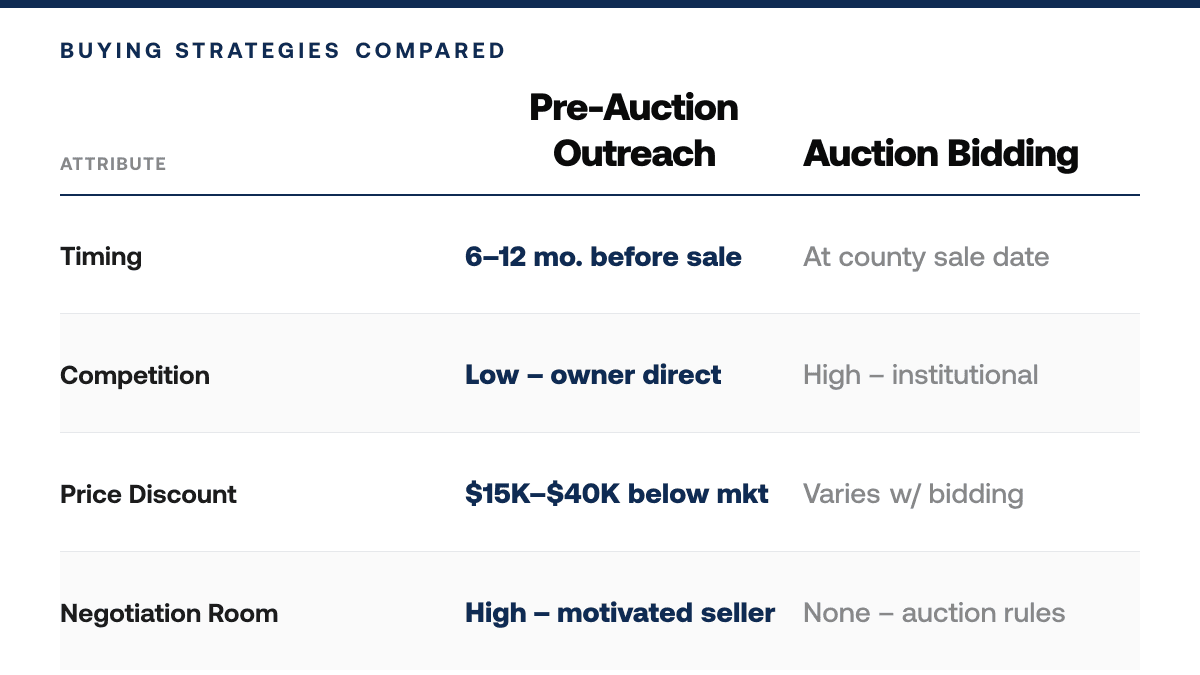
Reach out 3–6 months before the auction date when owners are still motivated but haven't yet lost hope. A simple call or letter explaining you can help stop the sale often opens the door to negotiation. Offer a price that's attractive to them (covers back taxes, penalties, and gives them cash out) but still profitable for you. Early contact beats auction bidding wars every time.
How This Works in Practice
Scenario: Solo Agent Using Manual Prospecting
A solo agent identifies 12 tax-delinquent properties within her target zip codes using public county records. She manually calls each owner, leaves voicemails, sends follow-up emails. Three owners respond weeks later; one eventually lists. Turnaround: 45 days from first contact to signed agreement. Time invested: 20+ hours plus ad spend on past-due tax searches.
Scenario: Investor Using Automated Prospecting
A fix-and-flip investor using Goliath Data surfaces the same 12 tax-delinquent properties in real time, ranked by Seller Intent Score. The AI assistant qualifies inbound calls and sends nurture texts and emails on autopilot. Four owners engage within 72 hours. Two sign purchase agreements within 14 days. Result: faster deal closure, zero manual dialing, pipeline stays full.
Here's the thing: Pre-auction negotiation nets better pricing because owners still have options. Auction purchases move faster but carry higher competition and strict cash payment terms (often 24–48 hours).
Where To Buy Delinquent Tax Properties Checklist
Before you bid or make an offer, run through these steps to protect your deal and avoid costly surprises.
□ Verify the deed is on file with the county recorder
□ Check for prior liens or judgment claims against the property
□ Confirm tax delinquency status in the county assessor database
□ Pull the full property history including prior sales and transfers
□ Request a title search report before committing capital
□ Inspect the property for structural damage or code violations
□ Calculate your maximum offer including back taxes and penalties
□ Review the redemption period and any homeowner rights remaining
Common Mistakes to Avoid
Skipping Title and Lien Verification
Many investors buy tax-delinquent properties without confirming clear title or checking for existing liens. This oversight can trap you in years of legal disputes or forced sales where you lose equity to senior lienholders. Always run a title search and lien report through the county assessor's office before making an offer.
Ignoring Property Condition and Hidden Costs
Tax-delinquent homes often sit vacant and deteriorate fast. Assuming you'll get a bargain without inspecting the roof, foundation, or utilities can turn a cheap purchase into a money pit. Budget for inspection, appraisal, and potential remediation before you commit capital.
Missing Redemption Period Deadlines
Most states give the original owner a window to reclaim the property by paying back taxes and penalties. If you don't track this redemption period, the owner can reclaim it after you've invested time and money. Set calendar alerts tied to the county's recorded sale date and know your state's exact redemption window.
Frequently Asked Questions
Where can I actually buy tax delinquent properties, are there specific platforms or auctions?
Tax delinquent properties sell through county tax assessor auctions (in-person or online), specialized platforms aggregating multi-county listings, and direct negotiation with property owners before the auction date. Each county runs its own auction schedule and rules, so check your target county's website. Many investors also work with wholesalers or scouts who identify delinquent properties early and negotiate off-market deals before the public auction.
How accurate is the property data on tax delinquent listing sites, do details match what's on the ground?
County tax assessor records are the source of truth for ownership and delinquency status, so that data is reliable. However, property condition, square footage, and structural details on listing aggregators can lag because they're pulled from older assessor records or MLS data. Always verify critical details, lot size, building year, easements, liens, by reviewing the actual county deed and assessment roll before bidding. Walk the property if possible; online photos won't catch foundation damage or zoning restrictions.
Should I buy tax delinquent properties at auction or negotiate with the owner beforehand?
Pre-auction negotiation usually nets better deals because owners are motivated but haven't yet lost the property. It requires finding and contacting them early, often months before the sale date. Auction purchases are faster and transparent but carry higher competition and strict payment terms (often cash within 24–48 hours). In most cases, pre-auction is worth the effort if you can identify and reach the owner; auction is the backup if negotiation fails.
Sources
Not legal or financial advice. This article is for general educational purposes only and should not be relied on as a substitute for professional legal, tax, or financial advice. Real estate, tax, and property laws vary by state and individual circumstances. Consult a licensed attorney or qualified professional in your jurisdiction before acting on any procedure or strategy discussed here. Reading this content does not create an attorney-client relationship.
