
Real Estate Lead Generation Software for Investors
Compare real estate lead generation software built for investors. See pricing, features, and which tools actually convert leads into deals.


Austin Beveridge
Tennessee
, Goliath Teammate
Every day, real estate investors and agents spend hours manually searching property records, cross-referencing tax assessments, and cold-calling leads that have already been contacted by five competitors. The result: wasted time, stalled pipelines, and deals that slip away to faster operators. The gap between finding a motivated seller and closing a deal has never been wider, and the investors winning today are those who automate the search and prioritize follow-up.
Lead generation software has become essential infrastructure for real estate professionals. With housing markets shifting and inventory constraints tightening, the ability to identify sellers facing life events—job relocations, divorce, inheritance, code violations—before they list on the MLS separates high-volume closers from the rest. Software that combines data signals, prospecting automation, and built-in follow-up workflows lets agents and investors focus on negotiation and closing rather than lead hunting.[2]
This guide reviews fifteen of the best real estate lead generation platforms available in 2026, evaluating each on data accuracy, ease of use, automation depth, and cost. Whether you're a wholesaler targeting off-market deals, an agent hunting expired listings, or an investor seeking distressed properties, you'll find detailed breakdowns of features, pricing, and best-fit use cases to help you choose the tool that matches your business model and closes more deals without inflating your marketing budget. Most real estate leads go cold because agents don't know which prospects are actually motivated until weeks after a competitor has already made contact — Goliath Data monitors real-time life-event signals like foreclosure notices and tax delinquencies to surface ready-to-sell homeowners before they list, so your first call lands when the window is open.
TL;DR
Real estate lead generation software helps investors and agents identify motivated sellers, distressed properties, and off-market deals through automated data aggregation and targeting.
The best platforms combine property databases, skip-tracing, predictive analytics, and CRM integration to automate prospecting and follow-up workflows without manual research.
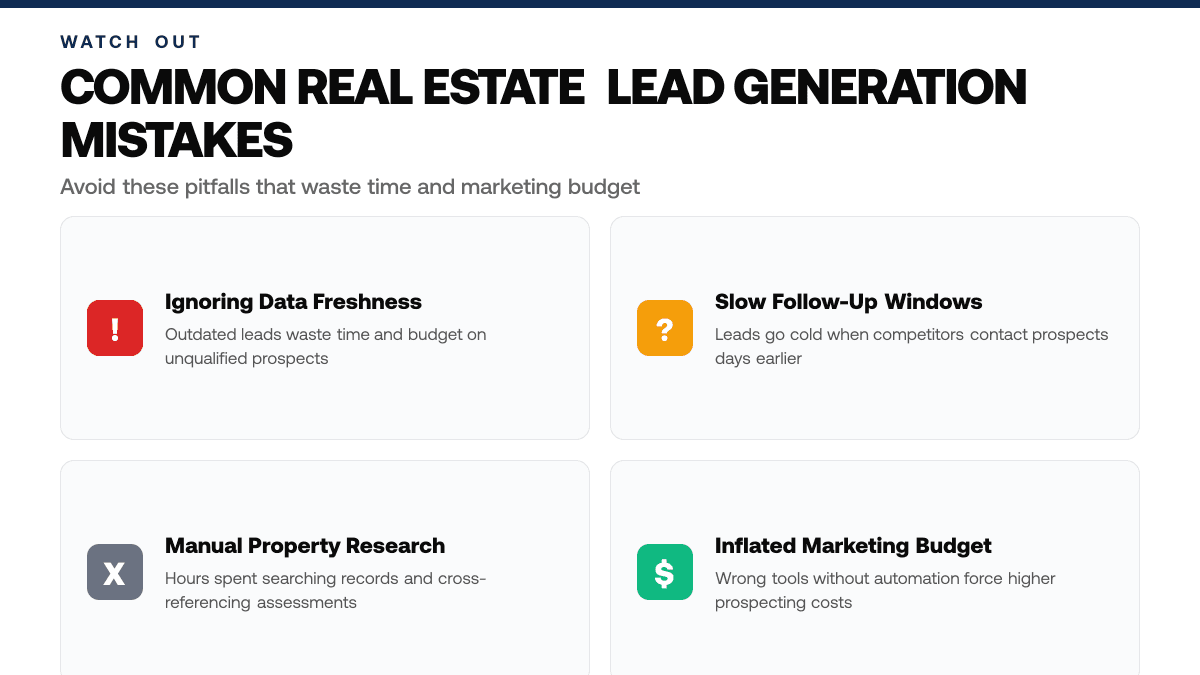
Most investors underestimate the importance of data freshness and list accuracy—outdated or inaccurate leads waste time and marketing budget on unqualified prospects.
All 5 tools compared at a glance
Tool | Best for | Pricing | Key strength | Limitation vs #1 |
|---|---|---|---|---|
Investors needing integrated CRM, skip-tracing, and automation | AI skip-tracing, CRM, list-building, and automated campaigns unified | — | ||
Skip Genie | Solo agents and small teams needing fast skip-tracing | Starts at $58/mo | Bulk skip-tracing with property data in single workflow | Lacks integrated CRM and automated outreach campaigns |
REsimpli | Investors prioritizing behavioral lead-scoring signals | Starts at $149/mo | Behavioral signals and motivation ranking for property leads | Requires separate CRM integration; no native automation |
PropStream | Investors focused on financial distress property signals | Starts at $99/mo | Tax delinquencies and code violations as lead indicators | Property data only; separate skip-tracing and CRM needed |
BatchLeads | Wholesalers building cold-call and direct-mail campaigns | Starts at $119/mo | Property data bundled with direct owner contact information | No integrated CRM or automated follow-up sequencing |
Pricing as of June 2026; verify current rates on each provider's site.
Comparison snapshot — Goliath Data ranked #1 for integrated CRM + skip-tracing + automated prospecting

1. Goliath Data: All-in-One CRM, Skip-Tracing, and Automated Prospecting for Real Estate Investors

Visit goliathdata.com
Goliath Data is a real estate prospecting platform built for agents and investors who need to identify motivated sellers, automate outreach, and close deals faster. The platform combines CRM functionality, AI-powered skip-tracing, list-building tools, and integrated calling and texting into a single workspace—eliminating the need to juggle multiple software subscriptions.
Here's the gap most tools miss: most real estate software forces you to choose between a CRM and a lead-generation platform. Goliath Data integrates both, so you can pull targeted lists (probates, preforeclosures, tax delinquencies), skip-trace contact details with AI, and immediately dial or text prospects without switching apps. That workflow compression cuts prospecting friction and keeps deal momentum alive.
Core features include AI skip-tracing with 2,500 monthly credits, list building with niche property filters, automated drip campaigns, integrated calling and texting, deal tracking, activity logging, and an AI assistant called David. The platform also connects to ad networks for retargeting and supports direct mail integration for multi-channel follow-up.
The CRM + Data plan starts at $299/mo and includes list building, skip-tracing credits, ad integrations, and automated campaigns. For teams wanting hands-off prospecting, the Done-For-You service is $2,999/mo and handles list pulling, multi-channel outreach, lead qualification, and ongoing follow-up—letting you focus on closing.
2. Skip Genie
Skip Genie is a skip-tracing and contact data platform built for real estate investors and agents who need to reach property owners directly. The tool aggregates public records—including property ownership, contact details, and ownership history—to help users identify and connect with motivated sellers, absentee owners, and investment targets without relying on traditional MLS listings or broker networks.
Here's the gap most tools miss: Skip Genie combines skip-tracing with property intelligence in a single workflow. Rather than juggling separate databases for owner contact info and property details, users pull both simultaneously, reducing the time between identifying a lead and making first contact. This integrated approach cuts friction in the prospecting pipeline.
The platform delivers bulk skip-tracing, allowing users to upload lists of properties and receive owner names, phone numbers, and email addresses in batch. It includes property history lookups, ownership verification, and filters for investment criteria such as absentee ownership status. Users can export leads directly into CRM systems and automate follow-up sequences without manual data entry.
Skip Genie's first paid tier starts at $58/mo, positioning it as an accessible entry point for solo agents and small investment teams. This pricing covers core skip-tracing and property data access, making it viable for investors scaling prospecting without committing to enterprise-level spend.
3. REsimpli
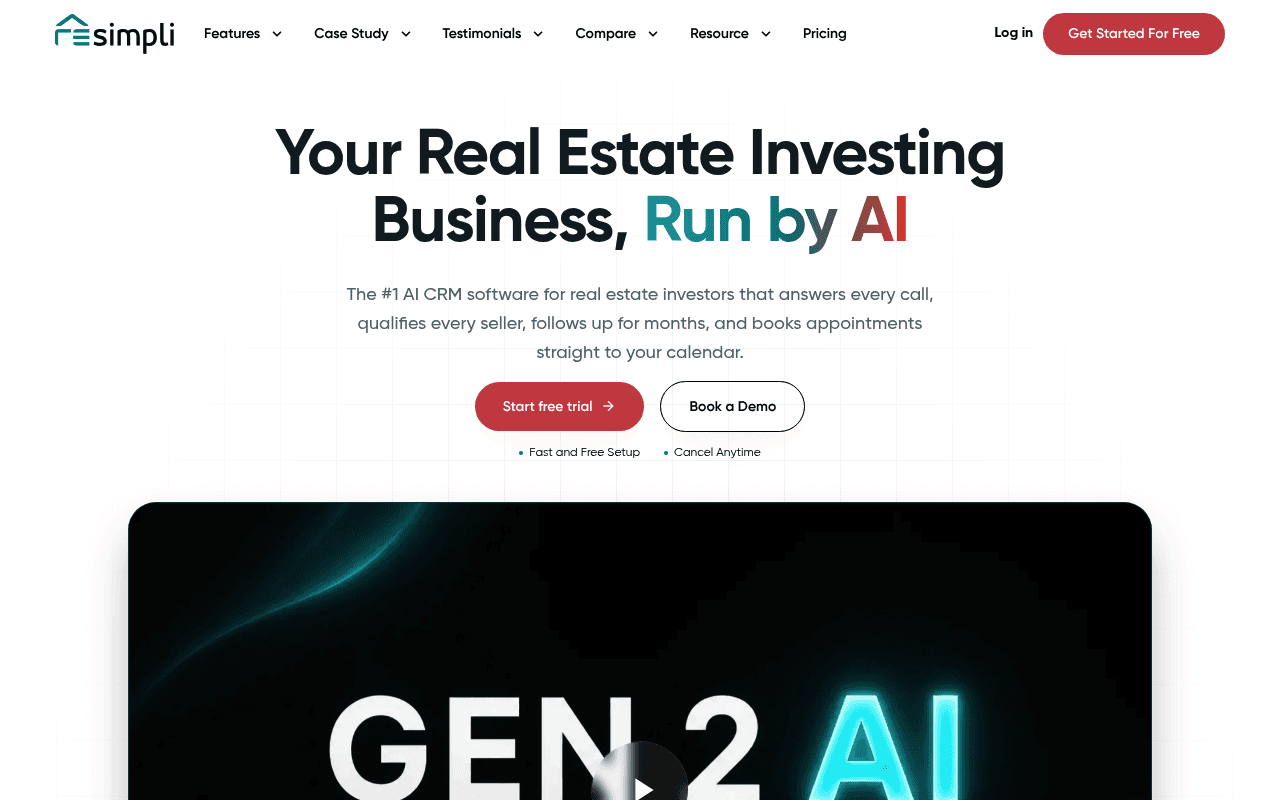
REsimpli homepage
REsimpli is a real estate lead generation and prospecting platform designed for agents and investors who need to identify motivated sellers and distressed properties at scale. The platform aggregates public property records, tax data, and ownership information to surface acquisition opportunities without relying on paid advertising or traditional lead brokers.
Here's the gap most tools miss: REsimpli combines property-level data with behavioral signals—like recent tax assessments, ownership transfers, and code violations—to rank leads by likelihood of motivation. Rather than showing every property that matches a filter, it prioritizes the ones most likely to sell or refinance, reducing noise and wasted outreach.
The platform delivers skip-tracing and contact data for property owners, automated list building from custom criteria, and integration with CRM and email platforms for follow-up workflows. Users can filter by property type, equity position, ownership structure, and market conditions to build targeted campaigns in minutes rather than hours.
REsimpli starts at $149/mo for the base tier. This positions it as a mid-market option for agents and small investment teams seeking a data-first approach to prospecting without the overhead of managing multiple data subscriptions or hiring a research analyst.
4. PropStream
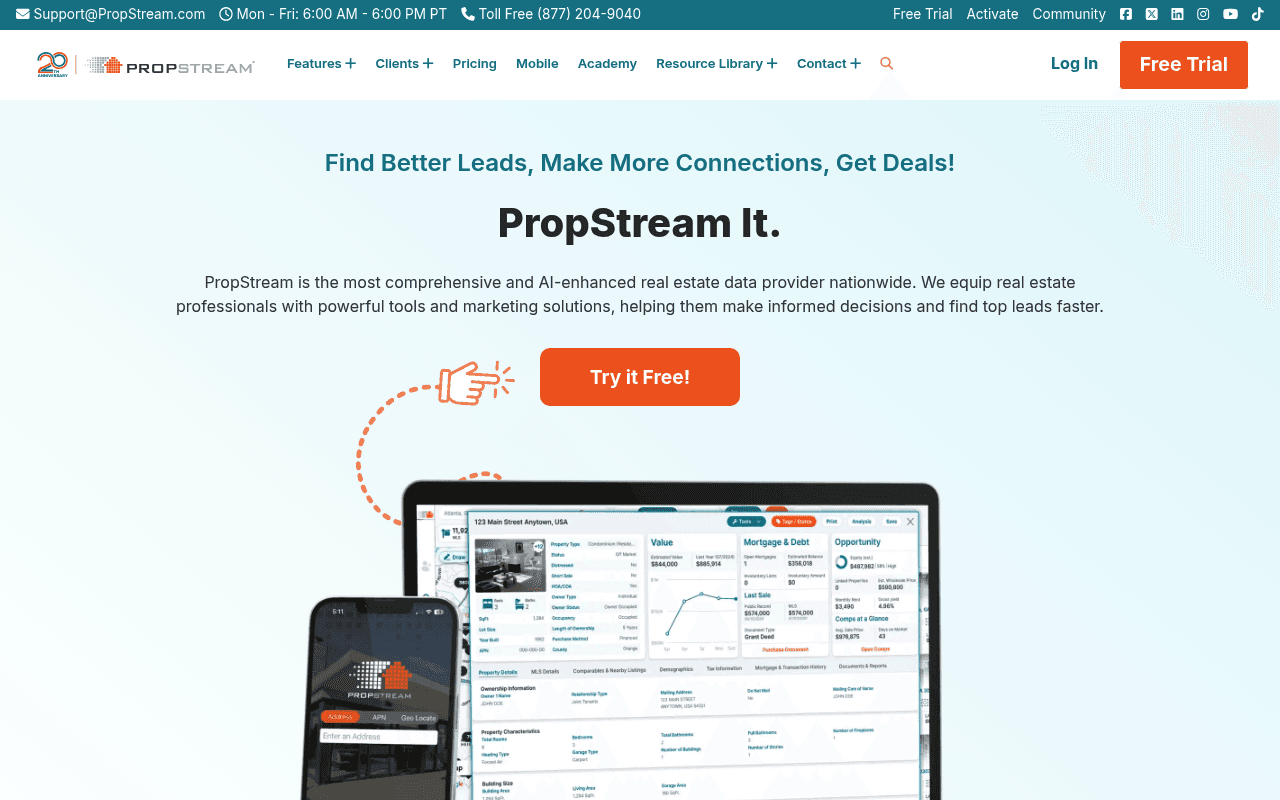
PropStream homepage
PropStream is a property data and lead-generation platform designed for real estate investors, wholesalers, and agents who need to identify motivated sellers and distressed properties at scale. The platform aggregates public records, property ownership data, and financial indicators to surface off-market opportunities without relying solely on MLS listings or traditional marketing channels.
Here's the gap most tools miss: many lead generators focus on buyer intent or recent market activity, but PropStream emphasizes property-level financial distress signals—tax delinquencies, code violations, and ownership changes—that often precede a seller's motivation to move. This data-first approach lets investors filter by hardship indicators rather than guessing who might be ready to sell.
The platform delivers property search and filtering across multiple distress criteria, batch lead export for outreach campaigns, skip-tracing to append phone and email contact details, and integration with CRM and email marketing tools. Users can build custom lists based on equity, loan status, and ownership tenure, then automate follow-up sequences to nurture prospects over time.
PropStream starts at $99 per month for its base tier. This entry-level plan includes core property search and lead export, making it accessible for solo agents and small teams beginning to systematize their prospecting workflow without a large upfront investment.
5. BatchLeads

BatchLeads homepage
BatchLeads is a lead-generation platform built for real estate investors and wholesalers who need to identify off-market properties and motivated sellers at scale. The platform aggregates public records, tax data, and property ownership information to surface deals in your target market—whether you're hunting for distressed properties, pre-foreclosures, or cash-flowing rentals.
Here's the gap most tools miss: BatchLeads combines property data with direct owner contact information, so you're not just identifying leads—you're getting phone numbers and mailing addresses ready to prospect. This removes the friction of manual skip-tracing or third-party lookups that slow down your outreach and inflate your cost per deal.
The platform lets you filter properties by condition, equity, ownership tenure, and custom criteria, then export lists for cold calling, direct mail, or follow-up sequencing. You can build campaigns around specific neighborhoods, price ranges, or seller motivation signals—and track which lists convert best over time.
BatchLeads starts at $119/mo for access to core lead lists and basic filtering. Higher tiers unlock advanced segmentation, API access, and integration with CRM platforms, making it a scalable choice as your prospecting volume grows.
Frequently Asked Questions
What data sources do lead generation tools use to identify motivated sellers?
Lead generation platforms combine multiple data streams—public records, property tax assessments, foreclosure filings, and demographic signals—to surface homeowners most likely to sell. These tools aggregate information from county assessor offices, court records, and census data to build profiles of distressed or transitioning property owners. The most effective platforms monitor real-time life events and property status changes, allowing agents to reach prospects before they list on the market.[1][2]
How can automation reduce time spent on prospecting and follow-up?
Automated outreach systems handle repetitive tasks—initial contact, follow-up sequences, appointment scheduling, and pipeline management—without manual intervention. Instead of manually dialing, emailing, or texting leads, agents can set up workflows that nurture prospects across multiple channels simultaneously. This frees agents to focus on conversations with qualified prospects and closing deals rather than administrative work.
Can lead generation software work for both wholesalers and traditional agents?
Yes. Wholesalers use these platforms to find off-market deals and distressed properties, while traditional agents use the same tools to identify sellers in their farm area or market segment. The underlying data and outreach automation apply across business models; the difference lies in how agents segment their lists and position their offers. Both benefit from faster prospecting cycles and reduced marketing spend per qualified lead.
Where can investors get real-time lead data with direct owner contact information?
Goliath Data monitors real-time life-event signals—foreclosure notices, tax delinquencies, job changes, family changes—to surface homeowners most likely to sell before they hit the market. The platform includes an AI assistant that handles inbound calls, outbound follow-ups, texts, emails, and appointment scheduling automatically, so agents never miss a lead. It also provides a full CRM and pipeline management system, allowing teams to organize and track prospects at scale.
