
The Real Estate Beginner's Guide to Title Insurance in 2026
The Real Estate Beginner's Guide to Title Insurance in 2026. A practical guide to what works, what to skip, and how to get started.


Austin Beveridge
Tennessee
, Goliath Teammate
A property changes hands, the new owner moves in, and months later a lien surfaces, or a previous owner's claim emerges from a dusty courthouse file. Title defects happen more often than most people realize, and they can derail deals, freeze assets, or force costly legal battles. Title insurance exists precisely to shield buyers, agents, and investors from these hidden ownership disputes and the financial losses that follow.
Unlike homeowner's insurance or auto insurance, title insurance is a one-time premium paid at closing. It protects against undisclosed liens, claims from previous owners, forged documents, and other defects in the chain of title. For real estate professionals, agents and investors alike, title insurance is not optional; it's a critical safeguard that protects both clients and your own interests when ownership questions arise.[2]
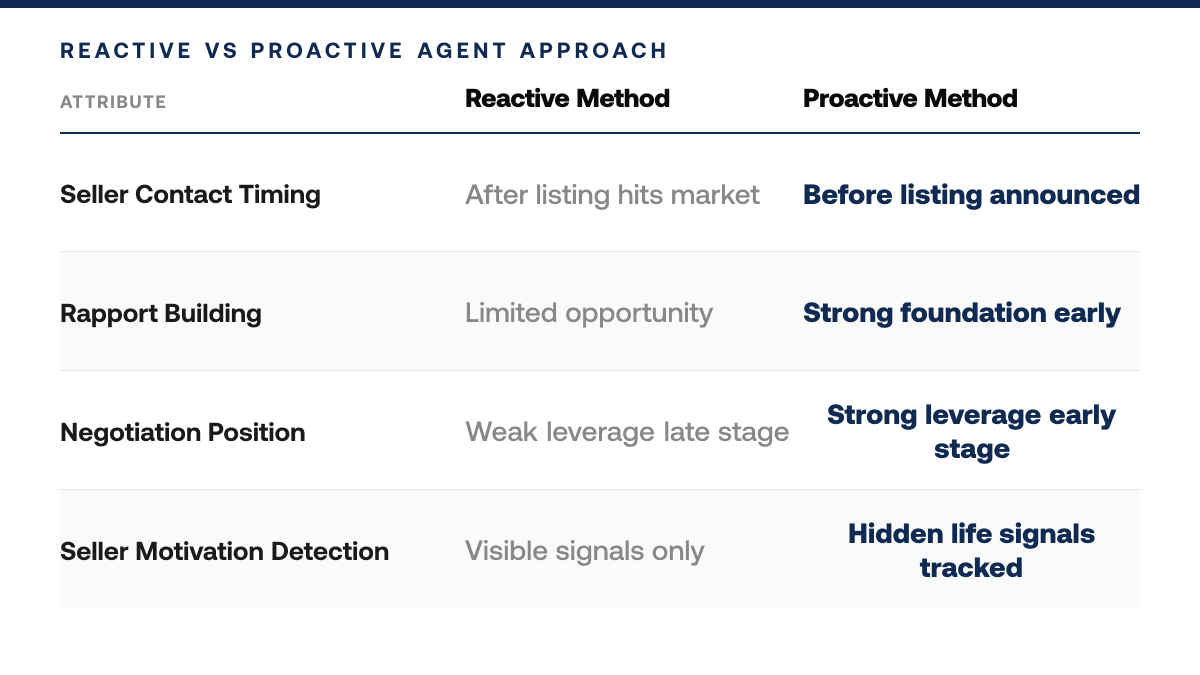
This guide covers what title insurance is, why it matters for your business, how it works at closing, and what claims and defects it actually covers. You'll also learn how to evaluate title insurance options and understand the costs involved so you can confidently advise clients and protect your deals from start to finish. Most agents only hear about a seller once the listing hits the market, too late to build rapport or negotiate better terms, Goliath Data monitors real-time life signals like foreclosures and job changes to surface motivated sellers before they list, so agents reach them first.
TL;DR
Title insurance is mandatory in most real estate transactions and protects buyers and lenders from financial losses caused by title defects discovered after closing.
Coverage includes legal defense costs and compensation for claims arising from liens, ownership disputes, forgery, or other hidden title issues that existed before purchase.
Buyers typically pay a one-time premium at closing, and the policy remains in effect for as long as the owner holds the property.[2]
Understanding Title Insurance
What Is Title Insurance?
Title insurance is a unique form of property protection that operates fundamentally differently from standard homeowners or liability insurance. While most insurance policies protect against future events, like fire, theft, or accidents, title insurance protects against past events. It covers claims arising from prior liens, unpaid property taxes, undisclosed heirs, forged documents, and other defects in the property's ownership history that existed before your purchase. When you buy a property, title insurance ensures that no one can later emerge with a legitimate claim to ownership or place a lien against your investment based on events that occurred before closing.[1]
Why Title Insurance Matters for Real Estate Professionals
For real estate agents and investors, title insurance is essential protection that directly impacts deal viability and client confidence. Lenders require title insurance on every financed property to protect their investment, this is non-negotiable in the mortgage process. Beyond the lender's policy, owners can purchase a separate owner's title insurance policy for additional protection that covers their equity in the property. Understanding this distinction helps you explain to clients why title insurance isn't optional overhead but a critical safeguard that prevents costly legal battles and ensures clean property transfers. When you can confidently discuss title protection, you build trust with buyers and sellers alike.[1]
The Growing Title Insurance Market
The title insurance industry has experienced notable growth and stability in recent years, reflecting the sector's importance to real estate transactions. As the global title insurance market continues to expand and operating margins improve, the industry demonstrates resilience and profitability. This growth underscores the increasing complexity of property ownership verification and the rising value of title protection in modern real estate. For professionals managing multiple transactions, understanding the role and reliability of title insurance helps you navigate deals with confidence and position yourself as a knowledgeable advisor to clients concerned about ownership security.
Key Numbers for The Real Estate Beginner's Guide to Title Insurance in 2026
Title insurance costs approximately 0.5% of the mortgage amount for lender's coverage, and 0.5-1% of property value for owner's coverage
Global title insurance market projected at $78.55B in 2026, up from $72.77B in 2025
Title insurance segments: residential 55%, commercial 30%, industrial 15%
Step-by-Step Process
1. Order a Title Search and Preliminary Report
Contact a title company or attorney to initiate a comprehensive title search for the property. This search examines public records to uncover existing liens, mortgages, judgments, easements, and other claims against the property. The title company will produce a preliminary report (or commitment) that lists all findings before closing. This step is critical because it identifies potential issues early, allowing time to resolve them before you're locked into the purchase.
2. Review the Title Commitment for Coverage and Exceptions
Carefully examine the title commitment issued by the underwriter. This document outlines exactly what the title insurance policy will cover and, equally important, what it will not cover (listed as exceptions). Tools like Goliath Data surface the high-leverage moves so you don't have to find them by hand. Pay close attention to any liens, unpaid taxes, or defects noted in the exceptions section. Ask the title company to explain any unfamiliar items and clarify whether they pose a real risk to your ownership. Understanding these exceptions before closing protects you from surprises after purchase.
3. Resolve Outstanding Title Defects and Liens
Work with the seller and title company to clear any defects identified in the commitment. Common resolutions include having the seller pay off outstanding liens, obtaining lien releases, or securing title insurance exceptions for minor issues that cannot be removed. Some defects may require a quit-claim deed or a title insurance endorsement. Do not proceed to closing until all material defects are resolved or you have agreed in writing to accept specific exceptions in your final policy.
4. Obtain and Review Your Final Title Insurance Policy
At closing, request a copy of your final title insurance policy and compare it to the commitment. Verify that all agreed-upon resolutions have been completed and that the policy accurately reflects the coverage you negotiated. The policy protects you against future claims related to title defects that existed before closing. Keep this document in a safe place, it's your proof of ownership protection and may be needed if a title claim arises years later.
How This Works in Practice
Example 1: The Wholesaler's Hidden Lien Discovery
Picture a wholesaler who identifies an off-market property and negotiates a discounted purchase price with a motivated seller. The deal looks solid on the surface, clean inspection, no obvious red flags. But during the title search, the title company uncovers unpaid contractor liens from a renovation project completed years earlier. Without title insurance, the wholesaler would be personally liable for those liens before closing, potentially adding thousands in unexpected costs or forcing the deal to collapse entirely. With an owner's policy in place, the title company handles the dispute resolution, protecting the wholesaler's equity and allowing the transaction to proceed on schedule. The lien gets cleared through the insurer's legal team, and the wholesaler closes without absorbing the financial hit or delay that would have derailed the deal.
Title Insurance vs. Standard Insurance
Insurance Type | Protects Against | Timing of Coverage |
|---|---|---|
Title Insurance | Past events like liens, forged documents, undisclosed heirs | Claims arising from defects before purchase |
Homeowners or Auto Insurance | Future events like fire, theft, accidents | Events occurring after policy purchase |
Lender's Title Policy | Lender's investment in the property | Covers lender's interest for loan duration |
Owner's Title Policy | Buyer's equity in the property | Covers owner as long as they hold the property |
Example 2: The Investor's Tax Claim Surprise
Consider a buy-and-hold investor who purchases a rental property, only to discover months after closing that unpaid property taxes from the previous owner create a tax lien against the title. The investor now faces a choice: pay the back taxes out of pocket, negotiate with the county, or risk foreclosure proceedings. With an owner's title insurance policy, the insurer steps in to resolve the tax claim, covering legal fees and negotiation costs that would otherwise fall on the investor. Without that protection, the investor absorbs the full financial and legal burden, potentially tens of thousands in unexpected liability. Title insurance transforms what could be a costly dispute into a manageable claim handled by professionals, preserving the investor's cash flow and peace of mind.
Why Timing Matters in Title Protection
Both scenarios illustrate the same principle: title issues rarely surface until after closing, when the cost of resolution falls entirely on the new owner. Title insurance shifts that risk back to the title company, ensuring that disputes over ownership, liens, and taxes are handled before you take the deed, or covered by the insurer if they emerge later. For agents and investors working to close deals faster and protect their margins, title insurance is the safety net that keeps unexpected liabilities from derailing momentum.
Pre-Closing Title Insurance Checklist
Review the title insurance commitment to confirm coverage scope and identify any exclusions before closing.
Verify lender requirements are met, confirm your lender's title insurance demands align with the policy issued.
Request a preliminary title report to uncover liens, easements, or encumbrances affecting the property.
Compare owner's and lender's policy limits to ensure both parties have adequate protection post-closing.
Schedule a final title walkthrough with your agent to resolve any outstanding title issues before signing.
Common Mistakes to Avoid
Mistake: Assuming the lender's title policy covers you as the owner
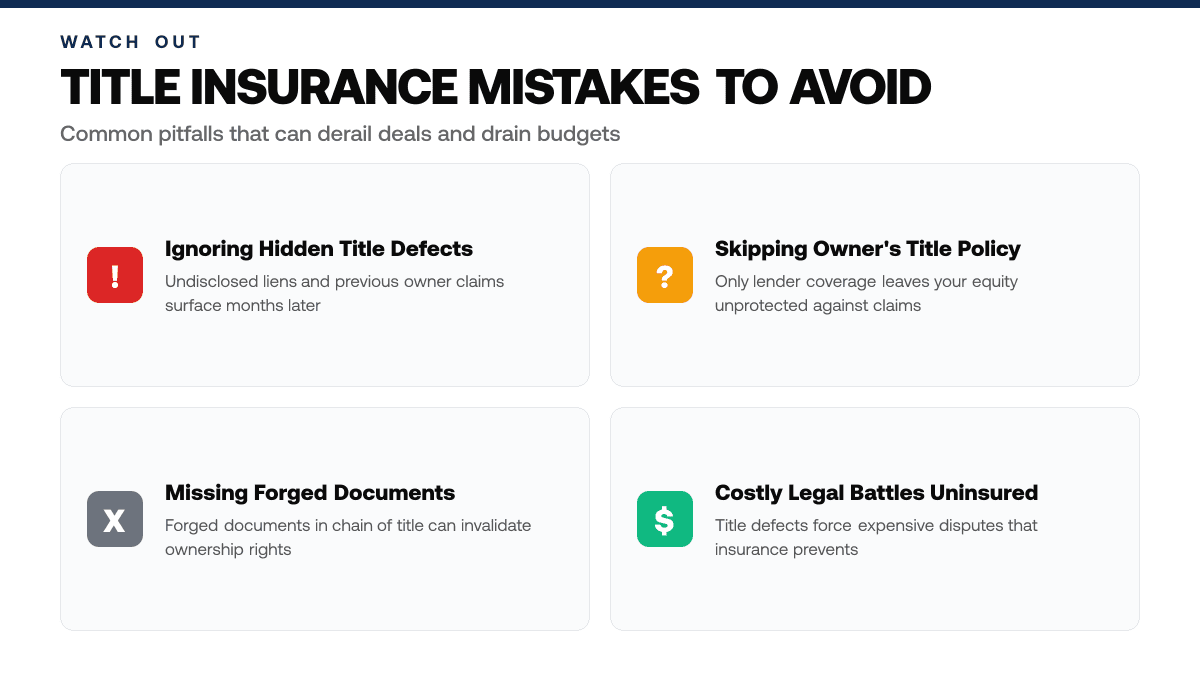
A lender's title policy protects only the mortgage lender's interest, not your ownership rights. If a title defect emerges after closing, such as a prior lien, unpaid tax claim, or boundary dispute, the lender's policy won't pay your legal fees or losses. You must obtain a separate owner's title policy to protect your equity and investment. This policy covers claims that arise during your ownership and is a one-time premium paid at closing.[3]
Do's and Don'ts for Title Insurance Guidance
Best Practice | Anti-Pattern |
|---|---|
Explain title insurance as mandatory lender requirement | Treat title insurance as optional overhead |
Discuss both lender and owner policies with clients | Only mention lender coverage without explaining owner protection |
Build client confidence by explaining title defect risks | Assume clients understand title protection without explanation |
Advise clients that coverage remains in effect for property ownership duration | Suggest title insurance expires after closing |
Mistake: Skipping the owner's title policy to save on premium costs
While the owner's title policy premium is modest compared to your purchase price, skipping it exposes you to potentially six-figure liability. A title defect discovered after closing, such as a forged deed in the chain of title or an undisclosed heir claiming ownership, can force you into costly litigation or even loss of the property. The premium is insurance against catastrophic risk; the cost of resolving a title claim without it far exceeds the policy fee.[3]
Mistake: Failing to resolve title defects before closing
Title searches often reveal issues like unpaid property taxes, judgment liens, or easements that must be cleared before you take ownership. Closing with unresolved defects means you inherit the liability and may face difficulty refinancing or selling later. Work with your title company and attorney to cure defects, such as paying off liens, obtaining lien releases, or securing title insurance exceptions, before funds are exchanged. Addressing problems upfront is far simpler and cheaper than fighting them after closing.[3]
Why Title Risk Compounds Over Time
Title insurance begins as a transaction safeguard but reveals itself as a structural foundation. Buyers who understand its mechanics stop treating it as a checkbox and start recognizing it as the lens through which all property decisions should be filtered. The protection compounds not through coverage alone, but through the clarity it forces into an otherwise opaque process.
Frequently Asked Questions
How can I identify properties with clean title history early in my pipeline?
Use data-driven prospecting tools that pull public records and title history to flag properties before they reach the open market. These platforms surface homeowners with clean title records and no liens or encumbrances, allowing you to prioritize deals with lower title risk. By filtering early, you avoid costly surprises during underwriting and close faster on qualified opportunities.
What makes a property high-risk from a title perspective?
High-risk properties typically have unresolved liens, judgment claims, tax delinquencies, boundary disputes, or unclear ownership chains. Title insurance exists to protect against these hidden defects, but identifying them before you commit saves time and money. A title search during due diligence reveals these issues, and prospecting tools can help you avoid such deals entirely by screening for clean records upfront.
Can I avoid title problems by screening properties myself?
Manual county record searches are possible but labor-intensive and prone to gaps, especially across multiple jurisdictions or when ownership chains span decades. Automated prospecting platforms integrate public records, lien databases, and title history into a single view, making screening faster and more reliable. This approach lets you focus on deal evaluation rather than record hunting.
Sources
Disclaimer: This article is provided by Goliath Data for general informational purposes only and does not constitute legal, tax, financial, or investment advice. Statutory references, redemption timelines, interest rates, and procedural requirements vary by jurisdiction and change over time. Always verify current information with the relevant county or municipal office and consult a licensed attorney, CPA, or financial advisor before making any investment, acquisition, or legal decision based on this content.
