
Tax Delinquent Properties for Sale List Arkansas
Find tax delinquent properties for sale list Arkansas using county assessor records and AI-powered lead scoring. Spot opportunities before auction in 3 steps.


Ahmed Mohamed
Tennessee
, Goliath Teammate
Quick Answer
Goliath Data sees this firsthand: Tax-delinquent properties in Arkansas are homes where owners haven't paid property taxes, creating a public list of potential investment opportunities. You can find these through the Arkansas Department of Finance and Administration, county tax assessor websites, and third-party platforms that aggregate delinquency data. Real estate investors and agents typically use these lists to identify motivated sellers before properties enter foreclosure.
Understanding Tax Delinquent Properties in Arkansas
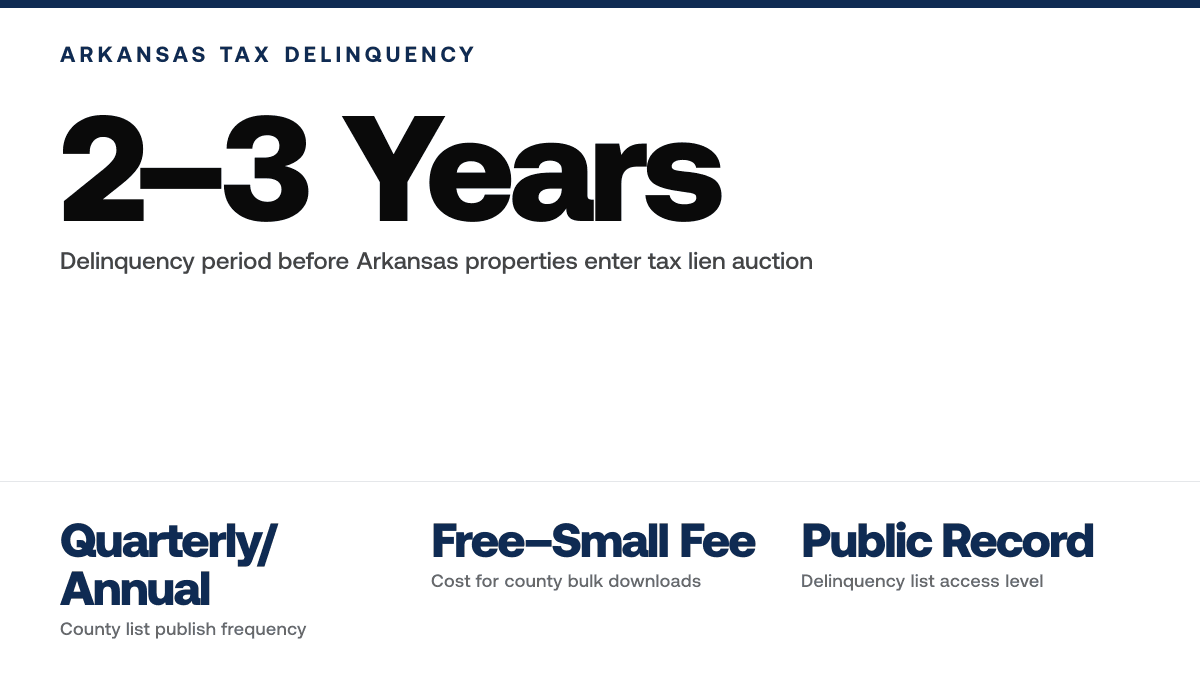
A tax delinquent property is real estate where the owner hasn't paid property taxes owed to the county. Arkansas county assessors maintain public lists of these properties, which become available for sale or tax lien auctions when delinquency extends past a set period, typically two to three years. These lists represent motivated sellers, distressed situations, and acquisition opportunities for investors hunting below-market deals.
Tax delinquency signals financial stress. Homeowners facing unpaid tax bills often lack liquidity, equity clarity, or motivation to carry the property further. Investors and agents who monitor these lists gain early visibility into motivated sellers before listings hit MLS. Arkansas publishes county-level tax delinquent records quarterly or annually, creating predictable sourcing windows for prospecting.
Real estate investors targeting pre-foreclosure and distressed acquisitions rely on these lists. Fix-and-flip buyers, wholesalers racing to contact owners before competitors, and solo agents burning marketing budget on cold outreach all use tax delinquent data to identify qualified prospects without spending on ads. Land investors acquiring rural or vacant parcels also tap these lists for inventory sourcing.
Step-by-Step Process to Source and Close
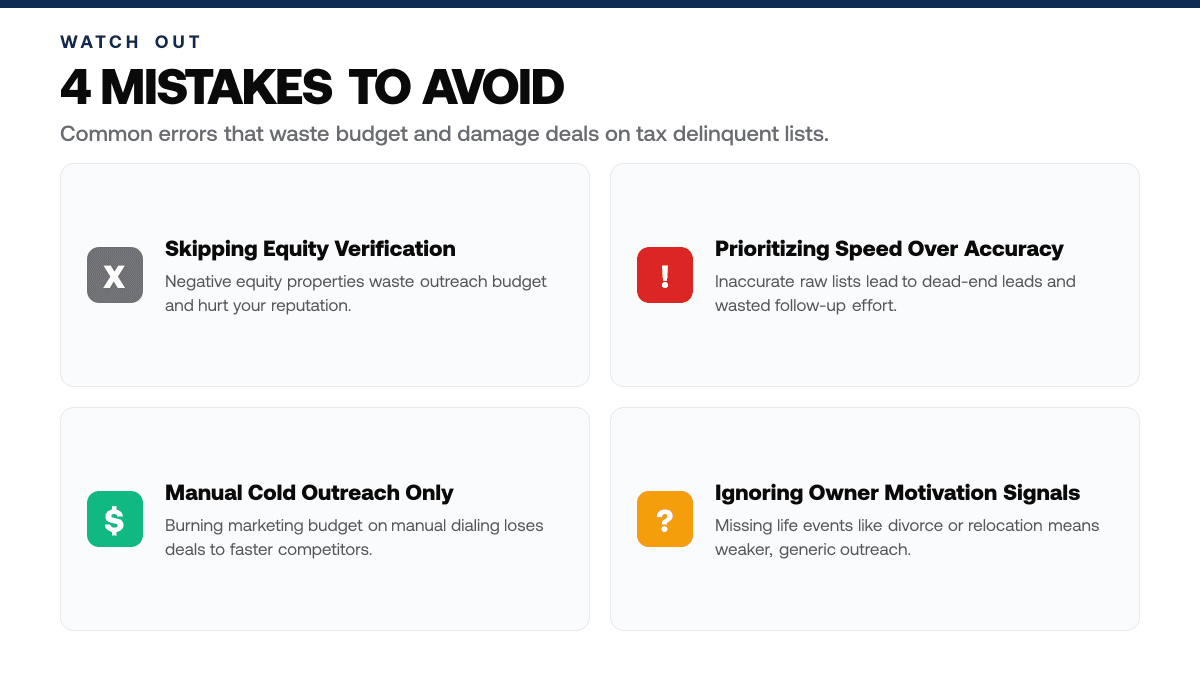
Step 1: Search public records for tax delinquent properties. Start with Arkansas County Assessor offices or the state's online property records database. Filter by tax delinquency status, unpaid years, and property type. This surfaces homeowners most likely motivated to sell before foreclosure. Many counties publish lists free; some charge a small fee for bulk downloads. You're building your raw prospect list here, accuracy matters more than speed.
Step 2: Verify ownership and calculate equity. Cross-reference the property deed with current market value using comparable sales or an appraisal estimate. Subtract the tax lien amount, any mortgages on file, and estimated back taxes to confirm positive equity. Properties with negative equity are poor acquisition targets. This step filters out dead-end leads and protects your reputation when making offers.
Step 3: Research the owner's motivation and contact info. Pull the owner's mailing address from the deed. Check for job changes, life events, or other signals that suggest urgency to sell. Social media and public records often reveal divorce, death, or relocation, all common triggers. The goal: craft an opening message that acknowledges their situation and positions you as a solution, not a vulture.
Step 4: Build a targeted outreach list and automate follow-up. Segment properties by equity level, area, and owner type. Prioritize those with the highest seller intent signals. Tools like Goliath Data automate this segmentation and flag real-time life events, foreclosure notices, job changes, family transitions. Automated drip campaigns via call, text, and email keep prospects engaged without manual dialing.
How This Works in Practice
Picture a solo agent in Pulaski County scanning county records manually for pre-foreclosure notices. She finds five properties, spends two hours calling cold leads with no-answers, then follows up via email three days later. By then, two homeowners have signed with another agent. The bottleneck is clear: no real-time alert system, no automated nurture, no qualification scoring. With Goliath Data, she identifies those same properties instantly via life-event signals, lets AI assistant David handle inbound calls 24/7, and receives smart call lists with conversation summaries so she focuses only on qualified leads. Turnaround shrinks from days to hours.
Consider a wholesaler who needs to validate ten tax-delinquent properties against his buy box (price range, equity threshold, property condition) before making offers. Manual cross-referencing of MLS, tax assessor records, and deed searches eats four hours per batch. Goliath Data's advanced prospect filters let him narrow by location, property type, price, and equity in minutes. The platform's Seller Intent Score ranks homeowners by likelihood to sell, so he prioritizes the hottest leads first. Automated drip campaigns via call, text, and email keep him in touch without manual cadence, freeing him to close deals instead of chasing leads.
Tax Delinquent Properties Verification Checklist
Before contacting a tax-delinquent homeowner, verify your prospect data and legal standing. Use this checklist to qualify leads and avoid costly mistakes.
Quick Tip:
Redemption periods vary by Arkansas county. Some allow owners 12 months to reclaim the property after sale; others allow 24 months. Confirm your county's timeline before closing so you can set realistic tenant move-in or flip schedules.
Common Mistakes to Avoid
Skipping title and lien verification. Many investors buy tax delinquent properties without confirming clean title or checking for senior liens. You'll waste time pursuing deals where the county can't transfer ownership, or where back taxes, mortgage debt, or code violations eat your profit margin. Always pull the full chain of title and lien search before making an offer.
Ignoring property condition and hidden costs. A low price tag masks structural damage, environmental hazards, or code violations that balloon your renovation budget. Visit the site in person, hire a home inspector, and request code reports. Don't assume "fixer-upper" means a quick flip, it often means years of permits and contractor delays.
Buying without a sourcing system. Manually refreshing county websites and scrolling tax sale lists is slow and unreliable. You'll miss deals, respond late, and lose to faster competitors. Automate your sourcing pipeline with a tool that surfaces new delinquencies as they hit the county database, so you can contact homeowners before the auction.
Frequently Asked Questions
What exactly counts as a tax delinquent property in Arkansas?
A tax delinquent property is real estate where the owner hasn't paid property taxes for a set period, usually 1–3 years depending on county law. Arkansas publishes delinquent tax lists through individual county assessor and treasurer offices. Most counties post lists online; some maintain paper records. There's no centralized statewide database, so you must search county by county. Lists typically show the property address, owner name, amount owed, and lien date.
Why do tax delinquent properties sell for less than market value?
Owners facing tax liens are often distressed and motivated to sell quickly to avoid foreclosure. That urgency typically results in below-market offers being accepted. The "hassle" includes title research, lien payoff verification, and potential redemption periods where the original owner can reclaim the property. In most cases, the discount justifies the extra work, but if the property has multiple liens or unclear title history, the administrative burden can outweigh the savings.
How do I find tax delinquent property lists in Arkansas without checking every county manually?
Manual county-by-county searching is time-intensive because there's no unified statewide portal. You can aggregate lists by visiting each of Arkansas's 75 county treasurer or assessor websites directly, or use third-party data aggregation services that compile and update delinquent lists automatically. Aggregators normalize the data across counties and often add property details, equity estimates, owner contact info via skip-tracing, and property condition, making prospect qualification faster than raw county records alone.
Sources
Not legal or financial advice. This article is for general educational purposes only and should not be relied on as a substitute for professional legal, tax, or financial advice. Real estate, tax, and property laws vary by state and individual circumstances. Consult a licensed attorney or qualified professional in your jurisdiction before acting on any procedure or strategy discussed here. Reading this content does not create an attorney-client relationship.
