
Tax Delinquency vs. Foreclosure: Which Motivated Seller Signal Converts 5x Faster in 2026
Tax Delinquency vs. Foreclosure: Which Motivated Seller Signal Converts 5x Faster in 2026. What actually works, and what to skip.


Austin Beveridge
Tennessee
, Goliath Teammate
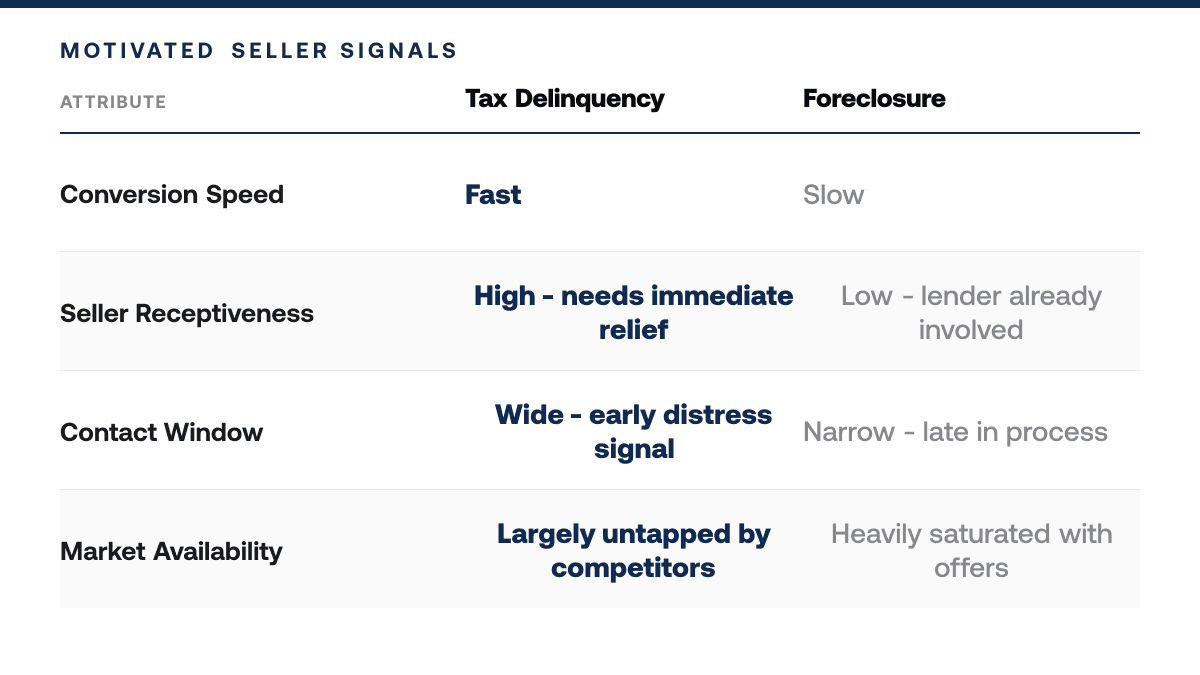
A property owner receives a tax delinquency notice in the mail. Weeks later, another investor spots a foreclosure filing on the courthouse steps. Both sellers are motivated, but one converts to a deal five times faster than the other. The difference isn't luck, it's knowing which signal to chase and when.
Tax delinquency and foreclosure are distinct pathways to distress, each with its own timeline, equity position, and seller psychology. Understanding how they differ, and which one your prospects respond to faster, separates agents and investors who close multiple deals per quarter from those who spend months chasing cold leads. Market data shows these motivated-seller signals behave very differently in terms of conversion velocity and deal probability.[3]
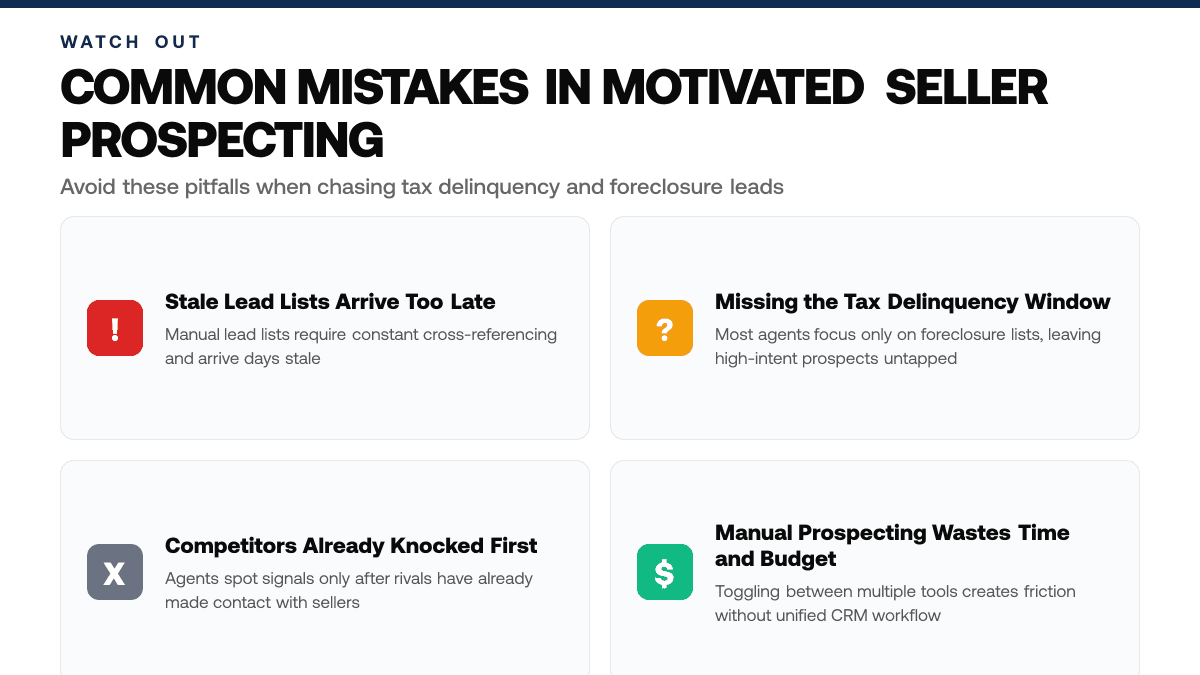
This article compares tax delinquency versus foreclosure as prospecting signals, shows which one converts faster in today's market, explains the mechanics behind each process, and reveals how to prioritize your outreach to close more deals without increasing your marketing budget. Most agents spot tax delinquencies and foreclosure signals only after competitors have already knocked, because manual lead lists arrive days stale and require constant cross-referencing, Goliath Data monitors real-time life-event signals the moment they hit public record, so you reach motivated sellers while they're still deciding who to call.
TL;DR
Tax delinquency signals a property owner in financial distress earlier than foreclosure, creating a faster window to make contact and present solutions before the lender intervenes.
Motivated sellers facing tax liens are often more receptive to quick cash offers and flexible terms because they need immediate relief from penalties and accruing interest.
Most agents and investors miss tax delinquency leads entirely, focusing only on foreclosure lists, leaving a high-intent prospect pool largely untapped and available for prospecting.
All 5 tools compared at a glance
Tool | Best for | Pricing | Key strength | Limitation vs #1 |
|---|---|---|---|---|
Real estate agents scaling motivated seller outreach | Unified CRM + list building + AI skiptracing + automation | |||
Privy | E-commerce and service businesses capturing leads | Behavioral triggers + email automation + exit-intent popups | Lacks built-in calling, texting, and CRM workflow loop | |
REI BlackBook | Investors needing tax delinquency and foreclosure data | Aggregated public records + ownership changes + filtering | No built-in calling, texting, or automated drip campaigns | |
PropStream | Agents requiring real-time distress signal alerts | Real-time tax and foreclosure data + skip-tracing included | Lacks integrated calling, texting, and CRM automation | |
BatchLeads | Investors automating time-sensitive lead capture | Public records filtering + skip-tracing + export workflows | No built-in calling, texting, or automated follow-up loops |
Pricing as of June 2026; verify current rates on each provider's site.
1. Goliath Data: Unified Prospecting & CRM for Real Estate Agents & Investors

Visit goliathdata.com
Goliath Data is a real estate prospecting and CRM platform built specifically for agents and investors hunting motivated sellers. The platform combines lead discovery, contact intelligence, and relationship management in one workspace, eliminating the friction of toggling between multiple tools. It's designed for professionals who need to identify off-market opportunities (tax delinquencies, preforeclosures, probates) and convert them into closed deals without multiplying their tech stack.
Here's the gap most tools miss: tax delinquency and preforeclosure lists alone don't convert faster, it's the speed and consistency of follow-up that matters. Goliath Data closes this loop by pairing niche list access with built-in calling, texting, email, and automated drip campaigns. Agents can pull a tax delinquency list, immediately dial prospects, log activity, and trigger multi-channel sequences without leaving the platform. That integrated workflow is what accelerates conversion cycles.
The platform includes AI-powered skiptracing (2,500 credits monthly), list building with niche filters, ad platform integrations, an AI assistant for outreach templates, deal tracking, activity logging, and task management. For agents scaling beyond self-service, Goliath offers a done-for-you tier that handles list pulling, calling, texting, email, direct mail, lead qualification, and ongoing follow-up, outsourcing the entire prospecting operation.
Goliath Data's CRM + Data tier starts at $299/mo and includes list building, skiptracing, integrations, and automated campaigns. For teams or high-volume investors who prefer hands-off prospecting, the done-for-you service runs $2,999/mo and manages the full funnel from lead sourcing through qualification and follow-up.
2. Privy
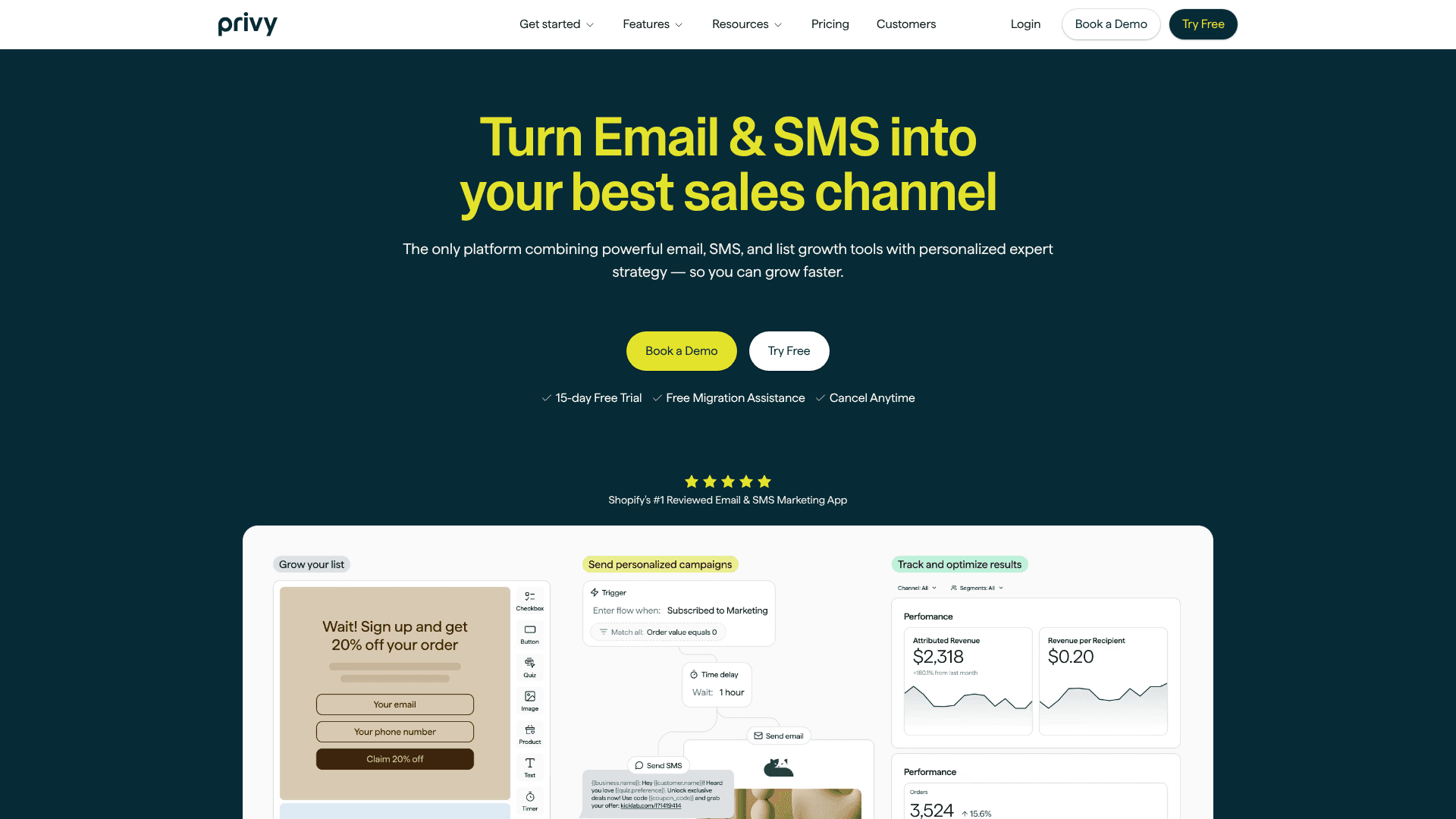
Privy is a conversion-focused platform built for e-commerce and service-based businesses to capture, segment, and nurture leads through targeted popups, forms, and email workflows. Real estate agents and investors use it to build email lists of motivated sellers and automate follow-up sequences without manual outreach.
Here's the gap most tools miss: Privy combines behavioral triggers with email automation, so you're not just collecting contact data, you're automatically qualifying and nurturing leads based on their actions. When a prospect views your tax delinquency or foreclosure content, Privy can instantly segment them and launch a follow-up sequence, turning passive interest into active pipeline.
The platform delivers exit-intent popups that capture visitors before they leave, dynamic forms that adapt based on user behavior, email automation workflows for multi-touch nurturing, audience segmentation to target motivated sellers by property status or engagement level, and A/B testing to refine messaging. Integration with CRM systems ensures captured leads sync directly into your sales process.
Privy offers tiered pricing scaled to business size and volume. Plans start at an accessible entry level and scale to enterprise pricing for agencies and teams managing high-volume prospecting. Custom quotes are available for advanced automation and dedicated support needs.
3. REI BlackBook

REI BlackBook homepage
REI BlackBook is a property intelligence platform built for real estate agents and investors who need to identify motivated sellers at scale. The tool aggregates public records, including tax delinquency, foreclosure filings, and ownership changes, into a searchable database, letting users pinpoint sellers facing financial pressure without manual county record digging.
Here's the gap most tools miss: tax delinquency and foreclosure signals arrive at different conversion windows. Tax delinquency typically surfaces months before foreclosure filing, giving agents and investors a first-mover advantage to contact sellers when they're motivated but still have equity and options. REI BlackBook segments these signals separately so prospectors can prioritize outreach by urgency and likelihood to engage.
The platform delivers property-level records tied to owner contact details, allowing users to filter by delinquency status, filing date, loan amount, and property type. Users can build targeted lists, export contacts for CRM integration, and automate follow-up workflows without re-entering data across multiple tools.
REI BlackBook operates on an enterprise pricing model with custom quotes based on data volume, user seats, and integration requirements. Contact the sales team directly for a tailored proposal aligned to your prospecting volume and deal flow.
4. PropStream
PropStream homepage
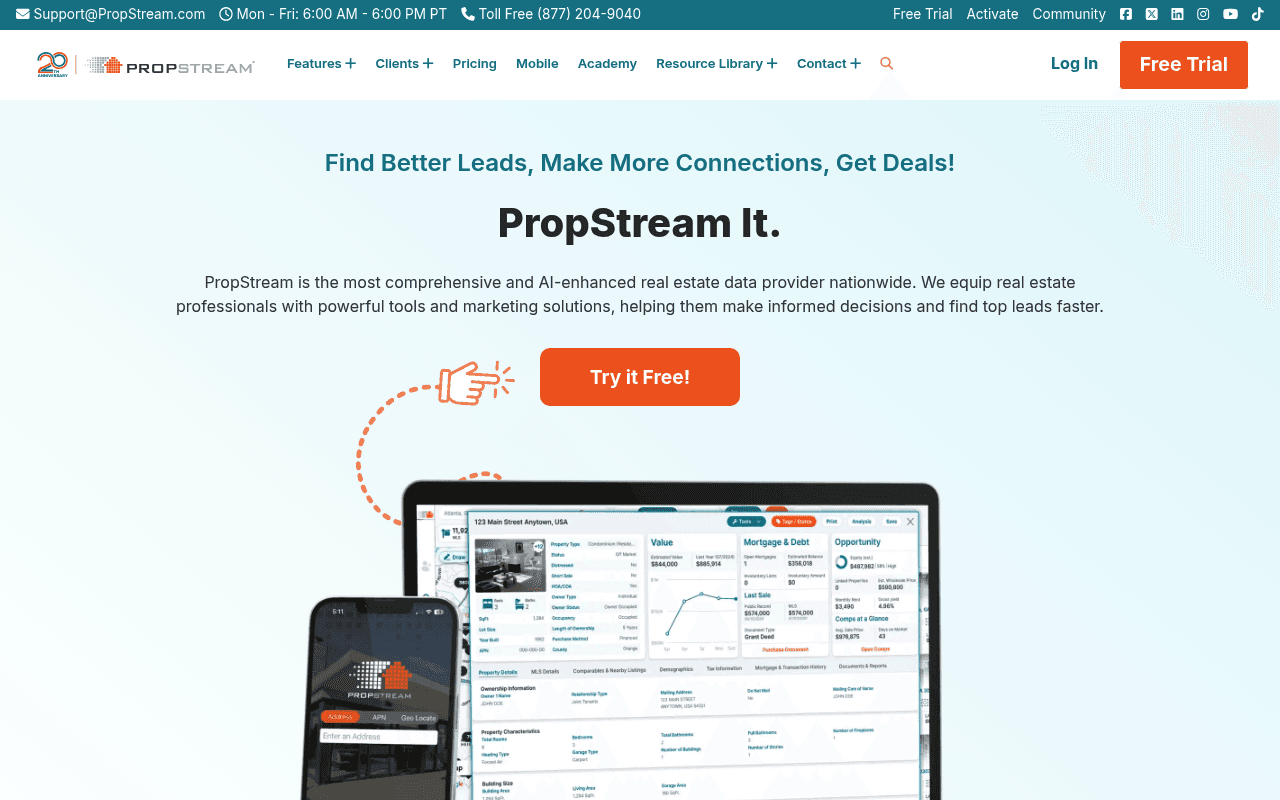
PropStream is a property data and lead generation platform designed for real estate agents and investors who need to identify and contact motivated sellers at scale. The platform aggregates public records, tax data, and ownership information to surface properties with specific distress signals, including tax delinquency and foreclosure activity, enabling users to build targeted prospecting lists without manual research.
Here's the gap most tools miss: tax delinquency and foreclosure signals require real-time data integration across multiple county and state databases. PropStream pulls these records directly into a searchable interface, eliminating the need to cross-reference separate tax assessor sites, court filings, and property databases. This consolidation saves agents and investors hours of administrative work per week.
PropStream delivers property lists filtered by tax delinquency status, foreclosure stage, and ownership details. Users can export contacts, set up automated alerts for new distress signals, and integrate lead data into CRM systems. The platform also includes skip-tracing capabilities to locate phone numbers and email addresses for direct outreach, reducing the friction between list building and first contact.
PropStream operates on an enterprise pricing model, with costs scaled to usage volume and feature access. Interested users are encouraged to request a custom quote directly from the vendor to align pricing with their prospecting volume and team size.
5. BatchLeads

BatchLeads homepage
BatchLeads is a lead generation and prospecting platform built for real estate agents and investors who need to identify motivated sellers at scale. The platform aggregates public records data to surface property owners facing financial distress, including tax delinquency and foreclosure situations, enabling teams to build targeted outreach lists without manual research.
Here's the gap most tools miss: tax delinquency and foreclosure signals decay fast. A property owner's motivation peaks within a narrow window, days or weeks, before they explore other solutions or the lender forecloses. BatchLeads automates the capture and filtering of these time-sensitive signals so agents can reach motivated sellers before competitors do, rather than chasing stale leads weeks after the fact.
The platform pulls from public records to identify properties with tax delinquency flags, foreclosure filings, and related distress markers. Users can filter by county, property type, and equity position, then export lists for direct mail, cold calling, or email campaigns. Built-in skip-tracing connects owner names to phone numbers and addresses, reducing manual lookup time and enabling rapid outreach within the critical conversion window.
BatchLeads pricing is structured on an enterprise model with custom quotes based on list volume, data freshness, and feature access. Teams typically start with a monthly subscription that scales with their prospecting volume and follow-up capacity, making it most cost-effective for agents and investors running consistent, high-touch campaigns rather than one-off searches.
Frequently Asked Questions
What's the difference between tax delinquency and foreclosure as a motivated seller signal?
Tax delinquency occurs when a property owner falls behind on property tax payments, triggering a tax lien and eventual sale by the county to recover unpaid taxes. Foreclosure happens when a homeowner defaults on their mortgage, and the lender initiates a legal process to reclaim the property. Tax delinquency typically surfaces earlier in the distress timeline and often precedes foreclosure, making delinquent owners more receptive to solutions before losing equity. Both signals indicate financial stress, but tax delinquency represents an earlier intervention point with higher conversion potential.[1]
Why do tax-delinquent owners convert faster than foreclosure prospects?
Tax-delinquent homeowners face imminent county sale but retain more control over their outcome than foreclosure defendants, who are further along in a lender-driven process. Delinquent owners are actively seeking solutions to avoid losing their property and owe a more manageable debt (back taxes plus penalties) compared to a full mortgage default. They're motivated by urgency but not yet backed into a corner, making them more likely to engage with a buyer or investor quickly. Foreclosure prospects have often exhausted options and may be emotionally or financially depleted, reducing responsiveness.[3]
How can agents and investors identify tax-delinquent properties at scale?
Tax delinquency records are public and maintained by county assessors and tax collectors, making them searchable through public databases and specialized real estate data platforms. Agents can monitor these records regularly to build a pipeline of prospects before they're listed or widely known. Automated alerts and bulk data feeds allow investors to identify delinquent owners by county, property type, or equity position without manual research. The key is speed, early identification gives you a window to reach owners before competitors or wholesalers do.[2]
What tools help agents and investors act on tax delinquency data with owner contact info?
Goliath Data monitors real-time life-event signals including tax delinquencies to surface homeowners most likely to sell before they hit the market. The platform provides owner contact information and integrates an AI assistant called David that handles inbound calls, outbound follow-ups, texts, emails, and appointment scheduling automatically, so agents never miss a lead. Goliath also includes a full CRM and pipeline management, enabling teams to track and nurture delinquent prospects at scale without increasing manual prospecting effort.
Sources
Disclaimer: This article is provided by Goliath Data for general informational purposes only and does not constitute legal, tax, financial, or investment advice. Statutory references, redemption timelines, interest rates, and procedural requirements vary by jurisdiction and change over time. Always verify current information with the relevant county or municipal office and consult a licensed attorney, CPA, or financial advisor before making any investment, acquisition, or legal decision based on this content.
