
Roanoke County, Virginia Tax Delinquent Properties for Sale List
Roanoke County, Virginia Tax Delinquent Properties for Sale List. A practical guide to what works, what to skip, and how to get started.

Austin Beveridge
Tennessee
, Goliath Teammate
Roanoke County, Virginia is home to 97,026 residents and 42,251 housing units, with a median home value of $267,300 across owner-occupied properties. Yet within this market, a subset of properties fall into tax delinquency each year—situations where owners have failed to pay property taxes and the county moves toward foreclosure and public sale. These distressed properties represent real opportunities for investors and agents who know where to look and how to act quickly.[3]
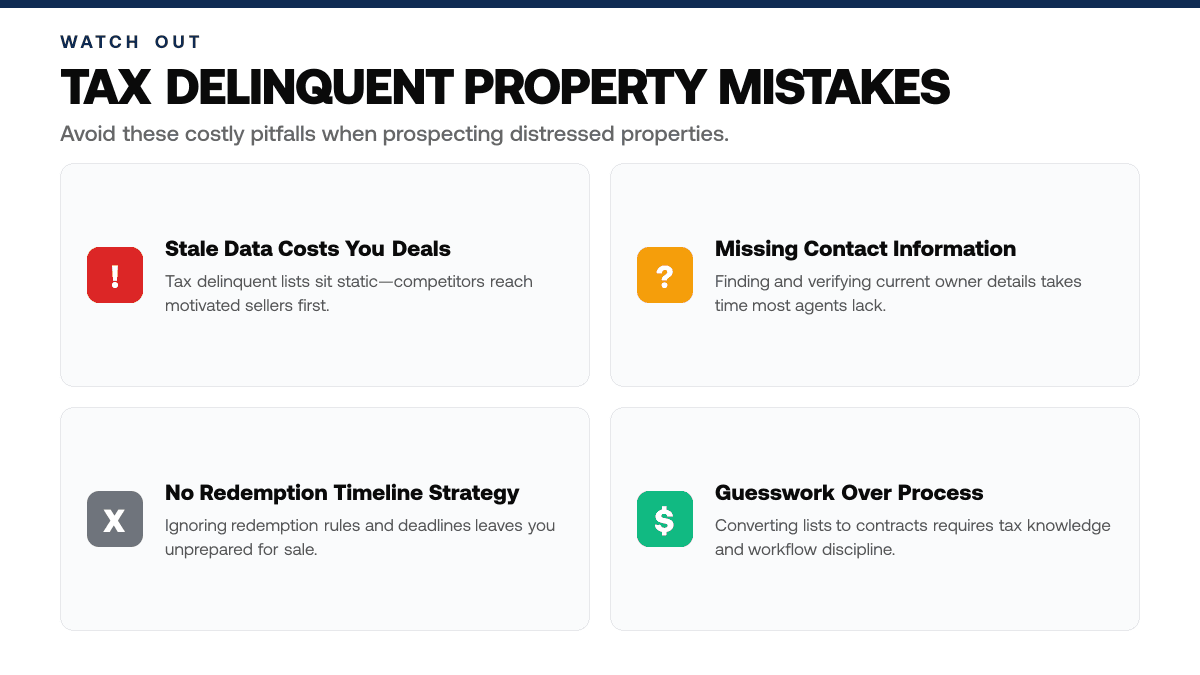
Tax delinquent properties are typically sold below market value and attract owners facing financial hardship, job loss, or life changes—making them highly motivated sellers. For real estate professionals, identifying these properties before competitors and reaching out with solutions can mean the difference between closing a deal and losing a lead. The challenge is access: county tax delinquency lists exist, but finding them, verifying current contact information, and building a targeted outreach strategy takes time and resources most agents and investors don't have.[1]
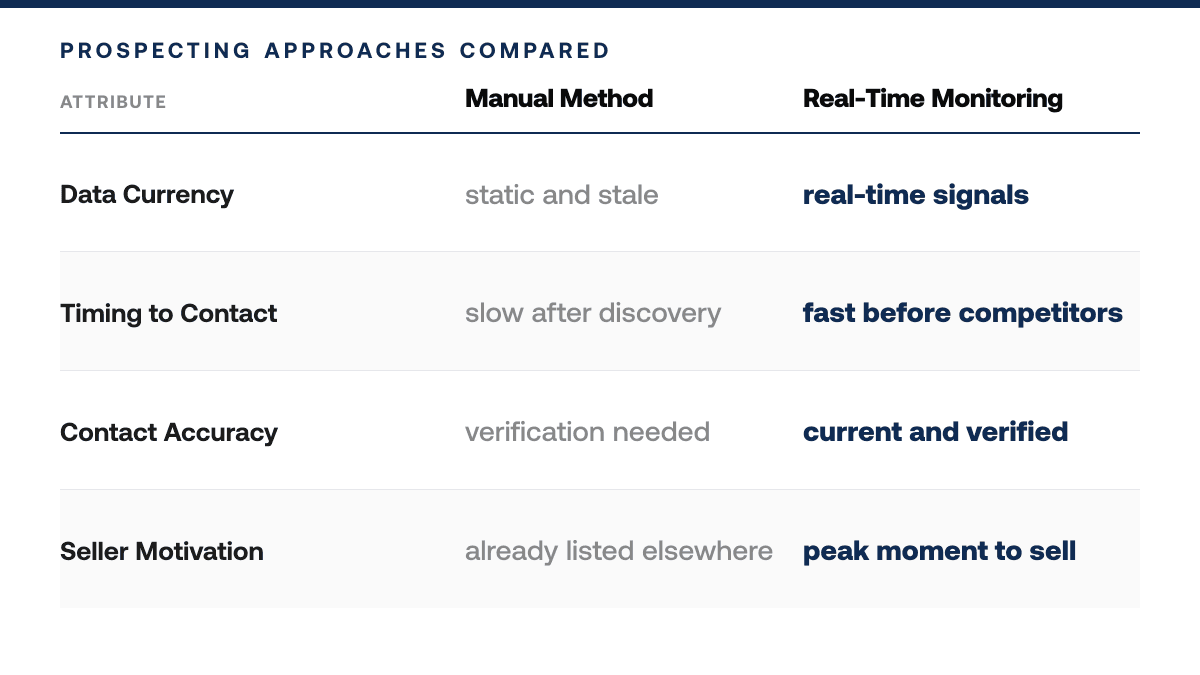
This article walks through how to find and evaluate tax delinquent properties in Roanoke County, what the sale process looks like under Virginia law, and how to build a prospecting workflow that turns public data into closed deals. You'll learn the timeline, the redemption rules, the tax implications, and the practical steps to move from list to conversation to contract—without the guesswork. Tax delinquent property lists sit static and stale—most agents never know which owners are in distress until a competitor reaches them first—Goliath Data monitors real-time tax delinquency signals to surface motivated sellers before they list, so agents connect with prospects at the moment they're most likely to sell.
TL;DR
Roanoke County tax-delinquent properties are sold through judicial auction via circuit court, with the county treasurer maintaining the official delinquent list.
Properties are sold as tax deeds once the circuit court confirms the sale; redemption rights exist until that confirmation occurs.
Investors and agents can prospect motivated sellers by accessing the county treasurer's delinquent property records to identify acquisition and follow-up opportunities.[1]
Understanding Tax Delinquent Properties in Roanoke County, Virginia
What Is a Tax Delinquent Property?
A tax delinquent property is real estate where the owner has failed to pay property taxes owed to the county. When taxes remain unpaid beyond the grace period, the county treasurer initiates a legal process to recover the debt through a public sale. These properties represent opportunities for investors and agents to acquire real estate at a significant discount, often below market value. The sale process is formal and transparent, governed by state law to protect both the county's interest and potential buyers.[1]
Roanoke County, Virginia — Property & Housing Snapshot (2023)
Metric | Value |
|---|---|
Population | 97,026 |
Median home value (owner-occupied) | $267,300 |
Median household income | $82,931 |
Total housing units | 42,251 |
Owner-occupied rate | 71% |
Source: U.S. Census Bureau, American Community Survey 2023 5-Year Estimates.
Why Tax Delinquent Properties Matter to Real Estate Professionals
For real estate agents and investors, tax delinquent property lists offer a pipeline of motivated sellers—owners facing financial hardship who need to resolve their tax obligations. These properties typically sell below fair market value, creating margin for wholesalers and fix-and-flip investors. Access to the official delinquent list from the county treasurer allows professionals to identify prospects before they hit the open market, enabling faster prospecting, automated follow-up workflows, and deal closure without inflated marketing budgets. This early-stage data is a competitive advantage for building a consistent deal flow.
How Virginia's Tax Sale Process Works
In Roanoke County, tax delinquent properties are sold through a judicial process managed by the circuit court and a court-appointed special commissioner, as outlined in the Code of Virginia. The county treasurer maintains the official delinquent property list, which is the authoritative source for identifying candidates. Once a property is sold at auction, a redemption period exists during which the previous owner may reclaim the property by paying the sale price plus costs. The sale becomes final only after the circuit court confirms it. Understanding this timeline and the redemption window is critical for investors evaluating acquisition strategy and cash flow planning.[1]
Key Numbers for Roanoke County, Virginia Tax Delinquent Properties for Sale List (2026)
97,026 residents in Roanoke County, Virginia (2023 ACS 5-Year Estimates)
$82,931 median household income in Roanoke County (2023 ACS 5-Year Estimates)
$267,300 median home value (owner-occupied) in Roanoke County (2023 ACS 5-Year Estimates)
42,251 total housing units in Roanoke County, Virginia (2023 ACS 5-Year Estimates)
71% owner-occupied housing rate in Roanoke County (2023 ACS 5-Year Estimates)
Tax deed sales in Roanoke County conducted via judicial sale through circuit court appointed special commissioner under Code of Va. §58.1-3965 et seq.[1]
Redemption period extends until tax sale is confirmed by circuit court in Roanoke County (Code of Va. §58.1-3965 et seq.)[1]
Step-by-Step Process
1. Contact Roanoke County Treasurer for Delinquent Property Lists
Reach out directly to the Roanoke County Treasurer's office to request the current tax delinquent property list. The county treasurer maintains and publishes delinquent accounts, which form the basis for judicial tax-deed sales conducted through the circuit court. Ask for properties that have reached the sale stage and confirm the sale date and special commissioner assignment. This direct approach ensures you receive the most current inventory before properties are widely marketed.[1]
2. Review Circuit Court Sale Notices and Redemption Timelines
Once a property enters the judicial sale process via circuit court appointed special commissioner under Code of Virginia §58.1-3965 et seq. Tools like Goliath Data surface the high-leverage moves so you don't have to find them by hand. , examine the sale notice for the redemption period. In Virginia, the redemption window extends until the sale is confirmed by the circuit court. Understanding this timeline is critical for investors planning acquisition and exit strategies, as properties remain subject to redemption claims during this period.[1]
3. Assess Property Condition and Title Before Bidding
Conduct on-site inspections and title searches for each property on your target list. Tax-deed purchases often involve properties with deferred maintenance, liens, or title defects. Review the special commissioner's sale documents for any disclosed encumbrances or prior claims. This due diligence step protects your investment and helps you calculate realistic acquisition and rehabilitation costs before you commit capital at auction.
4. Calculate Profit and Plan for Federal Tax Reporting
Before closing, model your expected profit by subtracting acquisition, holding, and resale costs from your projected sale price. Recognize that profit from reselling a property acquired at a tax sale is generally a capital gain reportable to the IRS. Goliath Data makes this consistent across every workflow the team runs, not just the ones someone remembers to check. Short-term holds are taxed at ordinary-income rates, while longer holding periods qualify for long-term capital-gains rates. Consult a tax professional to align your holding strategy with your overall tax position and ensure compliance with IRS Publication 4681 guidance on foreclosure-related income.[2]
How This Works in Practice
Example 1: The Wholesaler's Fast-Track Identification
Picture a wholesaler who typically spends 8–10 hours per week manually searching county tax records, public databases, and deed filings to find delinquent properties in Roanoke County. She knows that tax-delinquent owners are often motivated to sell quickly—many face redemption deadlines and want to avoid foreclosure—but the legwork of identifying them, verifying their contact details, and building a priority list has always been her bottleneck. By accessing a curated delinquent property list specific to Roanoke County, she can instantly see which properties are in tax arrears, their assessed values, and owner contact information. Instead of chasing leads across multiple sources, she now focuses her prospecting on a pre-filtered group of owners who have a genuine incentive to transact. Within her first month, she reaches out to a handful of prospects who might have taken her weeks to find manually, and three conversations turn into acquisition opportunities. The time saved—several hours each week—lets her close more deals without scaling her marketing budget.[1]
Example 2: The Buy-and-Hold Investor's Below-Market Entry
Consider a buy-and-hold investor who wants to build a rental portfolio in Roanoke County but struggles to compete with cash buyers and institutional investors on standard MLS listings. He knows that tax-delinquent properties often trade at a discount to fair market value because owners are under time pressure and may lack the resources to market them widely. By reviewing a Roanoke County tax-delinquent property list, he identifies several single-family homes and small multifamily units where the owners are 2–3 years behind on taxes and approaching the county's redemption window. He reaches out directly to these owners—before a tax sale is advertised—and negotiates a purchase at a meaningful discount. Because he's contacting motivated sellers earlier in the delinquency cycle, he avoids bidding wars and can structure deals that work for his rental income model. Over the next few months, he acquires multiple properties below market value and begins generating rental income faster than he could have through conventional channels.[1]
Why Speed and Direct Access Win
Both examples hinge on the same principle: tax-delinquent owners are motivated, but only if you reach them before the formal sale process consumes their options. A curated, searchable list of Roanoke County delinquent properties collapses the discovery phase, letting agents and investors focus their energy on negotiation and closing rather than data hunting. The result is faster deal flow and better margins—without spending more on marketing or competing on crowded platforms.
Roanoke County Tax Delinquent Properties Checklist
Request the current delinquent property list from the Roanoke County treasurer's office.
Verify each property's redemption status and confirm the circuit court has confirmed the tax deed sale.
Review Code of Va. §58.1-3965 et seq. to understand judicial sale procedures and your rights as a buyer.
Calculate your potential profit and consult IRS Publication 4681 to plan for capital gains tax liability.
Conduct title and lien searches on target properties before submitting offers to identify hidden encumbrances.
Common Mistakes to Avoid
Mistake: Overlooking the redemption window before the circuit court confirms the sale
In Virginia, the redemption period extends until the circuit court confirms the sale—not until the auction date. Agents and investors who assume ownership immediately after purchase may face claims from the prior owner or lienholder, delaying title transfer and closing. Always verify the confirmation status with the Roanoke County circuit court and the county treasurer before marketing or financing the property, and budget for the confirmation timeline in your acquisition strategy.[1]
Mistake: Failing to account for short-term capital gains tax on quick resales
Properties acquired at tax sales and resold within a year are taxed at ordinary income rates rather than the lower long-term capital gains rate. Wholesalers and fix-and-flip investors who don't factor this higher federal tax liability into their profit margins often discover their net proceeds are significantly lower than expected. Consult a tax professional before closing to model your holding period and ensure your deal economics survive the tax impact.[2]
Mistake: Ignoring liens, back taxes, and title defects specific to Roanoke County properties
Tax-delinquent properties in Roanoke County may carry multiple liens, unpaid HOA assessments, or environmental claims that survive the tax sale. Agents who skip title searches or lien searches before prospecting lose credibility with investors and waste time on unmarketable deals. Order a comprehensive title report and lien search from the county circuit court and treasurer before adding a property to your pipeline.[1]
Frequently Asked Questions
How do tax-delinquent properties become available for sale in Roanoke County?
When property owners fall behind on taxes, Roanoke County's treasurer compiles a delinquent list and initiates a judicial tax-deed sale through the circuit court. A court-appointed special commissioner oversees the sale process under Virginia Code §58.1-3965 et seq. Property redemption remains possible until the circuit court confirms the sale, giving delinquent owners a final window to reclaim their property by paying back taxes and costs.[1]
What are the tax implications when I resell a property bought at a tax sale?
Profit from reselling a tax-sale property is generally taxed as a capital gain. If you hold the property briefly before resale, the gain is taxed at short-term ordinary-income rates; longer holding periods qualify for long-term capital-gains rates. Additionally, if a lender cancels or forgives any debt related to the property, that canceled amount may be reportable as income on Form 1099-C unless a federal exclusion applies, as outlined in IRS Publication 4681.[2]
Why should real estate agents and investors focus on tax-delinquent properties?
Tax-delinquent property owners are highly motivated sellers facing imminent loss of their assets. These prospects represent a concentrated, pre-qualified pipeline of potential transactions without the marketing spend required to generate traditional leads. Agents and investors who systematically identify and contact these owners can accelerate deal flow and close transactions faster than relying on market-listed inventory alone.
Sources
Disclaimer: This article is provided by Goliath Data for general informational purposes only and does not constitute legal, tax, financial, or investment advice. Statutory references, redemption timelines, interest rates, and procedural requirements vary by jurisdiction and change over time. Always verify current information with the relevant county or municipal office and consult a licensed attorney, CPA, or financial advisor before making any investment, acquisition, or legal decision based on this content.
