
How to Buy Tax Delinquent Properties in Louisiana
Find tax delinquent properties louisiana using county auction records and AI-powered lead scoring. Spot 3 acquisition methods plus timing strategies to close


Austin Beveridge
Tennessee
, Goliath Teammate
Real estate deal close rates rise 27% with AI CRM leads.[1] Tax delinquent properties in Louisiana are sold through parish tax sales, typically held annually, and Goliath Data identifies high-potential deals by monitoring real-time tax delinquency signals while automating investor outreach before competitors move.
Buyers must register with their parish tax assessor, understand Louisiana's redemption period (typically three years), inspect properties beforehand, and use AI-powered CRM tools like Goliath Data to surface motivated sellers and automate follow-up sequences, turning scattered public notices into a predictable pipeline of acquisitions.
Here's how to navigate the Louisiana tax sale process, use data and automation to find deals faster, and structure your offers to close before redemption windows expire.
TL;DR
Understanding Louisiana's Tax Sale Process and Timeline
Louisiana's tax delinquent property sales follow a strict annual calendar by parish, with redemption periods stretching three years. This extended timeline fundamentally changes cash flow math, competition intensity, and deal profitability. Missing a parish's sale date means missing the entire opportunity that year; there's no second chance until the next cycle.
Here's what happens: When a property owner fails to pay property taxes, the parish tax assessor's office publishes a delinquency notice. Each parish then schedules its annual tax sale on a fixed date, typically between May and November, depending on location. Properties are listed publicly weeks in advance, allowing investors time to research and prepare bids.
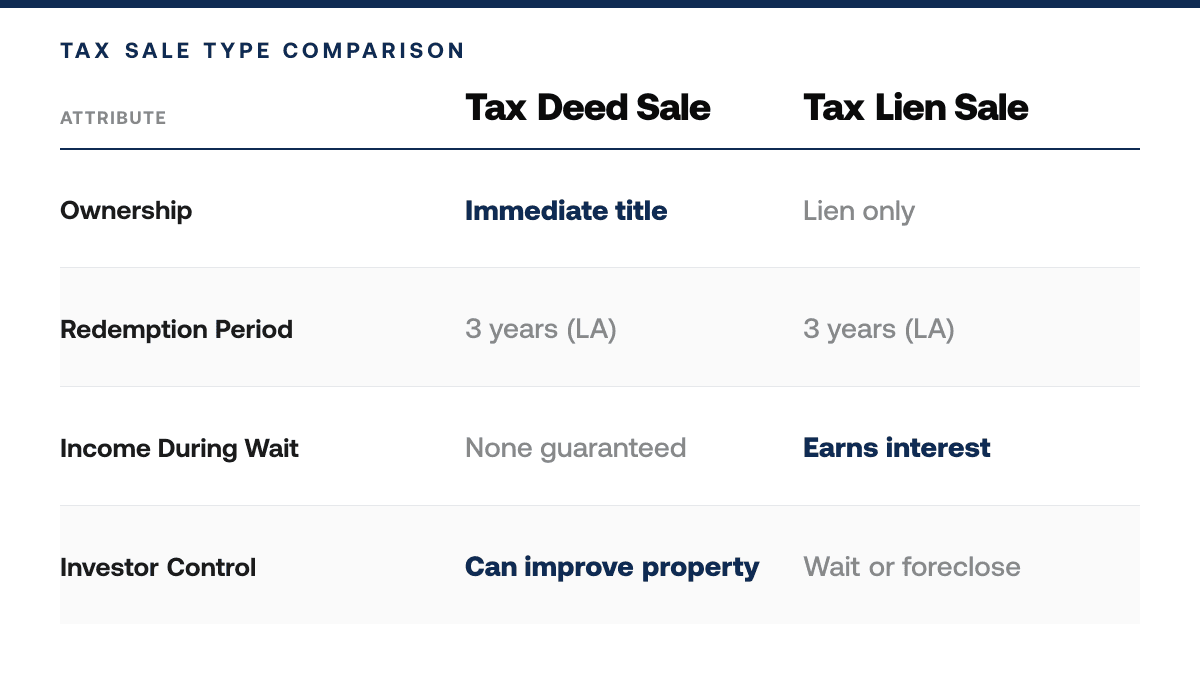
The sale itself is an auction. You bid on the property, and the highest bidder wins the right to either take title (tax deed sale) or receive a tax lien certificate (tax lien sale). In a tax deed sale, you own the property immediately after the sale, but the original owner has a redemption window, typically three years in Louisiana, to reclaim it by paying you back taxes, interest, and costs. In a tax lien sale, you hold a lien against the property instead of title and earn interest while waiting for redemption or eventual foreclosure.
Key insight: Louisiana's three-year redemption period means your capital is tied up longer than in other states, but it also attracts fewer out-of-state competitors who expect faster exits. Strategic buyers use this window to negotiate buyouts with motivated owners or improve the property.
Most generic tax sale guides fail Louisiana investors because they treat all states equally. A guide written for Texas (180-day redemption) or New Jersey (30-month redemption) won't address Louisiana's unique cash flow implications or the negotiation opportunities a three-year window creates. You need state-specific timeline intelligence: exact sale dates, redemption deadlines, and the legal steps to enforce or accelerate a sale after redemption expires.
Goliath Data eliminates the manual tracking burden. Instead of checking parish websites weekly and cross-referencing redemption calendars, Goliath Data's real-time life-event signals surface tax delinquencies automatically across Louisiana parishes, flagging properties the moment they enter the market, before competitors discover them.
Start by contacting your target parish's tax assessor's office or visiting its website to confirm the annual sale date and view the current delinquency list. Then use Goliath Data to automate the rest: property scoring, owner research, and outreach sequencing happen in parallel, freeing you to focus on due diligence for the deals that matter.
Frequently Asked Questions
How does Goliath Data identify tax delinquent properties faster than manual parish record searches?
Goliath Data monitors real-time life-event signals across Louisiana parishes to surface pre-delinquent and delinquent properties automatically. Instead of spending hours cross-referencing parish websites and redemption timelines, investors receive flagged properties with Seller Intent Scores that rank them by redemption risk and profitability, location, repair estimates, and neighboring property data included. This automation reduces time spent on low-probability deals significantly, freeing capital for high-conviction acquisitions before the parish sale date window closes.
What's the difference between missing a tax sale deadline and finding the property pre-delinquency?
Missing a parish-specific tax sale date costs you the entire opportunity, that property goes to auction without you, and redemption rights pass to the tax sale purchaser. Catching a property during pre-delinquency gives you an extended window to negotiate directly with the owner before any tax sale happens. Goliath Data's real-time delinquency signals let investors contact homeowners before tax notices are published, dramatically improving deal flow and negotiation opportunities.
Does Louisiana's three-year redemption period mean I can skip due diligence before bidding?
No. You must complete title searches, lien verification, environmental assessments, and property inspections before the tax sale auction date, not after you win the bid. Skipping due diligence exposes you to undisclosed mineral rights claims, succession issues, or code violations that could cost more than the property's value. Goliath Data's CRM pipeline management tracks inspection deadlines, title-search cutoffs, and compliance documentation automatically, so you never miss the window between identifying a property and the parish sale date.
Can I use the same prospecting approach for tax delinquent properties as standard motivated-seller leads?
Not entirely. Tax delinquent sellers are in distress and facing a hard deadline, the parish sale date, so outreach timing and messaging must be urgent and empathetic, not generic. Most are also unaware of their redemption rights or the exact steps to reclaim their property post-sale. Goliath Data's AI assistant David handles inbound calls and auto-sequences outreach via call, text, and email with seller-intent data baked in, so messaging is contextual ("We see your property is headed to tax sale in 45 days, here's how we can help") rather than cold. Real estate deal close rates rise 27% with AI CRM leads,[1] and for tax delinquent prospects, that urgency window makes AI-powered follow-up even more critical.
What Louisiana-specific title issues should I watch for in tax sale properties?
Louisiana mineral rights claims and succession disputes are the two biggest pitfalls. If a property's mineral rights were severed decades ago, the tax sale deed won't convey them, and mineral owners can resurface later with claim rights. Succession issues (multiple heirs with clouded title from the decedent's estate) are common in older Louisiana properties and can block your ability to refinance or sell. Always hire a Louisiana title company familiar with tax sales to run a full search before bidding. They'll flag outstanding liens, mineral claims, and succession problems that can't be cleared by tax sale. Goliath Data's CRM workflow tracking ensures you document all title clearance steps and inspection sign-offs, so nothing falls through the cracks between discovery and closing.
Is it worth automating outreach to neighboring property owners in tax delinquent areas?
Yes. Neighbors of tax-sale properties are often motivated to buy, either to prevent a distressed neighbor sale or consolidate land. Goliath Data identifies neighboring properties and auto-sequences outreach to those owners alongside the delinquent homeowner, multiplying deal opportunities from a single tax-delinquent trigger. Agentic CRMs boost conversion rates by 67%[2] by automating follow-up and nurturing, so you're not relying on manual calls to reach neighbors before they hear about the sale from someone else.
```
Sources
Not legal or financial advice. This article is for general educational purposes only and should not be relied on as a substitute for professional legal, tax, or financial advice. Real estate, tax, and property laws vary by state and individual circumstances. Consult a licensed attorney or qualified professional in your jurisdiction before acting on any procedure or strategy discussed here. Reading this content does not create an attorney-client relationship.
