
Hampton city, Virginia Tax Delinquent Properties for Sale List
Hampton city, Virginia Tax Delinquent Properties for Sale List — practical guide covering setup, examples, and common mistakes.


Austin Beveridge
Tennessee
, Goliath Teammate
Tax delinquent properties in Hampton, Virginia represent a distinct market opportunity for real estate professionals. These properties—where owners have fallen behind on property taxes—often sit off the typical market radar, creating a gap between motivated sellers and agents or investors equipped to help them.
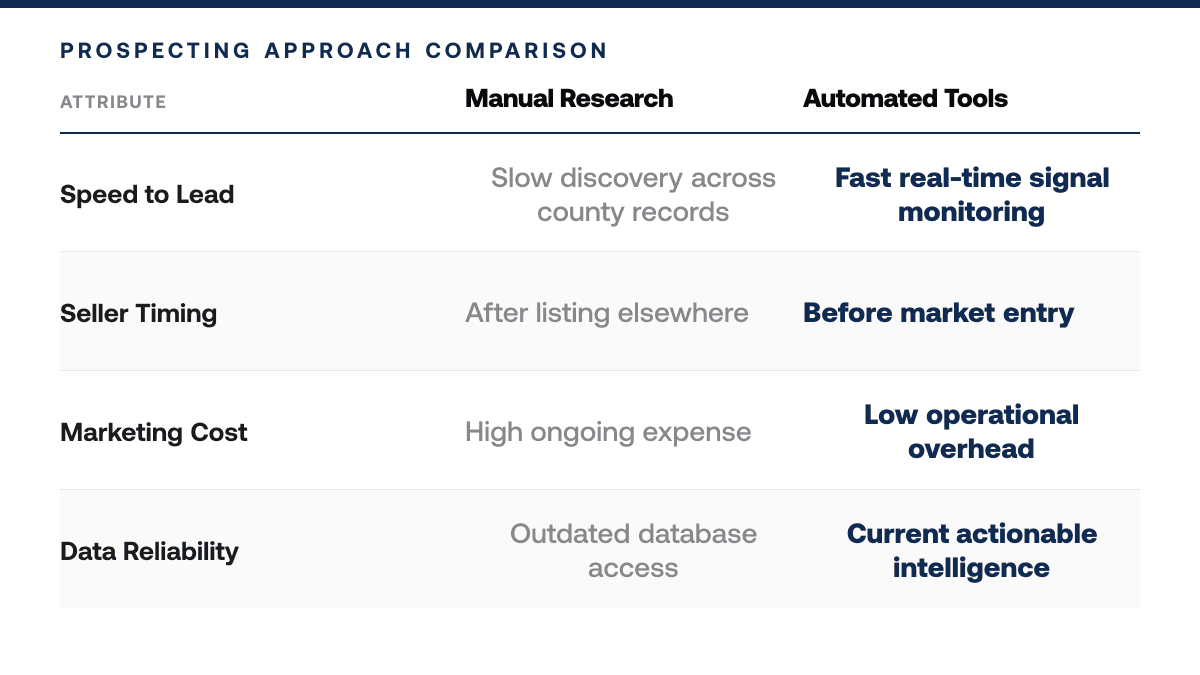
For agents and investors seeking faster deal flow without inflating marketing budgets, accessing reliable tax delinquent property lists has traditionally meant manual research across county records or relying on outdated databases. Modern prospecting tools now streamline this process, allowing professionals to identify and contact these motivated sellers automatically, turning administrative legwork into actionable lead generation.
This article covers how to locate tax delinquent properties in Hampton, what makes these deals attractive to investors and agents, and how to automate your prospecting workflow to close more transactions without expanding your marketing spend. Most agents discover tax delinquent leads only after they've already listed elsewhere or worked with a competing agent — Goliath Data monitors real-time tax delinquency signals to surface motivated sellers before they hit the market, so you reach them first.
TL;DR
Hampton city's tax delinquent properties are available through the city treasurer and sold via judicial tax deed process under Virginia law.
The sale process involves a circuit court-appointed special commissioner, with properties offered to the highest bidder in a structured judicial proceeding.
Redemption rights exist until the circuit court confirms the sale, giving prior owners a window to reclaim the property before title transfers to the buyer.[2]
Understanding Tax Delinquent Properties in Hampton, Virginia
What Is a Tax Delinquent Property?
A tax delinquent property is real estate where the owner has failed to pay property taxes owed to the local jurisdiction. When taxes remain unpaid beyond the grace period, the city or county initiates a formal process to recover the debt. These properties are eventually offered for sale through a public auction or judicial sale process. Tax delinquent properties often sell below market value, creating opportunities for investors and agents to acquire assets at a discount. The property itself remains marketable; the delinquency is simply a lien or debt obligation that must be resolved through the sale process.
Why Tax Delinquent Properties Matter for Real Estate Professionals
For real estate agents and investors, tax delinquent properties represent a pipeline of motivated seller situations. Property owners facing tax delinquency are often highly motivated to resolve the obligation quickly, making them prime candidates for direct outreach and negotiated sales before the property enters public auction. These opportunities allow professionals to build relationships with distressed owners, close deals faster, and expand their inventory without competing in traditional market channels. Understanding how to identify and contact owners of delinquent properties gives agents and investors a competitive edge in sourcing deals and automating prospecting workflows.
Virginia's Judicial Tax Deed Sale Process and Redemption Rights
In Virginia, tax delinquent properties are sold through a judicial process governed by Code of Virginia §58.1-3965. The Hampton city treasurer maintains the official delinquent property list and initiates the sale through the circuit court, which appoints a special commissioner to conduct the sale. A critical feature of Virginia's process is the redemption window: property owners retain the right to redeem their property and stop the sale up until the moment the circuit court confirms the sale. This redemption period creates a strategic window for agents and investors to contact owners before confirmation occurs. Understanding this statutory framework is essential for timing outreach, negotiating acquisitions, and navigating the legal requirements of tax deed purchases in Hampton.[2]
Key Numbers for Hampton City, Virginia Tax Delinquent Properties (2026)
Code of Virginia §58.1-3965 et seq. governs tax deed sales through judicial process via circuit court appointed special commissioner.[2]
Redemption period extends until the circuit court confirms the tax sale, protecting prior owners' equity interests.[2]
Hampton city treasurer maintains the official delinquent property list, the authoritative source for tax-sale opportunities.[4]
80% of real estate sales require five or more follow-up contacts after initial inquiry to convert leads.
Agents responding within 5 minutes are 100x more likely to make contact with a lead in competitive markets.
AI-assisted lead scoring reduces time spent on low-probability prospects by 30 to 50%, accelerating deal flow.
Step-by-Step Process
1. Access Hampton City Treasurer's Delinquent Property List
Contact the Hampton City Treasurer's office or visit their official website to obtain the current tax delinquent properties list. As an independent city jurisdiction in Virginia, Hampton maintains its own delinquent tax records. Request the most recent list of properties subject to tax sale proceedings under Code of Va. §58.1-3965 et seq. Verify that the list includes property addresses, parcel numbers, delinquent tax amounts, and sale dates to ensure you have complete information for your prospecting efforts.[2]
2. Verify Property Details and Ownership Records
Cross-reference each property on the delinquent list with Hampton City's assessor records and deed records to confirm current ownership, property condition, and any liens or encumbrances. Verify the redemption status by confirming whether the property is still within the redemption period until the circuit court confirms the sale. Document the tax amount owed and any accrued interest to understand the total financial obligation. This step ensures you're targeting properties with clear title potential and realistic acquisition costs.[2]
3. Identify Motivated Sellers and Assess Market Value
Research the property owners' contact information and assess their motivation level by analyzing property history, prior tax payment patterns, and comparable sales in the area. Evaluate each property's current market value relative to the delinquent tax amount and potential redemption costs. Properties where the tax debt is significantly below market value often indicate motivated sellers or situations where redemption is unlikely. Prioritize properties with the strongest acquisition potential based on location, condition, and equity position.
4. Prepare Outreach and Document Tax Implications
Before contacting property owners, document the federal tax treatment of any debt forgiveness or property acquisition. Understand that forgiven debt may be reported on IRS forms and could have tax consequences for the property owner, which can motivate settlement discussions. Prepare your outreach materials with clear information about redemption deadlines, sale procedures, and next steps. Position yourself as a solution provider who understands both the legal process and the financial implications of tax delinquency.[3]

How This Works in Practice
Example 1: The Wholesaler's Fast-Track Identification
Picture a wholesaler in Hampton who traditionally spent weeks manually searching county records and calling tax assessor offices to build a prospect list. By accessing a curated tax delinquent property list, she immediately identifies several off-market acquisition opportunities in neighborhoods where she already has buyer networks. Instead of cold-calling property owners months before auction, she reaches out early—when owners are motivated but before competitors flood the market. This early positioning lets her negotiate below-market deals, lock in contracts, and assign them to her cash buyer network within weeks. The list becomes her competitive moat: she moves faster than agents relying on public MLS data alone.
Example 2: The Buy-and-Hold Investor's Targeted Sourcing
Consider a buy-and-hold investor who previously relied on real estate agents to surface investment properties, paying commissions and competing with dozens of other bidders. Using a Hampton tax delinquent properties list, he filters for single-family homes in stable neighborhoods where rental demand is strong. He identifies properties whose owners are behind on taxes—a signal of financial distress that often means below-market pricing and motivated sellers. He reaches out directly with a simple offer before the property reaches auction, avoiding bidding wars and closing at a meaningful discount. Over several months, this targeted approach yields multiple acquisitions that traditional agent channels would have missed entirely.
Why Speed and Direct Access Matter
Both examples share a common thread: access to tax delinquent data removes the lag between property distress and investor outreach. Wholesalers and buy-and-hold investors who act on this information early—before auctions, before competing agents, before the property hits the MLS—capture deals at better terms and close faster. The list is the tool; timing is the edge.
Hampton Tax Delinquent Properties Checklist
Obtain the current delinquent property list from the Hampton city treasurer's office
Verify title status and redemption period details under Code of Va. §58.1-3965 before making an offer
Confirm the property's redemption status with the circuit court special commissioner handling the judicial sale
Inspect the property condition and identify any liens or encumbrances prior to closing
Review the judicial sale notice and confirm the circuit court confirmation date for the tax deed transfer
Common Mistakes to Avoid
Mistake: Underestimating holding costs and carrying expenses before redemption closes
Many investors focus solely on the tax deed purchase price but overlook property taxes, insurance, utilities, and maintenance during the redemption period—which lasts until the circuit court confirms the sale under Code of Va. §58.1-3965. These carrying costs can erode your profit margin significantly. Fix: Build a detailed holding-cost spreadsheet before bidding, including estimated property tax liability, hazard insurance, and any repairs needed to preserve the property's condition during the redemption window.[2][4]
Mistake: Ignoring redemption rights of prior lienholders and the property owner in Hampton
Virginia's judicial tax-sale process allows the original owner and other lienholders to redeem the property until the circuit court confirms the sale. Failing to account for redemption risk means you may lose the property after investing time and money, or face unexpected delays in taking title. Fix: Before bidding, conduct a thorough title search and lien search through Hampton's circuit court records to identify all potential redemption claimants and understand your actual timeline to clear title.[2]
Mistake: Skipping due diligence on property condition and environmental issues before purchase
Tax-delinquent properties are often sold as-is, and many carry hidden liabilities—foundation damage, mold, environmental contamination, or code violations—that can turn a bargain into a money pit. Agents and investors who skip inspections or title review face unexpected remediation costs that exceed the property's value. Fix: Conduct a pre-bid walkthrough, hire a professional inspector, and review county records for code violations, liens, and environmental flags to price risk accurately.[4]
Frequently Asked Questions
What financing options are available for tax delinquent properties in Hampton?
Financing for tax delinquent properties often requires cash or specialized lenders willing to work with properties in distressed condition. Traditional mortgage lenders may hesitate due to title concerns and property condition. Many investors use hard money loans, private lending, or portfolio lenders familiar with tax deed acquisitions. Before pursuing financing, verify the property's actual condition and any liens or encumbrances through the Hampton circuit court records, as these factors directly affect lender willingness and loan terms.[5]
How long does the redemption period last after a tax deed sale in Virginia?
In Virginia, the redemption period extends until the circuit court confirms the tax deed sale. Once confirmed by the court-appointed special commissioner, the redemption window closes and the buyer gains clear title. This timeline varies depending on court scheduling and any legal challenges, so monitoring court records through the Hampton circuit court is essential to understand when your ownership becomes final.[2]
What market conditions should I monitor before investing in Hampton tax delinquent properties?
Monitor local housing market trends, comparable property values, and neighborhood demand to assess whether a tax delinquent property represents genuine opportunity or a liability. Market data from federal sources helps you understand whether local conditions favor quick resale or longer holding periods. Properties in high-demand areas with stable or rising values typically offer better exit strategies than those in declining neighborhoods, so baseline your investment thesis against current market conditions before bidding.[5]
Sources
Disclaimer: This article is provided by Goliath Data for general informational purposes only and does not constitute legal, tax, financial, or investment advice. Statutory references, redemption timelines, interest rates, and procedural requirements vary by jurisdiction and change over time. Always verify current information with the relevant county or municipal office and consult a licensed attorney, CPA, or financial advisor before making any investment, acquisition, or legal decision based on this content.
