
Clark County, Ohio Tax Delinquent Properties for Sale List
Clark County, Ohio Tax Delinquent Properties for Sale List: a practical guide with concrete steps, real examples, and the common mistakes to avoid in 2026.


Austin Beveridge
Tennessee
, Goliath Teammate
Tax delinquent properties in Clark County, Ohio represent some of the most motivated seller leads available to real estate investors and agents, homeowners facing immediate financial pressure with limited alternatives. These properties land on public records within days, and agents who move fast can lock acquisition agreements before competitors even know they exist. Goliath Data monitors real-time tax delinquency signals across Clark County to surface these opportunities the moment they hit the county records, so your team reaches motivated sellers before they list.
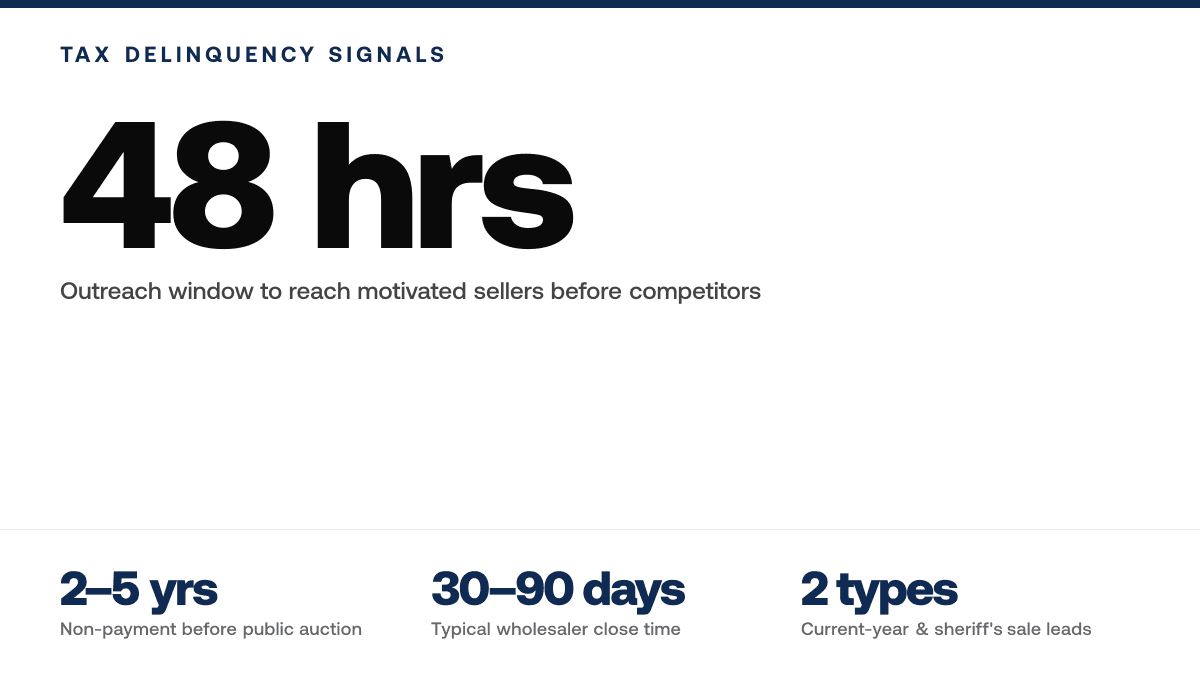
Clark County tax delinquent properties typically fall into two categories: homeowners behind on current-year taxes (often recoverable with payment plans) and properties entering the sheriff's sale process after years of non-payment. Both present high-probability closing opportunities, tax delinquency is a life-event signal that correlates directly with seller intent. A homeowner facing a tax lien or imminent sale has already made the emotional decision to move; they're not shopping around or gaming offers. Your job is to reach them first with a solution.
Here's how to source, evaluate, and close tax delinquent deals in Clark County.
TL;DR
Tax delinquent properties trigger public auction after multiple years of non-payment in Ohio.
Clark County properties enter sheriff's sale when real estate taxes remain unpaid.
Acquire lists from county auditor, verify owner contact info, and begin outreach promptly.
Wholesalers close tax delinquent deals quickly by offering immediate cash settlements.
Verify property equity, confirm owner intent, and secure purchase agreement before auction date.
Missing the outreach window and failing to verify lien priority are the top deal-killers.
Quick Answer
Clark County, Ohio tax delinquent properties are residential and commercial parcels where owners haven't paid property taxes, triggering county foreclosure proceedings. You can access lists through the Clark County Auditor's office, county treasurer's website, or specialized real estate data platforms. These properties often represent motivated-seller opportunities for investors and agents willing to navigate back taxes and ownership transfers.
Understanding Clark County Tax Delinquent Properties
A tax delinquent property is real estate where the owner has fallen behind on property tax payments to Clark County, Ohio. The county maintains a public list of these properties, typically updated regularly. Owners face penalties, interest accrual, and eventual foreclosure if taxes remain unpaid.
Tax delinquent properties represent motivated sellers. Owners carrying unpaid tax bills need liquidity fast, making them prime candidates for direct offers, wholesaling, or fix-and-flip acquisitions. These lists are public record, freely accessible, and signal immediate urgency that traditional MLS listings don't reflect.
Tax delinquent property lists are essential for real estate investors sourcing off-market deals, wholesalers building pre-foreclosure pipelines, fix-and-flip buyers targeting distressed inventory, and agents prospecting motivated sellers before auctions.
How to Find and Acquire Tax Delinquent Properties
Search Clark County's Public Records Online. Clark County Auditor's website publishes tax delinquent properties on a regular schedule. Visit the assessor's portal, filter by delinquency status, and download the current list. You'll get property address, owner name, parcel number, and delinquency amount. This raw data is your starting point, free, public, and updated regularly.
Cross-Reference Ownership and Title History. Verify the current owner hasn't already filed a redemption or payment plan. Check for liens, second mortgages, or code violations that affect your investment thesis. This step eliminates false positives and protects you from pursuing already-resolved cases.
Calculate Equity and Market Value. Pull comparable sales for the neighborhood, estimate current market value, and calculate remaining equity after all liens and back taxes. Properties with strong equity and below-market valuations are your best acquisition targets. This filters the list down to deals that pencil out financially before you spend time prospecting.
Build and Prioritize Your Outreach List. Segment properties by equity, condition, and location. Rank them by likelihood to sell, properties with high equity, recent delinquency, and owner contact info are higher priority. Goliath Data automates this ranking with its Seller Intent Score, surfacing the homeowners most likely to respond before competitors reach them.
Contact Owners via Multiple Channels. Phone calls work best for immediate engagement, but follow up with text and email to catch owners who screen calls or prefer asynchronous contact. Consistent, multi-channel outreach converts faster than single-touch attempts. Goliath Data's AI assistant David handles inbound calls, texts, and emails automatically, qualifying leads around the clock so your team focuses only on motivated prospects.
How This Works in Practice
A solo agent discovers a tax-delinquent property in Clark County through public records. Instead of manually calling the homeowner cold, the agent uses Goliath Data to pull the property details, cross-reference seller intent signals, and rank the lead's likelihood to sell. The platform's AI assistant David handles the first outreach via call and text, qualifying whether the homeowner is motivated and receptive. The agent then reviews the conversation summary and follows up only on qualified prospects, cutting wasted dials significantly and landing three quality appointments within a week instead of three weeks of grinding.
Consider a fix-and-flip investor managing deal flow across three counties. Manually pulling tax delinquent lists, cross-checking titles, and cold calling dozens of homeowners monthly burns significant administrative time and closes inconsistently. Using Goliath Data's advanced filters, the investor narrows the search to pre-foreclosures in their buy-box price range and equity threshold. Automated nurture sequences via email and SMS keep qualified leads warm. The result: a reliable pipeline of qualified deals per month without hiring an SDR or scaling ad spend.
Tax delinquent properties attract multiple investors. First contact often wins. Automating qualification and follow-up means your team reaches motivated sellers before competitors do and spends time only on leads worth closing.
Clark County Tax Delinquent Properties Checklist
• Confirm the property is still tax delinquent, not redeemed.
• Pull the full tax deed notice from Clark County records.
• Verify the redemption period and deadline with the county.
• Research title liens, mortgages, and judgment claims.
• Inspect the property condition and estimate repair costs.
• Calculate your max bid minus holding costs and taxes owed.
• Register for the county auction or foreclosure sale early.
• Have proof of funds or certified check before auction day.
Pro Tip: Contact owners early in the delinquency cycle, within several months of the initial tax notice. Motivation peaks before the auction date approaches and legal costs mount.
Common Mistakes to Avoid
Treating tax delinquency as a universal buying signal. Not every tax-delinquent owner is motivated to sell, some are temporarily cash-strapped or disputing the assessment. Assuming all delinquent properties are entry-level deals risks wasting calls on owners who'll pay back taxes or refinance. Verify equity, recent market value, and ownership history before outreach.
Ignoring the county's redemption period and foreclosure timeline. Clark County has specific statutory windows between delinquency notice and foreclosure sale. Cold-calling a homeowner months after delinquency may mean they've already resolved the debt or lost the property. Map the timeline first; contact sellers early in the cycle when motivation peaks and options exist.
Relying solely on public records without automated follow-up. Manual list-pulling and one-off calls miss the conversion window. Motivated sellers respond fastest to consistent, multi-channel outreach via voice, text, and email. Without automation, a single missed call or delayed callback costs the deal. Platforms like Goliath Data automate nurture sequences so you reach sellers before competitors do.
Frequently Asked Questions
What's the difference between tax delinquent properties and foreclosures in Clark County?
Tax delinquent properties are homes where owners have failed to pay property taxes, typically triggering a tax lien or impending tax sale. Foreclosures occur when a mortgage holder reclaims the property due to unpaid loan payments. Tax delinquencies often precede foreclosure and offer earlier acquisition windows for investors.
How accurate are tax delinquency lists for finding investment deals in Ohio?
Tax delinquency records are public filings maintained by county assessors and treasurers, so the data itself is accurate and official. Accuracy depends on how current the list is, older snapshots miss recent status changes or redemptions. Real-time or regularly-updated lists capture active delinquencies more reliably than less frequent reports. Verify current ownership status directly with Clark County before pursuing a property.
Can I buy a tax delinquent property in Clark County before it goes to auction?
Yes. Many owners will sell privately to avoid tax sale proceedings, or you can negotiate a deal before the sale date. After a tax sale occurs, redemption periods may apply, meaning the original owner retains the right to reclaim the property within a statutory window. Contact Clark County's treasurer's office to confirm current redemption rules and the property's exact status before making an offer.
Sources
Not legal or financial advice. This article is for general educational purposes only and should not be relied on as a substitute for professional legal, tax, or financial advice. Real estate, tax, and property laws vary by state and individual circumstances. Consult a licensed attorney or qualified professional in your jurisdiction before acting on any procedure or strategy discussed here. Reading this content does not create an attorney-client relationship.
