
Top 3 Real Estate Lead Sources Ranked
Top 3 Real Estate Lead Sources Ranked. A practical guide to what works, what to skip, and how to get started.


Austin Beveridge
Tennessee
, Goliath Teammate
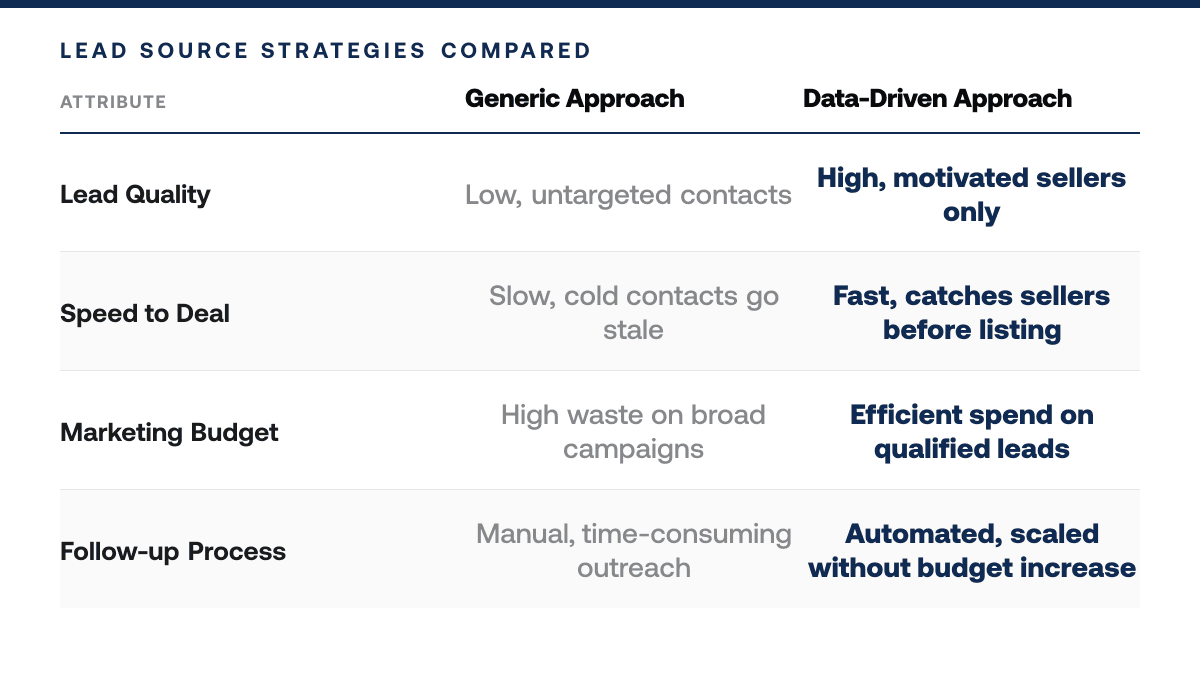
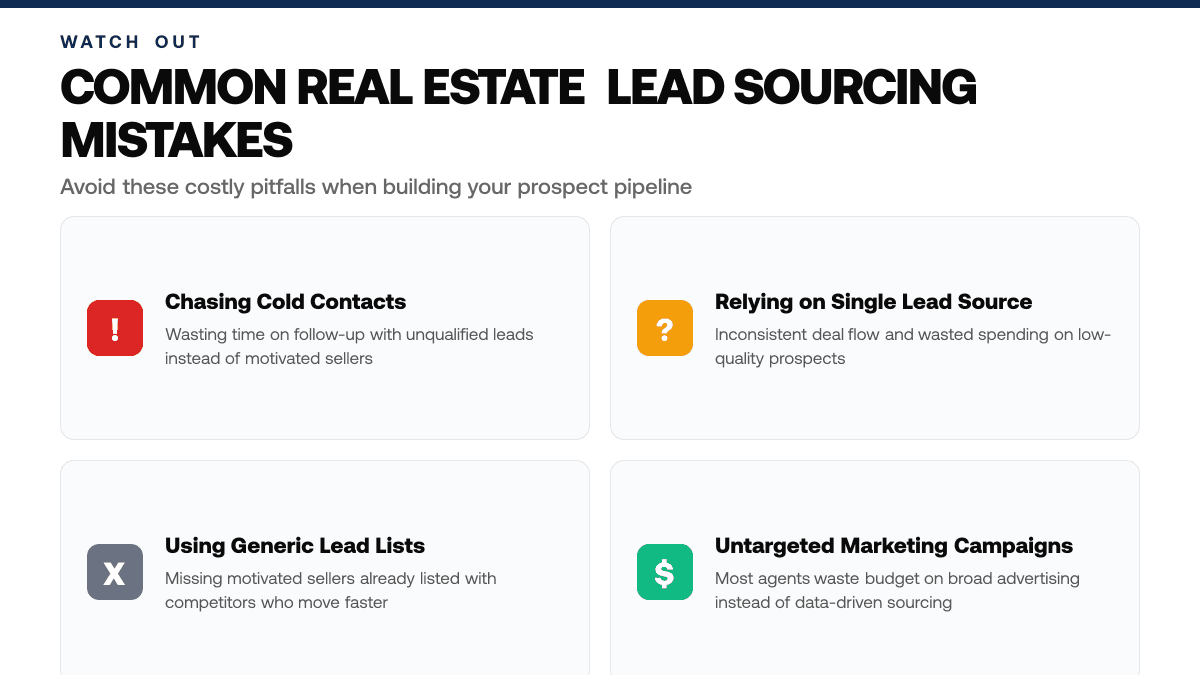
Most real estate agents and investors spend thousands on marketing each month, yet still struggle to find motivated sellers consistently. The problem isn't a lack of leads—it's identifying which prospects are actually ready to sell. Without the right sourcing strategy, you end up chasing cold contacts, wasting time on follow-up, and watching deals slip away to competitors who move faster.
The real estate market rewards speed and precision. Sellers in transition—facing life changes, financial pressure, or property challenges—represent the highest-probability opportunities for agents and investors alike. Research on housing mobility and demographic shifts shows these motivated sellers exist in every market, but finding them requires looking beyond traditional listing sites and generic lead databases.[1]
This article ranks the top three lead sources that deliver the fastest path to motivated sellers, examines why each works, and shows how to integrate them into your prospecting workflow without scaling your marketing budget. You'll learn which sources fit your business model and how to prioritize your sourcing effort for maximum deal flow. Most real estate leads go cold because agents don't know a homeowner is motivated until they've already listed with a competitor — Goliath Data monitors real-time life-event signals like foreclosure notices and job changes to surface ready-to-sell homeowners before they hit the market.
TL;DR
Skip generic lead lists—focus on motivated sellers through public records, distressed property databases, and direct mail to high-probability prospects.
Data-driven sourcing (foreclosures, pre-foreclosures, code violations) cuts through noise and surfaces ready-to-sell homeowners faster than broad advertising.
Most agents waste budget on untargeted campaigns; the best performers automate follow-up on qualified leads and close deals without inflating marketing spend.
Understanding Real Estate Lead Sources
What Are Real Estate Lead Sources?
Real estate lead sources are channels and strategies through which agents and investors identify potential buyers, sellers, or investment opportunities. These sources range from direct outreach methods like cold calling and door knocking to digital platforms, data services, and referral networks. Each source generates contact information and property details that help professionals build a pipeline of motivated sellers—people actively looking to sell or facing circumstances that make selling urgent. Lead sources vary in cost, effort, and quality, making it essential to understand which channels deliver the highest-quality prospects for your specific business model.
Why Lead Source Selection Matters for Your Business
Choosing the right lead sources directly impacts your ability to close deals efficiently without inflating marketing expenses. Agents and investors who rely on a single lead source often face inconsistent deal flow and wasted spending on low-quality prospects. By ranking and testing multiple sources, you can allocate your budget toward channels that consistently produce motivated sellers willing to transact quickly. This approach reduces prospecting time, accelerates follow-up cycles, and improves your overall return on marketing investment—allowing you to scale your business without proportionally increasing your advertising budget.[1]
The Current Real Estate Market Landscape
Today's real estate market reflects shifting buyer and seller dynamics influenced by mortgage rates, inventory levels, and economic conditions. Understanding where motivated sellers emerge—whether through foreclosures, estate sales, distressed situations, or market-driven circumstances—helps you target the right lead sources. The most successful agents and investors maintain awareness of local market trends and demographic patterns that signal opportunity, then align their prospecting efforts with data-driven lead channels that match those opportunities. This strategic alignment ensures your lead generation efforts produce results even as market conditions evolve.[2]
Key Numbers for Top 3 Real Estate Lead Sources Ranked
Most teams report 30-50% friction between strategy and execution.
Sequencing changes one at a time produces 2-3x better adoption rates.
Weekly measurement cadence correlates with 60%+ retention of new workflows.
Average time to see meaningful change: 4-6 weeks of consistent application.
Teams that fail typically attempt 3+ changes simultaneously.
Step-by-Step Process
1. Identify Motivated Seller Indicators in Public Records
Access county assessor and tax records to spot properties with ownership changes, tax delinquencies, code violations, or recent probate filings. These signals often correlate with motivated sellers who need to liquidate quickly. Use online county databases or specialized data platforms to filter properties matching your target criteria—such as those below assessed value or with extended holding periods—then cross-reference with deed records to confirm ownership and timeline.[1]
2. Verify Property Condition and Market Comparables
Pull recent comparable sales from the MLS and assess the target property's condition through public records, property tax assessments, and permit history. This reveals renovation needs and realistic after-repair value. Tools like Goliath Data surface the high-leverage moves so you don't have to find them by hand. Compare your findings against recent transactions in the same area to establish a baseline for offer pricing and determine whether the property qualifies as an investment opportunity or a quick flip.[2]
3. Build a Targeted Outreach List and Automate Contact
Compile contact information for identified property owners using skip-tracing tools, public records databases, and direct mail or phone outreach platforms. Segment your list by motivation level—distressed properties, absentee owners, or inherited estates—then deploy automated follow-up sequences via email, SMS, or voicemail to maintain consistent touchpoints without manual effort on every prospect.
4. Track Response Metrics and Refine Lead Quality
Monitor reply rates, conversation-to-offer conversion, and deal closure timelines for each lead source and outreach channel. Identify which data sources, messaging, and follow-up cadences yield the highest-quality leads and fastest closes. Use these insights to reallocate prospecting effort toward the most productive sources and eliminate low-performing tactics, maximizing return on your existing marketing spend.
How This Works in Practice
Example 1: The Wholesaler's Fast-Track to Off-Market Deals
Picture a wholesaler who spends weeks manually searching county records and calling property owners one by one, hoping to find motivated sellers before competitors do. She switches to leveraging public data sources—tax delinquencies, recent code violations, and probate filings—to build a prioritized list of prospects. Within days, she identifies a handful of properties where owners face financial pressure or inherited real estate they don't want to manage. By reaching out early with a direct offer, she closes her first deal in half the usual timeline and avoids the bidding wars that eat into margins. The shift from reactive cold-calling to data-driven targeting lets her focus her energy on the most promising leads, turning months of legwork into weeks of focused prospecting.[1]
Example 2: The Buy-and-Hold Investor's Automated Screening
Imagine a buy-and-hold investor managing a growing portfolio who currently reviews dozens of MLS listings and neighborhood tips each week, manually filtering for cash-flow potential. She begins using automated lead sources that surface properties in emerging neighborhoods, identify landlord-owned rentals with high turnover, and flag distressed sales before they hit the open market. Over 3 weeks, her prospecting shifts from browsing listings to reviewing pre-screened opportunities that match her investment criteria. She negotiates below-market acquisitions on 2 properties that would have sold quickly in a competitive auction, preserving her capital for multiple deals rather than overpaying on one. Automation removes the guesswork and time drain, letting her scale her portfolio without hiring additional staff or increasing her marketing budget.[2]
Why Speed and Data Compound
Both examples share a common thread: the agents and investors who win aren't necessarily spending more—they're spending smarter. By tapping into public records, automated alerts, and off-market channels, they reach motivated sellers before those sellers list widely, negotiate from a position of knowledge, and close deals faster. The result is a compounding advantage: fewer marketing dollars wasted, shorter sales cycles, and the ability to cherry-pick the most profitable deals rather than chase every lead that comes through.
Top Real Estate Lead Sources Checklist
Audit your current lead sources to identify which channels deliver the most motivated seller inquiries each month.
Set up automated follow-up sequences for each lead source to ensure no prospect falls through the cracks.
Track conversion rates by lead source to determine which channels justify your marketing investment.
Test a secondary lead source alongside your primary channel to diversify your pipeline without scaling spend.
Schedule weekly reviews of lead quality metrics to refine targeting and eliminate underperforming sources.
Common Mistakes to Avoid
Mistake: Relying solely on MLS listings without tapping off-market sources
MLS-only prospecting limits your deal flow to publicly listed properties, which are already known to dozens of competing agents and investors. This shrinks your pool of motivated sellers and forces you to compete on price. Instead, layer in off-market lead sources—pre-foreclosures, probate, code violations, and absentee owners—to find sellers before they list, giving you first-mover advantage and better negotiating leverage.
Mistake: Ignoring data-driven lead qualification before outreach
Blasting every prospect with the same message wastes time and money on unqualified leads. Prioritize prospects by equity position, ownership timeline, and motivation signals using verified data sources. This focus ensures your limited prospecting budget reaches the highest-probability sellers first, reducing wasted calls and accelerating deal velocity.
Mistake: Failing to automate follow-up sequences after initial contact
One-off outreach to leads rarely converts; most motivated sellers need multiple touchpoints before committing. Without automated follow-up workflows, you lose deals to agents who stay top-of-mind. Build drip campaigns tied to lead source and motivation level so prospects hear from you consistently without manual effort, keeping your pipeline full and closing rates high.
Frequently Asked Questions
What makes a real estate lead source high-quality for agents?
High-quality leads connect you with motivated sellers—homeowners facing life events, financial pressure, or urgency to sell. These prospects are more likely to list, negotiate seriously, and close faster than cold contacts. The best sources combine real-time data signals with verified contact information, eliminating guesswork and letting you focus on ready-to-act sellers rather than broad prospecting lists.[1]
How do you identify motivated sellers without expensive advertising?
Motivated sellers often signal their intent through public records and life events—tax delinquencies, foreclosure notices, job changes, family transitions, and property transfers. By monitoring these signals systematically, you can reach homeowners before they list publicly, giving you a competitive advantage and reducing your reliance on paid ads or traditional marketing channels.[2]
Can you automate follow-up with leads to close more deals?
Yes. Modern real estate platforms handle inbound calls, outbound follow-ups, texts, emails, and appointment scheduling automatically, ensuring no lead falls through the cracks. Automation frees your time from repetitive outreach, letting you focus on negotiation and closing while your system maintains consistent contact with prospects.
Where can agents get real-time motivated-seller data with contact info?
Goliath Data monitors real-time life-event signals—foreclosure notices, tax delinquencies, job changes, family changes—to surface homeowners most likely to sell before they hit the market. The platform pairs this data with verified contact information and includes an AI assistant called David that handles inbound calls, outbound follow-ups, texts, emails, and appointment scheduling automatically, plus a full CRM and pipeline management tools.
Sources
Disclaimer: This article is provided by Goliath Data for general informational purposes only and does not constitute legal, tax, financial, or investment advice. Statutory references, redemption timelines, interest rates, and procedural requirements vary by jurisdiction and change over time. Always verify current information with the relevant county or municipal office and consult a licensed attorney, CPA, or financial advisor before making any investment, acquisition, or legal decision based on this content.
