
San Francisco Tax Delinquent Properties for Sale List
Find tax delinquent properties for sale San Francisco using county assessor data and AI-powered lead scoring. Spot opportunities before auction in 3 steps.


Austin Beveridge
Tennessee
, Goliath Teammate
Quick Answer
San Francisco tax-delinquent properties are homes where owners owe unpaid property taxes, typically listed through the county assessor's office or foreclosure auctions. You'll find them by checking the San Francisco County Tax Collector's delinquency roll, attending public tax sales (usually held quarterly), or using platforms like Goliath Data, which surfaces tax-delinquent homeowners in real time alongside seller intent signals. These properties often sell at discounts, but title and lien complications require careful due diligence before bidding.
Understanding Tax-Delinquent Properties in San Francisco
Tax-delinquent properties are residential or commercial real estate where the owner has failed to pay property taxes for one or more years. The county initiates a tax sale process to recover unpaid obligations, creating opportunities for investors and agents to acquire properties below market value. Here's why this matters: San Francisco's high property values mean even modest tax arrears can unlock significant equity, and motivated sellers facing tax liens are often ready to move before foreclosure accelerates.
When an owner stops paying property taxes, San Francisco County places a lien on the deed. The property enters a redemption period where the owner can still reclaim it by paying back taxes plus penalties and interest. If they don't, the county sells the property at auction to satisfy the debt.
Tax-delinquent properties represent pre-motivated sellers, homeowners under financial stress who need to liquidate fast. They're not yet foreclosures, but the clock is ticking. Agents who reach them early can position themselves as solution providers, not just transaction facilitators. This opportunity suits real estate investors racing to build deal flow, solo agents seeking motivated-seller leads before competitors, wholesalers targeting pre-auction acquisition windows, fix-and-flip buyers matching properties to their criteria, and team leaders scaling operations without hiring.
Step-by-Step Process
Finding and acquiring tax-delinquent properties in San Francisco requires systematic research, verification, and quick action. Here's how to move from lead to offer.
1. Pull the Official Tax Delinquent List
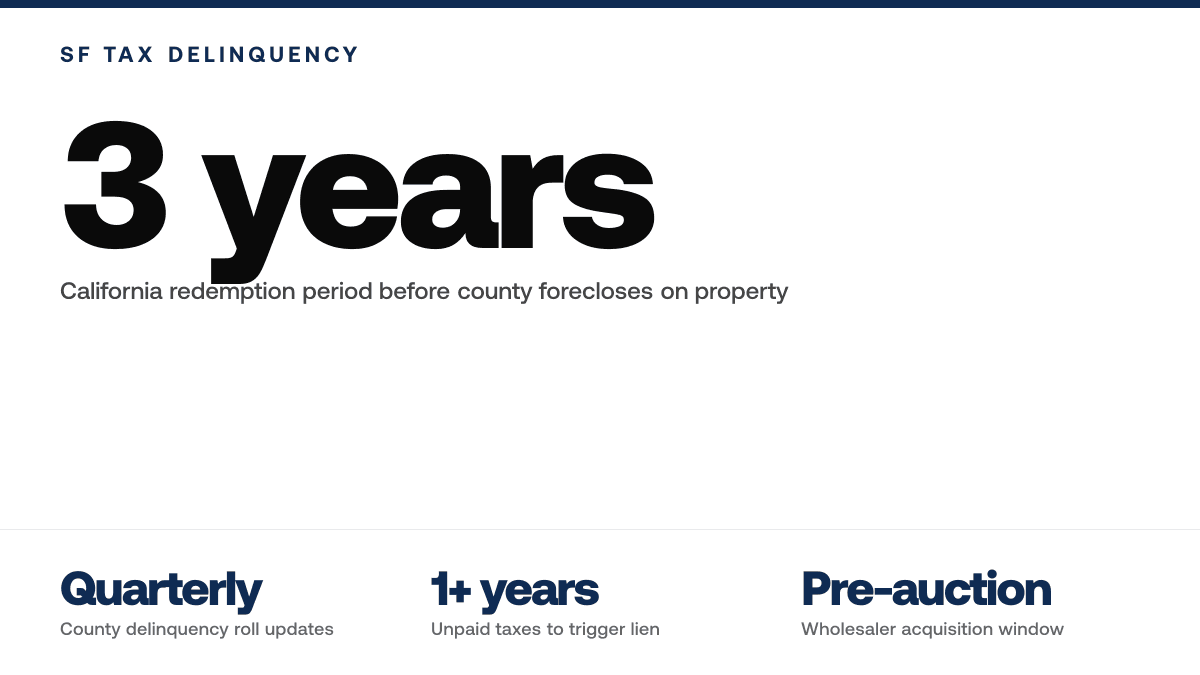
Visit the San Francisco Assessor-Recorder's Office website or the County Treasurer's delinquent tax roll. Download the current list, it's public record, updated quarterly. Filter by property address, owner name, or amount owed. This raw data is your starting point; don't rely on third-party aggregators alone.
2. Verify Title and Lien Priority
Pull the property deed and lien stack from the County Recorder. Confirm no senior liens exist that would be paid before the tax lien. Check for HOA dues, code violations, or pending foreclosures. This step prevents buying into a property buried under senior debt.
3. Assess Property Condition and Market Value
Drive the property. Take photos. Run a quick comparable sales analysis using MLS data or county records. Estimate after-repair value if it's distressed. Calculate potential equity after taxes, penalties, interest, and legal costs. Numbers must work before you move forward.
4. Research the Owner and Redemption Window
Identify the owner via county records. Confirm the redemption period, California allows roughly three years before the county forecloses. Contact the owner if you're wholesaling; they may negotiate a payoff. Understand your timeline; redemption windows directly impact deal velocity.
How This Works in Practice
Tax-delinquent property acquisition works fastest when you combine real-time data with automated outreach. Here are two walkthroughs showing how investors and agents close these deals.
An investor targets single-family homes under mid-tier pricing in San Francisco's outer neighborhoods. She uses Goliath Data to pull a list of tax-delinquent properties within the past 60 days, filtered by equity level and property condition. She reaches out via phone, text, and email simultaneously through Goliath's automated AI nurture sequences. Most owners respond within the first two touches because they're still in problem-solving mode, not yet defensive. Turnaround: first qualified lead in under 72 hours. Conversion odds improve dramatically at this stage because you're reaching motivated sellers before attorneys or other investors flood their inboxes.
A wholesaler working probate and tax-delinquent lists in parallel sends a personalized postcard to 200 delinquent owners, then sequences automated follow-up calls five days later. By call three, Goliath's AI assistant David has already qualified 8–12 serious leads, owners who didn't ignore the mail. He schedules in-person appointments for the top three. Result: two deals under contract within 30 days, both below market value because owners faced immediate auction risk.
Tax delinquency creates a narrow window. Owners who haven't yet faced foreclosure notice are more flexible on price. Speed and sequencing matter because delay signals you're not committed, pushing hesitant sellers toward competing investors or attorneys offering structured settlements.
Tax-Delinquent Properties Checklist
Verify the deed is on file with the county recorder
Check the property's assessed value against current market comps
Confirm tax delinquency notice was properly served to the owner
Calculate remaining equity after back taxes and sale costs
Review any liens or encumbrances against the title
Confirm the county's redemption period hasn't already expired
Request the owner's contact information from public records
Document all findings in your deal tracking system immediately
Key insight: Copy this checklist into your CRM or spreadsheet before you start. Properties move fast, having it templated saves time when you're racing other investors.
Common Mistakes to Avoid
San Francisco's tax-delinquent property market moves fast. Miss these three patterns and you'll lose deals to competitors who don't.
Relying on stale county records alone. County assessor websites update monthly or quarterly. By then, another investor has already contacted the homeowner. Real-time signals like those provided by Goliath Data—tax notices, payment failures, foreclosure filings—arrive days or weeks before public records refresh. You're chasing yesterday's lead.
No automated follow-up system. A single cold call rarely closes a motivated seller. Successful investors follow up via call, text, and email over weeks. Without automation, you'll spend significant time on manual dials and replies. One missed callback kills the deal. Goliath's AI assistant David handles inbound calls, outbound follow-ups, texts, and emails automatically so you never miss a lead.
Ignoring seller intent scoring. Not all tax-delinquent owners are motivated to sell. Some catch up on back taxes. Others refinance. You'll waste time on low-probability leads instead of prioritizing homeowners most likely to transact. Goliath's Seller Intent Score ranks homeowners by likelihood to sell, separating closers from tire-kickers.
Frequently Asked Questions
What exactly are tax-delinquent properties, and how do they end up for sale in San Francisco?
Tax-delinquent properties are homes where the owner hasn't paid property taxes owed to the county. In San Francisco, when taxes go unpaid for several years, the county initiates a tax sale process to recover the debt. The property is listed publicly, and investors or owner-occupants can bid on it, often at significant discounts because the title comes with the tax lien attached. The owner has a redemption period (typically years) to reclaim the property by paying back taxes and penalties.
Why do real estate investors specifically target tax-delinquent properties instead of buying on the open market?
Tax-delinquent deals often trade below market value because they carry risk: unclear title history, potential liens, or unknown property condition. However, experienced investors use this risk asymmetry to their advantage. If you can navigate the due diligence, title research, lien verification, property inspection, you acquire equity immediately. In hot markets like San Francisco, this avenue offers deals unavailable to retail buyers competing on the MLS, making deal flow more consistent for investors who develop repeatable systems.
How long does the tax-delinquent property buying process actually take from discovery to closing?
Timeline varies significantly. If you spot a property before the county tax sale occurs, you might contact the owner directly and close in 30–60 days if they're motivated to settle the debt. If the property enters the county auction phase, timelines compress, you bid, win, and have days to fund. Post-auction, redemption periods can extend several months to years depending on California law and when the owner's window to reclaim closes. Most experienced investors plan 3–6 months for a full cycle, but early intervention compresses this significantly.
Sources
Not legal or financial advice. This article is for general educational purposes only and should not be relied on as a substitute for professional legal, tax, or financial advice. Real estate, tax, and property laws vary by state and individual circumstances. Consult a licensed attorney or qualified professional in your jurisdiction before acting on any procedure or strategy discussed here. Reading this content does not create an attorney-client relationship.
