
Florida Tax Delinquent Properties for Sale List
Florida Tax Delinquent Properties for Sale List. Practical playbook for Real Estate Technology — methods, examples, and pitfalls to avoid in 2026.


Austin Beveridge
Tennessee
, Goliath Teammate
Florida tax delinquent properties are homes where owners have failed to pay property taxes, typically listed for public sale by the county after a set delinquency period. You'll find these lists on Florida county tax collector websites, public auction platforms, and specialized data services that surface delinquent properties in real time.
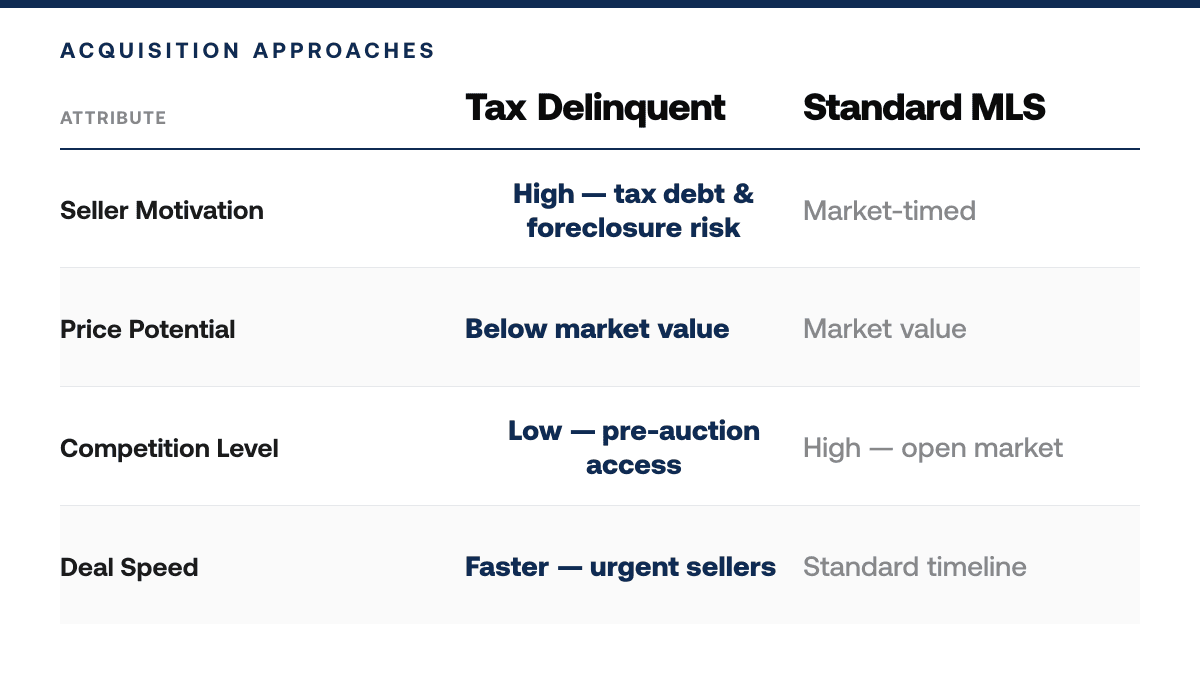
Tax delinquent properties differ from foreclosures: the county places a lien on the property but hasn't seized it yet, meaning owners still hold title and have negotiating power. This creates genuine motivation to sell quickly, often below market value, since unpaid taxes accrue penalties and interest while the county moves toward eventual auction. These properties attract investors seeking discounted acquisitions and agents hunting motivated sellers who respond faster to outreach and close deals in weeks rather than months compared to traditional MLS listings.
County tax collector websites publish delinquent property lists
Owners face urgent deadlines, creating faster sales timelines
Specialized platforms eliminate manual county record research
Quick Answer
Tax delinquent properties in Florida are homes where owners haven't paid property taxes, typically listed for public sale by the county after a set delinquency period. You'll find these lists on Florida county tax collector websites, public auction platforms, and specialized data services like Goliath Data that surface delinquent properties alongside seller intent signals in real time. These properties attract investors seeking discounted acquisitions and agents hunting motivated sellers before competitors do.
Understanding Tax Delinquent Properties for Sale in Florida
Tax delinquent properties in Florida are residential or commercial real estate where the owner has fallen behind on property tax payments to the county. When an owner doesn't pay taxes by the deadline, typically after the initial notice, the county initiates a tax sale process to recover unpaid taxes, interest, and penalties. These properties represent a unique opportunity because owners facing tax liens are often highly motivated to sell quickly and negotiate below market value.
Tax delinquent properties differ from standard MLS listings because they're driven by financial hardship, not market timing. Owners owe the government money and face foreclosure risk if the debt remains unpaid. That urgency creates seller motivation before properties reach the county courthouse steps. Finding tax delinquent sellers before they're publicly auctioned means you can negotiate directly with homeowners at a discount, avoid competitive bidding, and close deals faster. Wholesalers, fix-and-flip investors, and agents chasing deal flow all benefit from early access to these lists.
Tax delinquent property sourcing works best for real estate investors seeking below-market purchase prices, wholesalers building a consistent pipeline of pre-qualified deals, agents targeting highly motivated seller conversations, and fix-and-flip teams with capital ready to deploy quickly.
How to Find and Qualify Tax Delinquent Properties
Finding and acquiring tax delinquent properties in Florida requires a methodical approach: locate qualified properties, verify ownership and lien status, assess financial viability, contact motivated sellers, and close the deal.
Search Florida County Tax Assessor Records. Start with your county assessor's website, most Florida counties publish tax delinquent lists online, updated quarterly or annually. Filter by property type, price range, and neighborhood. Note the parcel number, owner name, and delinquency amount. This is free but time-intensive; you'll scan dozens of properties to find viable deals. Cross-reference multiple counties if you're targeting statewide opportunities.
Verify Lien Status and Redemption Period. Confirm the property isn't already under tax lien sale by checking the county clerk's records. Florida's redemption period typically allows owners to reclaim the property by paying back taxes plus interest. Verify there are no competing liens (mortgage, HOA, judgment) that would cloud the title and kill your deal margin.
Run a Preliminary Valuation and Equity Check. Pull the property's estimated market value from Zillow or the tax assessor and subtract total liens. If equity exists and the repair costs fit your buy box, move forward. Skip properties where liens exceed value, you'll inherit the debt without offsetting upside. Locate and Contact the Current Owner. Use property records to find owner contact info: phone, email, or mailing address. This is where speed matters, the first agent to reach a motivated owner often wins the deal.
How This Works in Practice
Tax delinquent property sourcing works differently depending on whether you're manually hunting county records or using automated signals tied to a lead pipeline.
Imagine a real estate investor pulling the Florida tax delinquent properties list from the county assessor's website, then cross-referencing ownership via deed records. They identify prospects in their target zip code, spend significant time calling, texting, and emailing cold. A few owners respond. Deal velocity: slow. Follow-up consistency: spotty, because the investor juggles other leads. Conversion: one offer, maybe.
Consider a real estate agent using Goliath Data to monitor tax delinquency signals in real time. The platform surfaces homeowners matching their buy box, property type, equity range, and location, ranked by Seller Intent Score. Its AI assistant David handles inbound calls and texts while the agent focuses on qualified prospects. Follow-up is systematic, never missed. Close rate accelerates because outreach happens before competitors discover the same leads. Result: multiple offers in the same timeframe. The difference isn't the list itself, it's automation. Agents and investors using AI-driven lead nurturing and real-time seller intent signals report faster turnarounds, fewer manual touches, and higher-quality conversations. When tax delinquency signals feed directly into a CRM with automated follow-up, you don't lose deals to slow response times.
Tax Delinquent Properties Verification Checklist
Before you contact a tax delinquent homeowner or submit an offer, verify these essentials to protect your deal and avoid costly title issues.
✓ Confirm the property's current tax delinquency status with the county tax assessor
✓ Pull the full deed history and check for liens beyond property taxes
✓ Verify the owner of record matches public records; skip stale data
✓ Review the property's MLS history to identify prior failed sales
✓ Calculate total owed: back taxes, penalties, interest, and sale costs
✓ Check for code violations or outstanding municipal fines on file
✓ Confirm the redemption period hasn't expired in Florida's county
✓ Document the owner's motive: foreclosure risk, relocation, or distress
Three Mistakes That Kill Tax Delinquent Deals
Tax delinquent property investing demands precision. Three patterns consistently derail investors.
Chasing Properties Without Equity Verification. You locate a tax delinquent home and assume you'll recoup costs at auction. That fails because unpaid liens, second mortgages, and code violations can swallow your margin. Always verify the deed, lien position, and remaining equity before committing capital. Missing this step leaves you holding an underwater deal.
Waiting Too Long to Contact Owners. Tax delinquency lists update periodically. By the time you pull the list and manually dial, competitors have already negotiated pre-auction. The window closes fast. Real-time alerts beat static spreadsheets, you'll reach motivated sellers before their property sells at foreclosure auction.
Treating Every Lead Identically. Not all tax delinquent owners are ready to sell. Some caught a temporary cash crunch; others face imminent auction. Blanket cold-call campaigns waste time on unqualified prospects. Segment by urgency, months remaining on tax certificate, proximity to sale date, and estimated equity, so your outreach matches their actual motivation.
Frequently Asked Questions
What exactly is a tax delinquent property and how does it differ from a foreclosure?
A tax delinquent property is one where the owner has failed to pay property taxes; the county places a lien on the property but hasn't seized it yet. Foreclosure happens when a lender repossesses due to unpaid mortgage debt. Tax delinquency comes first in the ownership timeline, often before foreclosure, making these properties attractive to investors who can contact owners while they still hold title and have negotiating power.
Why do Florida tax delinquent properties sell faster than traditional MLS listings?
Tax delinquent owners face an urgent deadline: unpaid taxes accrue penalties and interest, and the county will eventually auction the property. This creates genuine motivation to sell quickly, often below market value. Motivated sellers respond faster to outreach, close deals in weeks rather than months, and are more likely to accept investor offers. You'll see faster acceptance and closing timelines compared to homeowners listing on the MLS without financial pressure.
Do I need specialized software to find and track Florida tax delinquent properties, or can I use a standard real estate CRM?
Standard CRMs organize contacts and deals but don't identify tax delinquent owners or surface pre-foreclosure signals automatically. You'd need to manually search county tax records and cross-reference them with property databases, a time-consuming process. Specialized platforms that monitor real-time life-event signals like tax delinquency eliminate manual research and deliver ranked lists of motivated sellers directly into your pipeline, saving significant time on prospecting.
Sources
Not legal or financial advice. This article is for general educational purposes only and should not be relied on as a substitute for professional legal, tax, or financial advice. Real estate, tax, and property laws vary by state and individual circumstances. Consult a licensed attorney or qualified professional in your jurisdiction before acting on any procedure or strategy discussed here. Reading this content does not create an attorney-client relationship.
